Tokyo Suica and Transit IC Cards: Choosing Between Physical Cards, Mobile Versions, and Day Passes
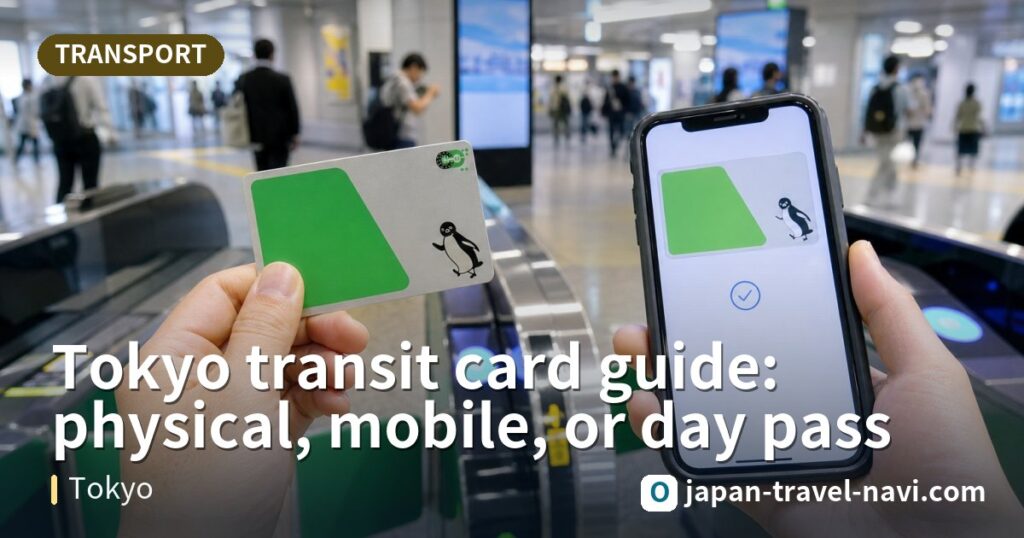
If you’re staying in Tokyo for 2 or more days and switching between multiple transit lines daily, a transit IC card is the most convenient option. We recommend deciding on a physical card or mobile version before departure and starting to use it on your arrival day at the airport. Day passes aren’t essential—only worth purchasing on days when you’ll take many subway trips. Below, we break down the differences, recharging methods, coverage areas, and best combinations.
Contents
Physical Card vs. Mobile Version: Check Your Phone First
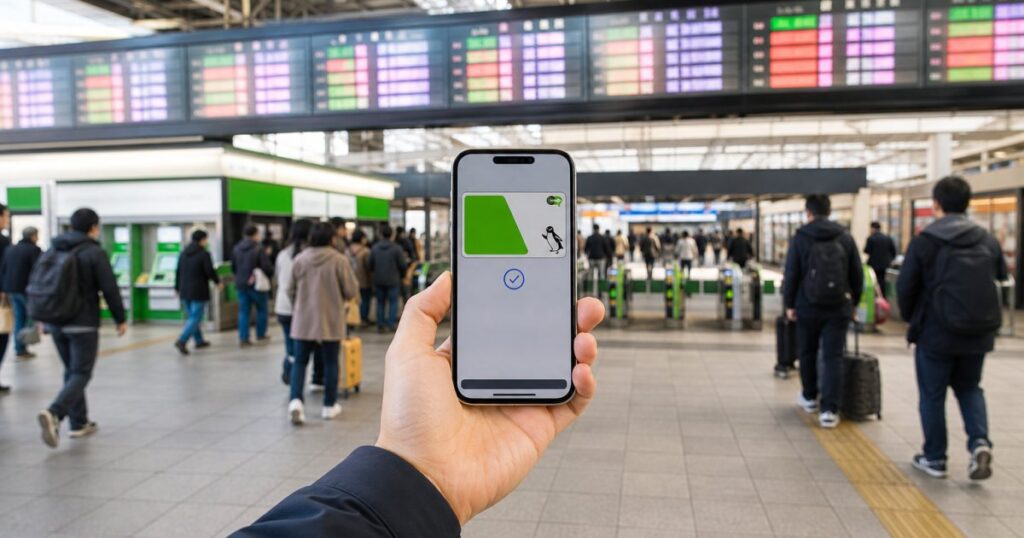
A mobile Suica adds the card to your phone’s digital wallet—no need to queue for a card, and no risk of losing it. However, whether you can add it and whether you can use a credit card to reload depend on your phone model and operating system. We recommend testing the setup on your phone a week before departure rather than discovering compatibility issues at the airport.
The advantage of a physical card is that it doesn’t drain your phone battery and you don’t have to worry about your phone dying and being unable to pass through gates. Physical card availability may change, so check the official website for the latest information before you go. For extra peace of mind, you can use the mobile version as your primary option and carry a backup physical card.
Recharging and Checking Balance: A Quick Check Before Each Day
Physical cards can be recharged at station ticket machines (チャージ機) using Japanese yen cash, and some convenience stores also offer this service. Mobile versions can be recharged directly through the digital wallet or official app, typically without needing a physical machine.
There are several ways to check your balance: the gate display shows it briefly when you pass through, you can check at a ticket machine, or use your phone app. Make it a habit to check your balance before leaving each day—if it’s running low, top it up before entering the station rather than discovering insufficient funds when exiting and having to backtrack to find a machine.
Where You Can and Can’t Use It
Suica works on JR East, Tokyo Metro, Toei Subway, and most bus lines. Most major IC cards in other regions are also compatible with each other, so you can continue using it when visiting Osaka, Kyoto, or Fukuoka later. Many convenience stores, vending machines, and coin lockers also accept card payments.
Keep in mind that shinkansen (bullet trains) and express trains typically require separate ticket purchases or reserved seat fees—an IC card alone won’t cover these. Some sightseeing buses and smaller shops may not accept cards either. Check the official website for the latest information before departure and keep some cash on hand as backup.
Should You Buy a Day Pass: Judge by “How Many Trips and Which Lines”
Tokyo Metro offers a 24-Hour Metro Pass (東京メトロ24時間券) and a combined day pass covering both Tokyo Metro and Toei Subway. The limitation is that neither includes JR, so lines like the Yamanote Line and Chuo Line still require separate payment.
The decision is straightforward: list the routes you plan to take that day and use the official fare calculator to estimate costs. If most of your trips are on the metro—for example, moving through Asakusa, Ueno, Ginza, and Roppongi—a day pass is more likely to be worthwhile. If you’re mainly using JR to connect Shinjuku, Shibuya, and Ikebukuro, or only taking two or three trips, paying per trip with an IC card offers more flexibility.
Recommended Payment Strategy
The most practical approach is “IC card as base, day pass when needed.” Use your IC card for regular daily travel; on days with heavy metro use, buy a day pass and only use your IC card when you need to take JR or buses. When entering and exiting stations, keep the two tickets separate—don’t tap your day pass and IC card together.
We suggest dividing your itinerary into “metro-focused days” and “JR-focused days,” choosing the best payment method for each rather than second-guessing yourself daily.
Transit and Itinerary Reminders
- During rush hours (around morning commute and evening rush), stations are crowded; travelers with luggage should avoid these times when possible, and allow extra buffer time for transfers.
- Set up mobile Suica before arrival and confirm your phone battery; carry a power bank if necessary to avoid being unable to pass through gates.
- Keep sufficient balance on both physical and mobile cards; check your balance before entering a station to avoid being blocked when exiting due to insufficient funds.
- Interchange stations between the metro and JR may have exits far apart; check station signs before transferring with an IC card, and allow approximately 10–15 minutes if needed.
- For shinkansen, express trains, or remote attractions, check the official website before departure to confirm whether separate tickets are required or if IC cards are accepted locally.
- If the weather changes or plans shift mid-day, recalculate the number of trips and decide whether a day pass is still worthwhile.
This article was written and edited by the Japan Travel Navigation Editorial Team. Attraction and transit information may change; please refer to the latest official announcements from each facility before departure.
Please refer to the latest official information for actual conditions.
This article was translated from our Traditional Chinese edition.
Related reading
 Kyoto by foot, bike, and taxi: how to combine them for the best use of time and energy
 Getting to Arashiyama: Comparing JR, Randen, and Hankyu Transit Options
 How to Get from Kansai Airport to Kyoto: Express Trains, Buses, Late Arrivals & Return Options
 Kyoto Metro, JR, Keihan & Hankyu: Complete Transit Guide to Skip Bus Traffic
More from Tokyo
More Christmas Shopping Pop-up at Ichigaya Station (Toei Shinjuku Line) Nov 25–Dec 26
 Nov 22: 20th Bakuretsu Festival – Airsoft & Tactical Gear Showcase
 Nov 28–29 Ikebukuro Sunshine City Furniture Clearance Sale – Free Entry
 Marunouchi Building’s RIMTAE Debuts Black Tea Blooming Tea with Peony and Chrysanthemum