Sapporo Soup Curry Ordering Guide: Broth, Spice Level & Toppings Explained
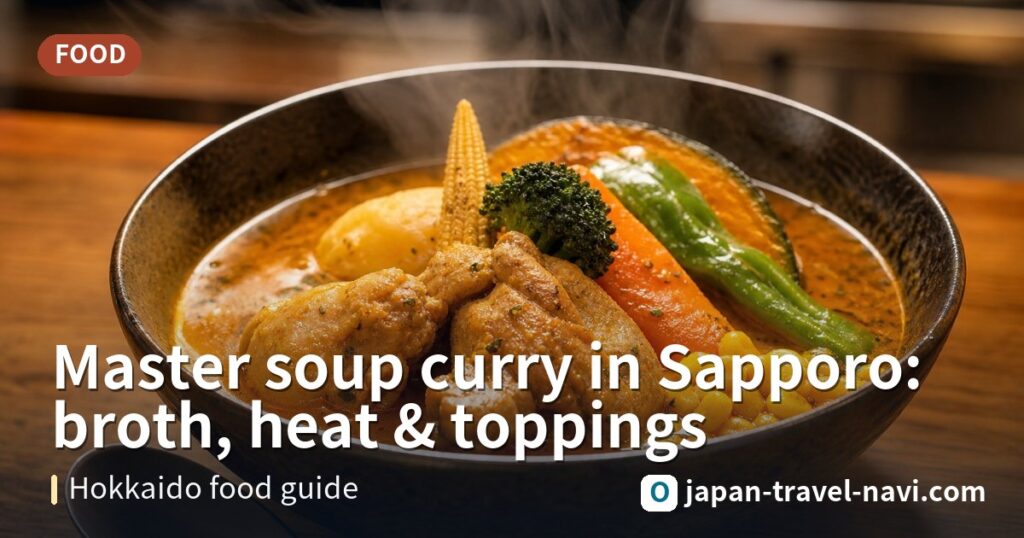
Looking for a distinctive and warming dish in Hokkaido? Soup curry (スープカレー) is a perfect choice. First-time visitors should allow 60 to 90 minutes for a meal. We recommend avoiding peak hours around noon, or visiting on colder or snowy days to better appreciate its appeal.
Contents
How soup curry differs from standard Japanese curry
Japanese curry has a thick sauce poured over rice, and toppings are usually cooked until soft. Soup curry, by contrast, is a light, aromatic broth served separately from rice. Toppings like chicken and vegetables are large chunks, typically deep-fried or grilled before being added to the soup, giving the dish more textural complexity. Rather than submerging all your rice in the soup, the best approach is to scoop a spoonful of rice and dip it lightly in the broth to preserve the rice’s texture.
How to choose your broth
Every shop has its own signature broth. Common bases include chicken bone, pork bone, and vegetable stock, while some offer milder options with tomato tang or coconut milk, and others feature seafood umami. The exact varieties depend on each restaurant’s menu—you don’t need to memorize names beforehand. For your first visit, we recommend choosing the broth marked as the house specialty or signature, which best showcases the restaurant’s character. Go for a clear broth if you prefer something light, or pick tomato or coconut-based options if you want richer flavors.
How to choose your spice level
Spice levels are usually indicated by numbers or stages, but standards vary widely between restaurants—what one shop calls “3” might be completely different from another’s “3”. The safest approach for your first visit is to start with the lowest or second-lowest level. If you want it spicier halfway through, most tables have chili powder or spices you can add yourself. If dining with someone who isn’t heat-tolerant, starting mild is especially wise, since soup curry’s aromatic spices are already prominent and excessive heat can mask other flavors.
Common toppings and rice portions
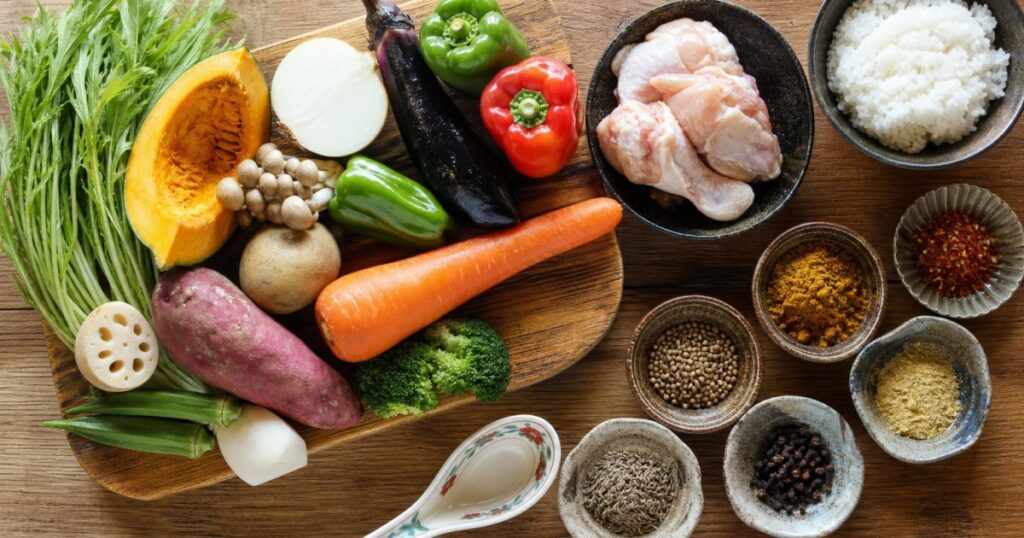
Entrees typically start with a choice of protein—chicken leg, pork chunks, or seafood—then you can add toppings as desired. Common vegetables include potato, carrot, pumpkin, eggplant, bell pepper, and okra; egg and cheese are also options. Rice portions usually come in different sizes, indicated by grams or small/medium/large on the menu. For your first time, choose a standard portion and remember the broth itself is quite filling—don’t add too many toppings at once. For a balanced meal, pick one protein and one vegetable combination, then adjust based on your appetite.
Ordering process and how to eat
Tell staff your party size when entering, then after being seated, order in this typical sequence: protein, broth, spice level, rice portion, and finally any additional toppings or drinks. Some restaurants use ticket machines while others take orders table-side—just follow the restaurant’s system. Wear dark clothing when dining, as soup easily splatters; some shops provide aprons. If it’s busy at lunch, scout out a backup option nearby rather than waiting at the door and disrupting your afternoon plans.
Travel tips
- Soup curry shops cluster around Sapporo Station, Odori (大通), and Susukino (薄野). The underground subway connects these areas in about 5 minutes, making it easy to combine with your city itinerary.
- Check official information before visiting to confirm hours, rest days, and whether you need to queue or register for a wait.
- When carrying large luggage, stash it in a station locker first. Traveling light is easier to navigate in shops and doesn’t take up space.
- In winter, roads can be icy. Wear slip-resistant shoes when walking from the subway to the restaurant, and allow extra time.
- Broth splatters easily, so wear dark tops. Long hair should be tied up.
- After eating, consider a stroll through Odori Park or Susukino to digest. On bad-weather days, explore underground shopping streets or station-area malls instead.
This article was compiled and written by the Japan Free Travel Information editorial team. Attractions and transit information may change; please verify with official sources before departure.
Please refer to the latest official announcements for the most current information.
This article was translated from our Traditional Chinese edition.