Sapporo Snow Festival: Pre-Trip Guide to Venues, Lighting Times, Cold-Weather Gear and Booking
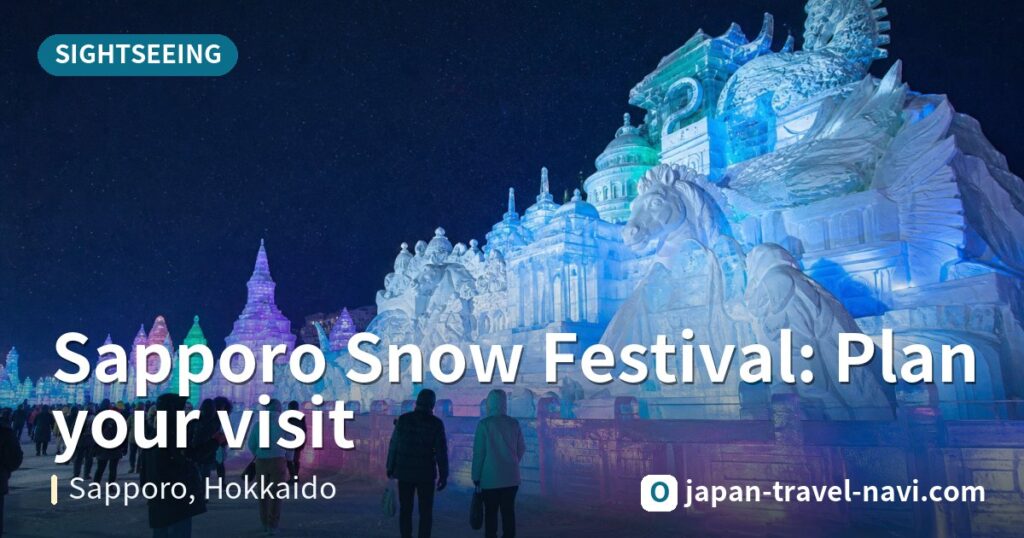
Visitors experiencing large-scale snow and ice sculptures for the first time in winter will find the Sapporo Snow Festival ideal. The main venues in the city center can be explored in half a day to one evening, and at least 2 nights of accommodation are recommended. The best approach is to tour the snow sculptures in the afternoon, wait for dusk to see the illuminations, then finish at Susukino for dinner. Event dates and venue layouts may change annually, so check the official website for the latest information before you go.
Contents
Venue Features and Flow
There are two main venues in the city center. Odori Park (Ōdori Kaijō) is an east-west strip in Odori Park, featuring large snow sculptures. Walking from one end to the other and taking photos takes approximately 1 to 1.5 hours. Susukino Kaijō is located around the Susukino intersection and features ice sculptures. Walking along the street takes about 30 to 40 minutes. Between the two areas, taking the Namboku subway line is just one station, or about 15 minutes on foot.
The recommended order is to explore Odori in the afternoon, then head south to Susukino in the early evening to view ice sculptures while searching for dinner. If you want to visit an outdoor venue, you’ll need to allocate an additional half day and confirm on the official website whether it’s set up that year and check transportation options.
Daytime vs. Nighttime Illumination
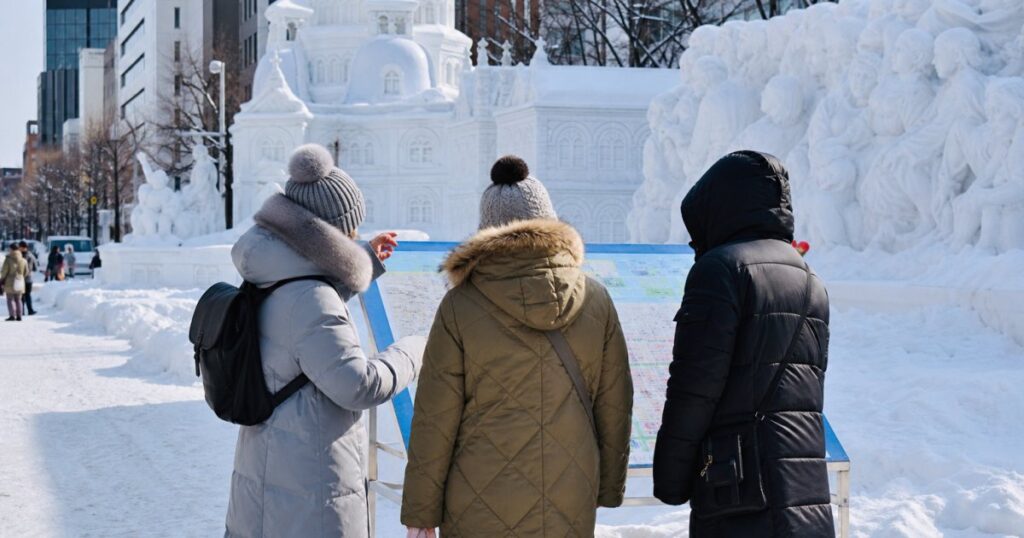
In daytime, snow sculpture outlines are clear, and you can see facial expressions, clothing folds, and architectural details. Crowds are also smaller than at night, making it ideal for photography. At night, sculptures are lit with lights and projections, creating a completely different atmosphere. The ice sculptures in Susukino are translucent and look even more beautiful after dark.
If you can only visit one time of day, it’s recommended to arrive at Odori about 1 hour before sunset, photograph the daytime version first, then wait for illumination. The actual timing of lights and projections varies each year, so check the official website for the latest details. Evenings are most crowded, and walkways are often blocked by photographers. You might walk to a less crowded section first and slowly make your way back.
Staying Warm and Anti-Slip Gear
You’ll be standing outdoors for long periods during the festival, so staying warm is more important than walking comfort.
- Layering: Wear thermal underwear as the base layer, a sweater or fleece as the middle layer, and a windproof, waterproof jacket on top. Add a beanie, gloves, and scarf.
- Footwear: Choose waterproof snow boots with deep tread patterns. Regular sneakers are slippery; consider anti-slip shoe covers to put over your shoes.
- Hand warmers: Place them on the outside of your clothing or in your pockets—never directly on skin.
- Mobile phone: Cold drains battery quickly. Bring a power bank and keep your phone in an inside pocket.
- Walking technique: Take small, slow steps and keep your center of gravity low. Thin ice is common at pedestrian crossings, intersections, and subway exits, so be especially careful.
Indoor heating is strong, so wear an easy-to-remove jacket.
Why Book Accommodation Early
The Sapporo Snow Festival is one of the most popular winter activities in Hokkaido. Accommodation in the city center fills up quickly during the festival. Once your dates are confirmed, book as soon as possible. Prioritize rooms with free cancellation so you have flexibility if your flights or plans change.
Locations near Odori Station, Susukino Station, and Sapporo Station are most convenient. You can also choose accommodations along subway lines as long as they’re not far from the station. If downtown hotels are fully booked, consider staying in Otaru and taking the JR to and from Sapporo, but check the final train times after evening illumination. Snow can cause transportation delays. If you’re flying out, it’s recommended to stay in Sapporo the night before or allow plenty of time to reach New Chitose Airport.
Transportation and Travel Reminders
- Use public transportation: City roads are congested during the festival and parking is scarce. Use the subway, JR, and walk instead. Odori Station and Susukino Station are right next to the venues, and you can access the attractions immediately upon exiting.
- Airport transfer: The JR rapid train from New Chitose Airport to Sapporo is most reliable. Snow may cause delays, so allow extra time on return trips and don’t cut it close to your departure time.
- Avoid peak times: 1 to 2 hours after illumination and weekend evenings are most crowded. Subway stations are also packed. For a more relaxed experience, arrive early or return to your hotel later.
- Snow safety: Visibility is poor at night and surfaces are slippery. Don’t look at your phone while walking, and stop to check road conditions before crossing streets.
- Weather alternatives: During heavy snow or strong winds, explore underground shopping streets or relax in indoor restaurants and cafes until conditions improve.
- Be flexible with your itinerary: Venue layouts and transportation announcements change annually. Check the official website for the latest information before departure and allow a half day as a weather backup plan.
This article was prepared by the Japan Travel Navi editorial team. Venue and transportation information may change. Please refer to each facility and official announcements for the latest information before your trip.
Please follow the latest official announcements for actual conditions.
This article was translated from our Traditional Chinese edition.