How to Eat Osaka Udon: Clear Broth, Fried Tofu & Breakfast Noodle Guide
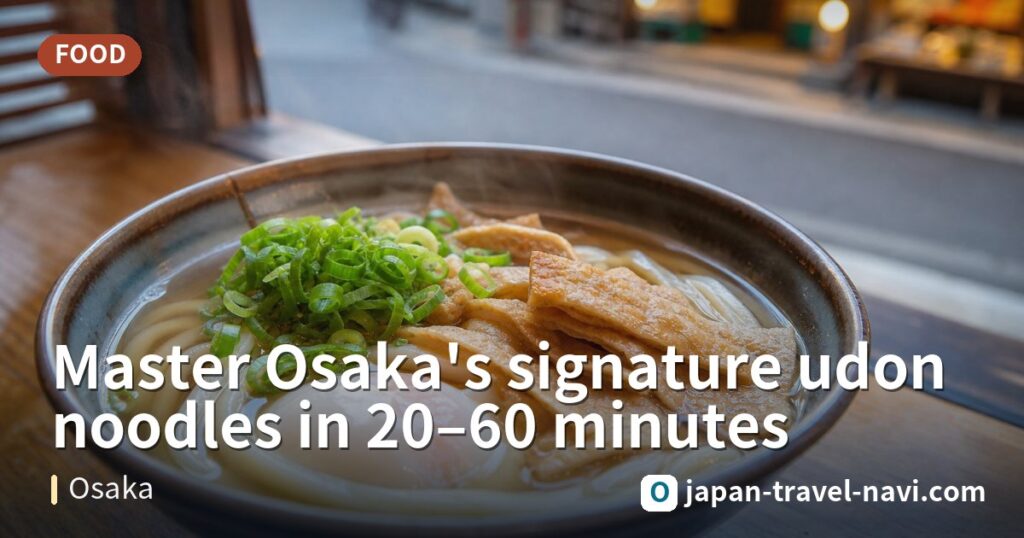
Want to truly taste Osaka’s udon? You don’t need to venture far—a meal takes just 20–60 minutes. Perfect for those who love a clean, delicate broth and want to squeeze a local meal into gaps in your schedule. We suggest visiting in the morning or after 2 p.m. to avoid the lunch rush.
Contents
The Secret to Clear Broth: Kombu and Light Soy Sauce
Kansai udon broth is pale in color, with kombu (kelp) and bonito flakes as the stars, creating a rich umami flavor. The seasoning uses light soy sauce (usukuchi shoyu), so while the broth looks delicate, it’s actually full of depth. Many believe this tradition stems from Osaka’s historic role as a kombu distribution hub, which shaped locals’ reverence for quality broth.
On your first try, order the most basic plain udon or fried tofu udon (kitsune udon). Take a sip of the plain broth first, then decide whether to add shichimi (seven-spice powder). Green onions and tempura flakes are usually self-serve, but don’t add too much at the start—you don’t want to mask the delicate kombu aroma.
Fried Tofu Udon (Kitsune Udon): Origin & How to Eat It
Fried tofu udon is Osaka’s signature noodle dish, topped with a piece of sweet-savory braised fried tofu skin. The common origin story places it at noodle shops in the Semba area of Osaka, with its name linked to a folktale about foxes loving fried tofu. Details vary by shop, so think of it as a fun story for the dinner table.
When eating, try biting into the tofu first to let its braising liquid seep into the broth—this adds more layers of flavor. If you’re still hungry, you can order inari sushi (inarizushi), which uses the same fried tofu skin and has a similar taste.
Standing Shops vs. Sit-Down Restaurants: Which to Choose
Standing shops (tachigui udon stands) are usually located inside or near train stations. Order, get your bowl, eat, and leave—about 15 minutes total. Perfect for tight train connections, tight schedules, or when you just want a simple bowl.
Sit-down restaurants have seating and a wider menu: hot-pot udon, sets with sushi or rice bowls, and often house-made noodles. Plan for 40–60 minutes to relax; expect queues at lunch, so arrive early or come after 2 p.m. instead.
If you’re unsure, do both: grab a quick standing-shop bowl in the morning or during a connection, then enjoy a proper sit-down meal at dinner.
Breakfast Noodles: Eating Like a Local
In Osaka, udon isn’t just for lunch or late-night snacks—many locals eat it for breakfast too. A warm bowl sets you up for the day. Some shops near stations open early, perfect for a quick bowl before catching an early train. Hours vary by shop, so check official information before you go.
The trick for breakfast udon is choosing a small bowl with clear broth, paired with a rice ball or inari sushi. You won’t feel too full, and it won’t slow you down for the rest of your day. If you’re planning a packed sightseeing schedule, this combo is the lightest option.
Fitting Udon into Your Day
Umeda, Shinsaibashi, Namba, and Tennoji are all on Osaka’s Midosuji Line, with short travel times between them—perfect for “eat while you explore.” For example, visit Osaka Castle in the morning, take the train to Namba or Dotonbori area for lunch before 12 p.m., then explore Shinsaibashi in the afternoon.
To compare different styles, hit standing shops at transfer points and save sit-down restaurants for dinner. Osaka also has local udon cooked with beef drippings (kasutei udon)—if you want to try something different on day two, give it a shot.
Travel Tips
- Use trains and subways: Umeda, Shinsaibashi, Namba, and Tennoji are all on the Midosuji Line with short connections—ideal for stopping to eat.
- Store luggage before eating: Noodle shop seating is tight; large bags are inconvenient. Store yours in a station locker or at your hotel first.
- Watch for ordering systems: Some shops use ticket machines; others take orders at the counter. Carry some cash in case, and check the shop’s official info beforehand.
- Avoid the lunch rush: Peak time is around noon. Eat earlier or later, and save queuing time for attractions instead.
- Rainy day backup: Choose shops inside stations or underground arcades when it rains—no need to travel outdoors. Finish eating, then head to department stores or covered passages.
- Watch out for hot soup and splashes: Noodles and broth are very hot. Be careful not to splash soup on your clothes; dark coats hide stains better.
This article was compiled by the Japan Free Travel Information Station editorial team. Attractions and transit information may change; please check official announcements before you go.
Always verify the latest official updates.
This article was translated from our Traditional Chinese edition.