Your Guide to Osaka Kushikatsu: Sauce Rules, Cabbage Tips & How to Order
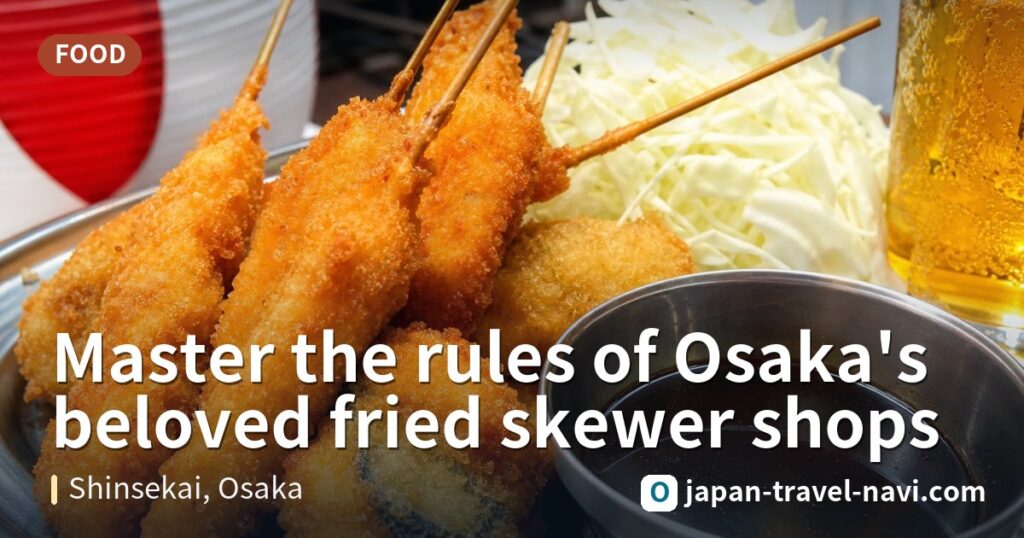
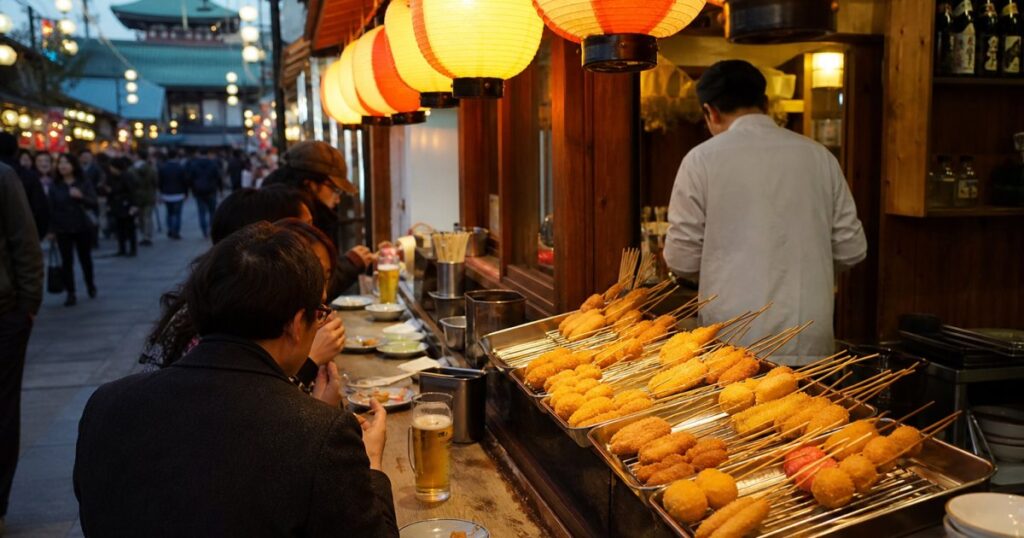
Visitors looking to experience authentic Osaka working-class food in a relaxed atmosphere should consider a kushikatsu meal. Budget about 1 to 1.5 hours, and you can easily combine it with a stroll around Tsutenkaku. For shorter waits, visit before the evening rush or eat dinner earlier than usual.
Contents
Plan your route and timing
Shinsekai is located in Naniwa Ward, with Tsutenkaku as the easiest landmark to navigate by. Start by exploring the area around Tsutenkaku, then decide which restaurant to visit by checking the menus posted at shop entrances and observing queue lengths. Dinner time draws noticeably larger crowds, so eating earlier will save you from long waits. On rainy days, the shopping streets and covered alleys are more comfortable to explore, and you might also consider moving your meal time earlier to avoid the congestion created by rainy-day crowds.
The “no double-dipping” rule: how to do it respectfully
The most famous rule at kushikatsu (串カツ) shops is “no double-dipping sauce (二度づけ禁止).” Tables typically have one shared sauce container that all customers use together, so skewers you’ve already bitten cannot be dipped again. Here’s how to follow the rule:
- Dip each skewer in the sauce only once, and make sure it’s coated evenly.
- If you need more sauce, use a cabbage leaf to scoop and drizzle it on top.
- Never touch the sauce container again with a skewer you’ve eaten from, and don’t stick your chopsticks or fingers in it.
If you see rules posted inside the shop, follow them. If you’re unsure, ask the staff. Some restaurants also offer alternative seasonings like salt or lemon—check with the staff for their specific options.
Cabbage is more than just a side dish
Tables usually come with a plate of fresh cabbage (キャベツ), which serves two purposes: as a tool to scoop and drizzle sauce, and as a palate cleanser after eating fried items. When the fried food starts to feel rich, a few bites of cabbage will refresh your palate considerably. Whether you can get more cabbage and any charges vary by restaurant—just ask when ordering.
Common kushikatsu varieties and ordering strategy
For your first time, start with popular flavors like beef, pork, large shrimp, and quail eggs, then try vegetables like lotus root, onion, mushroom, and sweet potato. Finally, add richer items like cheese if you’re still hungry. The general rule: order lighter items first, then move to more robust flavors so you don’t get tired of the taste too quickly. Since kushikatsu is fried to order, there will be staggered serving times—don’t order everything at once. Place orders in batches for the best experience.
Ordering tips for solo diners and groups
- Solo dining: Start with 3 to 5 skewers to test the waters, then add more. If the restaurant offers set meals or combination platters, these are good starter options—check the menu for details.
- Two or more people: Order a combination platter or let each person choose a few skewers, then add more based on preferences. This avoids duplicates and waste.
- If someone has dietary restrictions or allergies: Ask the staff before ordering, since it’s hard to judge frying oil and ingredient content from appearance alone.
Stop when you’re about 80% full. The area has plenty of other small snacks to explore, and saving room in your stomach lets you sample a variety of foods as you stroll.
Travel tips
- Taking the train or subway is recommended. You can get off at Ebisumachi Station (恵美須町駅) or JR Shin-Imamiya Station (新今宮駅), both near Tsutenkaku. You can also walk from Tennoji or Namba and transfer. Confirm your specific route with a map app before you go.
- Shinsekai’s alleys are narrow and crowded. Driving is not recommended. If you must drive, check parking locations in advance and allow extra time for navigation.
- During peak meal times, check the queuing method at the shop entrance. If a number system is used, follow staff instructions and wait your turn—don’t cut in line.
- Plan to explore Tsutenkaku first, then return for your meal, so you won’t waste energy waiting on an empty stomach.
- When it’s crowded, keep an eye on your belongings. Wear backpacks in front, and keep your table clear of clutter so staff can serve dishes easily.
- Check official sources for the latest information on operating hours, days off, and reservation policies before you visit.
This article was prepared by the Japan Travel Navigator editorial team. Venue and transport details may change—please confirm with official sources and announcements before your visit.
Please verify the latest official information before your trip.
This article was translated from our Traditional Chinese edition.