Osaka JR vs. Private Railways: Guide to 5 Major Lines, Same-Name Stations & Train Types
First-time visitors to Osaka need to grasp one key principle: “JR connects the wider region, while each private railway operates its own territory”—and you’ll save yourself many wrong turns. Before you go, spend about 30 minutes reviewing the route from your accommodation to major attractions, and try to avoid changing trains during morning and evening rush hours.
Contents
Getting the big picture: how JR and private railways differ
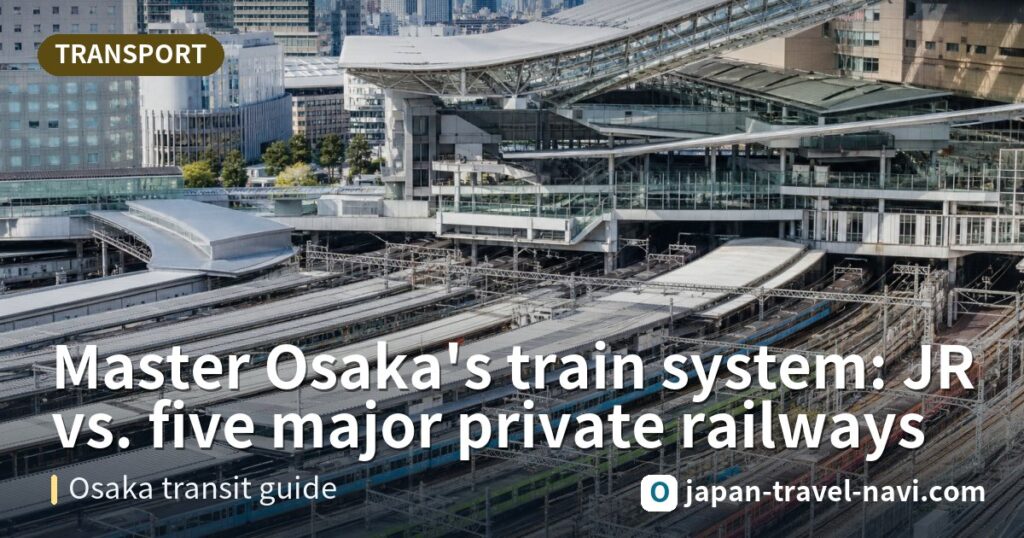
JR’s strength is its connected network: the Osaka Loop Line circles the city center, and direct trains reach Kyoto, Kobe, and Nara. Private railways each have their own territory, with stations often located right in the city center, serving their own special destinations.
A practical approach: use JR as your backbone for long distances and multiple transfers; use a specific private railway when your destination happens to be on its line. Note that JR passes usually don’t cover private railways—check official information before purchasing. IC cards like ICOCA generally work on both.
Where each of the five private railways goes
- Hankyu: From Umeda to Kobe Sannomiya, Kyoto Kawaramachi, and Takarazuka. Kawaramachi is central Kyoto with easy access to Gion, though it’s not Kyoto Station.
- Hanshin: From Umeda to Kobe Sannomiya and Koshien, extending to Namba and connecting directly to Kintetsu for Nara. Best for baseball games or heading toward Kobe from Namba.
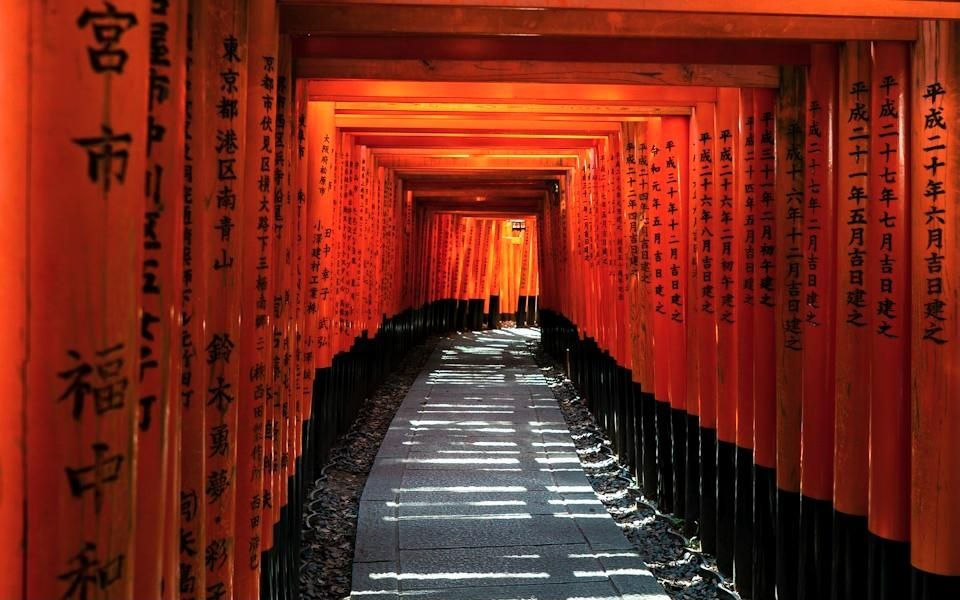
- Keihan: Connects Osaka city center to eastern Kyoto, with stops at Gion, Kiyomizu-dera, Fushimi Inari Shrine, and Uji. Keihan is usually closer to attractions in the Higashiyama and Fushimi areas than JR.
- Kintetsu: From Osaka Namba and Osaka Uehonmachi to Nara; long-distance service extends to Ise-Shima and Nagoya.
- Nankai: From Namba to Kansai International Airport and Mount Koya—the main carrier for airport transfers and mountain trips.
Same name, different stations: the Umeda, Namba, and Tennoji trap
The most common mistake is thinking “same station name means the same place.”
- Umeda: JR calls its station “Osaka,” while Hankyu, Hanshin, and the subway call theirs “Umeda.” They’re connected by underground passageways or at ground level but require a 5–10 minute walk. Reserve transfer time if you’re meeting someone.
- Namba: JR Namba, Nankai Namba, Kintetsu’s Osaka Namba, and the subway’s Namba are all nearby but have different exits. If you’re taking Nankai to the airport, follow the “Nankai” sign, not the JR signs.
- Tennoji: JR Tennoji and Kintetsu’s Osaka Abenobashi are adjacent but separate stations. To reach southern Nara or Yoshino by Kintetsu, board at the latter.
- Kobe Sannomiya: Hankyu and Hanshin use “Kobe Sannomiya,” while JR writes “Sannomiya” (三ノ宮). Enter the correct station name for each operator into your map app.
How to identify express and local trains
Kansai has many train types. Even “Limited Express” (Tokkyū) varies by operator: Hankyu, Hanshin, and Keihan’s limited express usually don’t charge extra, but some Kintetsu and Nankai limited express services require a surcharge and have reserved seating. Confirm before boarding whether an extra fee applies.
Three steps to identify the right train:
1. Check the platform’s electronic sign or the train’s front display for the train type and final destination, confirming your stop is listed.
2. Note which doors serve express versus local services—don’t line up at the wrong spot.
3. If your destination is a small station, taking express to a major station then switching to local is often faster than riding local the whole way.
JR’s “Shin-kaisoku” (new rapid), “Kaisoku” (rapid), and “Futsu” (local) also differ by the number of stops they make, with noticeable speed differences. To save time, prioritize trains with fewer stops.
Traffic and itinerary reminders
- Rely on public transport: check the operator name above the ticket gate (JR, Hankyu, Hanshin, Keihan, Kintetsu, Nankai) before entering—wrong gate means the wrong platform.
- Allow transfer time: passage between lines at Umeda and Namba can be lengthy; budget an extra 10 minutes per transfer in your schedule.
- Luggage and rush hour: avoid early morning and evening commutes with large bags, use exits with elevators, and consider station lockers if needed.
- Confirm paid trains first: check if your train requires a surcharge or reserved seating before boarding; consult official information if unsure.
- Last trains and route changes: confirm final departure times before heading back; if you miss one, switch to the subway or another private railway.
- Rainy-day alternative: prioritize routes connected by underground passageways to avoid searching for stations in the rain.
This article was compiled and written by the Japan Travel Navi editorial team. Attraction and transit information may change—please verify with official sources before your trip.
Always follow the latest official updates for current conditions.
This article was translated from our Traditional Chinese edition.
Related reading
 Kyoto by foot, bike, and taxi: how to combine them for the best use of time and energy
 Getting to Arashiyama: Comparing JR, Randen, and Hankyu Transit Options
 How to Get from Kansai Airport to Kyoto: Express Trains, Buses, Late Arrivals & Return Options
 Kyoto Metro, JR, Keihan & Hankyu: Complete Transit Guide to Skip Bus Traffic