How to Get from Narita Airport to Tokyo: Keisei Line, N’EX, and Bus Options by Accommodation
First-time visitors to Tokyo should start by checking which train station is closest to your accommodation, then work backwards to decide which transport option to take. From Narita Airport to your hotel usually takes about 1.5 to 2 hours, including baggage claim, ticket purchase, waiting, and transfers. If you arrive during the day or early evening, all three transport options work well. For late-night arrivals, check the last departure times in advance and have a backup plan ready.
Contents
Three Main Transport Options Compared
Keisei Skyliner (スカイライナー) is the fastest option, reaching Nippori or Keisei-Ueno in about 40 minutes. All seats are reserved, and there’s dedicated space for large luggage. The downside is that it only goes to those two stations, so most passengers need to transfer to the JR Yamanote Line or metro.
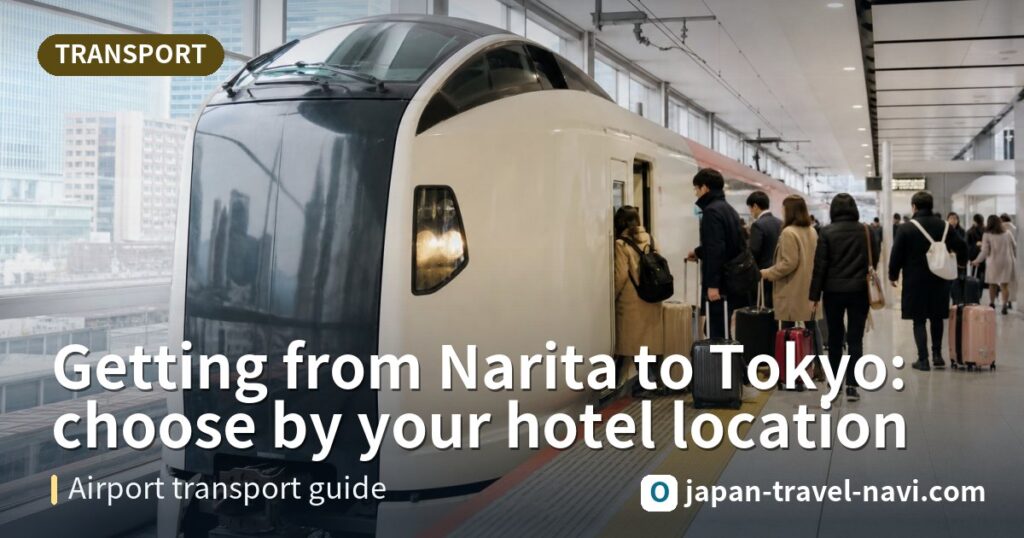
JR Narita Express (N’EX, 成田エクスプレス) goes directly to major stations like Tokyo, Shinjuku, Shibuya, and Ikebukuro without changing trains. Travel time is about 1 to 1.5 hours depending on your destination. If you’re staying in these areas, this is the most convenient option.
Keisei Main Line Express and Access Express (アクセス特急) are time- and budget-friendly options, but they make more stops and take longer. The Access Express connects directly to the Tokyo Metro and Toei Subway lines, which is convenient if your hotel is near Asakusa, Oshiage (Tokyo Skytree area), or Nihonbashi—you can skip one transfer.
Airport buses are a fourth option, which we’ll cover below. Check official websites for the latest ticket prices and schedules before you travel.
Choose Your Route by Accommodation Area
- Ueno, Asakusa, Nippori area: Skyliner to Keisei-Ueno or Nippori is most convenient; walk or take a short train ride to your hotel.
- Tokyo Station, Ginza, Nihonbashi: N’EX direct to Tokyo Station is simplest. To save money, consider Access Express or an airport bus.
- Shinjuku, Shibuya, Ikebukuro: Prioritize N’EX to avoid transfers. You can also take Skyliner to Nippori and transfer to the JR Yamanote Line, but you’ll need to carry luggage up and down stairs.
- Roppongi, Omotesando, Harajuku: No direct service available. We recommend going to Tokyo or Shinjuku Station first, then transferring to the metro. Check elevator locations and exits at transfer stations before you travel.
If you’re unsure which area you’ll be in, prioritize hotels near major Yamanote Line stations—your first-day commute will be much easier.
When You Have Lots of Luggage, Seniors, or Children
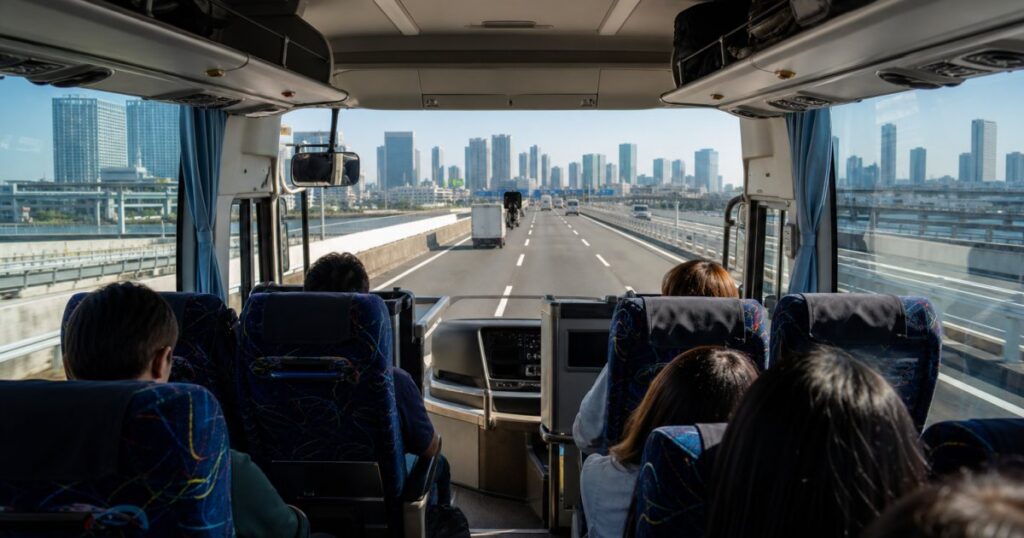
If you have more than one large suitcase, I’d recommend two options: first, N’EX or Skyliner, since seats are reserved and there’s dedicated luggage space in the car; second, airport buses, where luggage goes in the compartment below—no need to carry it up and down stairs. Many routes stop at major hotels or key stations.
Keep in mind that buses are affected by traffic conditions, and peak hours may add significant time to your journey. If you have important plans on arrival day or need to get somewhere quickly, taking the train is more reliable.
If you must transfer to the metro, stairwells and corridors are often longer than expected. Choose off-peak times if possible, or divide the work—one person watches luggage while another scouts the route.
Backup Plans for Late-Night and Early-Morning Arrivals
For late-night flights, the key is checking the last train times. Customs, baggage claim, and immigration can all delay you, so check official schedules before departure and assume you might arrive 30 minutes later than expected.
You have three backup options:
1. Switch to an airport bus: Some routes operate later than trains, but schedules and routes change annually—confirm in advance.
2. Stay one night near Narita: Enter Tokyo the next morning. While it costs extra, you’ll avoid rushing through an unfamiliar area at midnight.
3. Take a taxi: This is expensive for a single passenger but can be split among several travelers. Keep it as your last resort.
For early-morning arrivals, the issue is the opposite—the first trains haven’t started yet. Have breakfast at the airport and organize your luggage while you wait. If your hotel doesn’t offer early check-in, consider storing luggage in a hotel locker or coin lockers at the station and start exploring light-packed.
Small Tips Before You Arrive
Narita has multiple terminals; Terminal 3 requires extra walking to reach the train station, so allow time. Download maps and transit apps before you go. Screenshot your hotel’s nearest station and exits—if the internet is slow when you arrive, you’ll still have a guide.
Transport and Itinerary Reminders
- Confirm your terminal: Narita has multiple terminals, and Terminal 3 is farther from the train station. Allow extra walking time and don’t plan tight transfers.
- Reserved seats fill up: Skyliner and N’EX have assigned seating. During peak season or holidays, check seat availability online before buying tickets at the airport, as trains may be fully booked.
- Plan large luggage transfers carefully: Staircases and corridors at transfer stations can be long. Locate elevators in advance and avoid traveling during rush hour for a smoother experience.
- Allow buffer time for buses: Airport buses are affected by traffic and may arrive later than scheduled. If you have restaurant reservations or strict check-in times, build in extra time.
- Check last train times for late arrivals: Look up official schedules before you depart and prepare a backup plan, such as switching to a bus or staying near the airport overnight.
- Keep valuables with you: When resting on trains or at stations, keep your passport, phone, and wallet on your person—don’t leave them in luggage racks or checked bags.
This article was compiled and written by the Japan Travel Guide editorial team. Attractions and transport information may change; please verify with official sources before your trip.
Always check official announcements for the latest information.
This article was translated from our Traditional Chinese edition.
Related reading
 Kyoto by foot, bike, and taxi: how to combine them for the best use of time and energy
 Getting to Arashiyama: Comparing JR, Randen, and Hankyu Transit Options
 How to Get from Kansai Airport to Kyoto: Express Trains, Buses, Late Arrivals & Return Options
 Kyoto Metro, JR, Keihan & Hankyu: Complete Transit Guide to Skip Bus Traffic
More from Tokyo
More Christmas Shopping Pop-up at Ichigaya Station (Toei Shinjuku Line) Nov 25–Dec 26
 Nov 22: 20th Bakuretsu Festival – Airsoft & Tactical Gear Showcase
 Nov 28–29 Ikebukuro Sunshine City Furniture Clearance Sale – Free Entry
 Marunouchi Building’s RIMTAE Debuts Black Tea Blooming Tea with Peony and Chrysanthemum