Kyoto Temple Flea Market Guide: Antiques, Vintage Kimono, Haggling Tips & Early Bird Strategies

If you love hunting for antiques, vintage kimono or traditional fabrics, Kyoto’s temple flea markets are perfect additions to your itinerary. Plan to spend about 2–3 hours, and try to arrive early in the morning. The two most iconic are the Kobo Market (弘法市) at Toji Temple and the Tenjin Market (天神市) at Kitano Tenmangu, both held regularly each month. They combine flea market excitement with the atmosphere of visiting a sacred temple.
Contents
Plan Ahead: The Two Major Monthly Temple Markets
Toji Temple’s Kobo Market is usually held on the 21st of each month, while Kitano Tenmangu’s Tenjin Market typically happens on the 25th. These markets run on fixed dates only—they’re not daily events—so when planning your trip, check your accommodation dates first and decide whether to dedicate a day to either market. During year-end, bad weather, or special circumstances, the market’s scale and operating format may change, so check official information before you go. If you can catch both dates, pick the one closer to your other planned activities—no need to squeeze both in.
What to Find: Antiques, Goods & Vintage Kimono
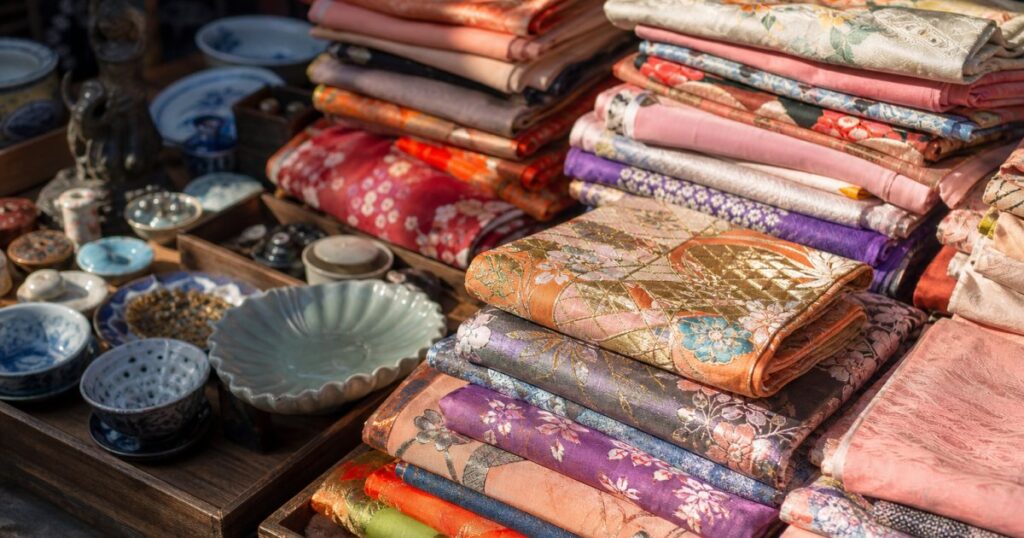
The stalls are wonderfully varied. You’ll commonly find antique ceramics, traditional household items, old books, vintage fabric, secondhand kimono and obi sashes, plus plants and street food. On your first visit, don’t rush to buy—walk the entire market, note which stalls catch your eye, then return for purchases. This usually means fewer regrets. When you’re tired, grab a snack from a food stall and rest in a quiet corner while soaking in the temple atmosphere. If you buy fragile ceramics, ask the vendor to wrap them extra well, and factor transport time into your itinerary.
Key Inspection Points for Vintage Kimono
Viewing vintage kimono in natural light is essential:
- Neckline, cuffs, underarms and hem: These spots are most prone to stains or wear.
- Fading and yellow stains: Unfold the fabric and hold it up to the light to check if the colour is even throughout.
- Smell: Strong musty or mothball odours may be hard to remove at home.
- Size: Antique kimono may run short or narrow for taller people—always ask the vendor to let you try it on if you plan to wear it.
If you’re just looking for decoration, consider obi sashes, haori jackets or fabric scraps instead. These work beautifully as table runners, wall hangings or bag materials, and they’re much easier to pack than a full kimono set.
Cash & Haggling Etiquette
Markets run primarily on cash, so bring small bills and coins before you go—this makes change easier and saves vendors from awkwardness. Haggling is acceptable, but stay polite: when buying multiple items, you can smile and ask “Could you give me a better price?” Accept a polite refusal gracefully and don’t push further. Handmade items, food, or already fairly-priced goods usually have little room for negotiation. Check for damage and condition first, then discuss price—this usually leads to smoother deals.
Why Morning Visits Are Best
Arriving early offers three advantages: fewer crowds means you can browse leisurely; the best antiques and kimono get snapped up quickly, so early birds get better selection; and you’ll feel fresher physically and mentally before afternoon heat or rain sets in. Plan for about 2 hours in the morning, then move on to other activities. From Toji Temple, head back to Kyoto Station for lunch and visit other attractions; from Kitano Tenmangu, take a bus to nearby Kinkaku-ji Temple. If it rains, some stalls may close, so consider swapping the market for an indoor afternoon activity instead.
Travel Tips
- Use public transport: From Kyoto Station, take the Kintetsu Line to Toji Station and walk, or walk directly to Toji Temple. For Kitano Tenmangu, take the city bus from Kyoto Station (about 30 minutes). Markets are crowded on event days—allow extra time.
- Buses and trains are packed on market days: Especially during afternoon return times. Consider avoiding peak afternoon crowds or leaving early.
- Prepare cash and small change beforehand: Exchange yen before you go, and keep small bills and coins separate so you don’t have to fumble through your wallet in crowds.
- Mind fragile items: Ask vendors to wrap ceramics or glass in extra layers, and try to buy breakables near the end of your day to avoid carrying them all day.
- Weather and footwear: Temple grounds have stone or gravel paths—wear comfortable walking shoes. On rainy days, stalls may reduce in number, so bring an umbrella and have an indoor backup plan.
- Confirm details beforehand: Market dates, scale and whether the event is running should always be checked against the latest official information.
This article was compiled and written by the Japan Travel Navigator editorial team. Venue and transport information may change—please verify with each facility and official announcements before you visit.
Always check the latest official information for current details.
This article was translated from our Traditional Chinese edition.
Related reading
 Hankyu Umeda Main Store Holiday Food Festival: Christmas Treats and Limited Souvenirs from Nov 25
 BEYOND Pop-Up Shop Brings Curated Brands to Kyoto’s Shinpuhkan Nov 27–29
 Disney Stainless Steel Couple Rings Arrive at Canal City Hakata on Nov 15
 Hakata Canal City: LAKOLE × NO COFFEE First Collaboration Nov 13–Dec 3