Kyoto Tea-Buying Guide: How to Choose and Store Matcha, Sencha, and Hojicha
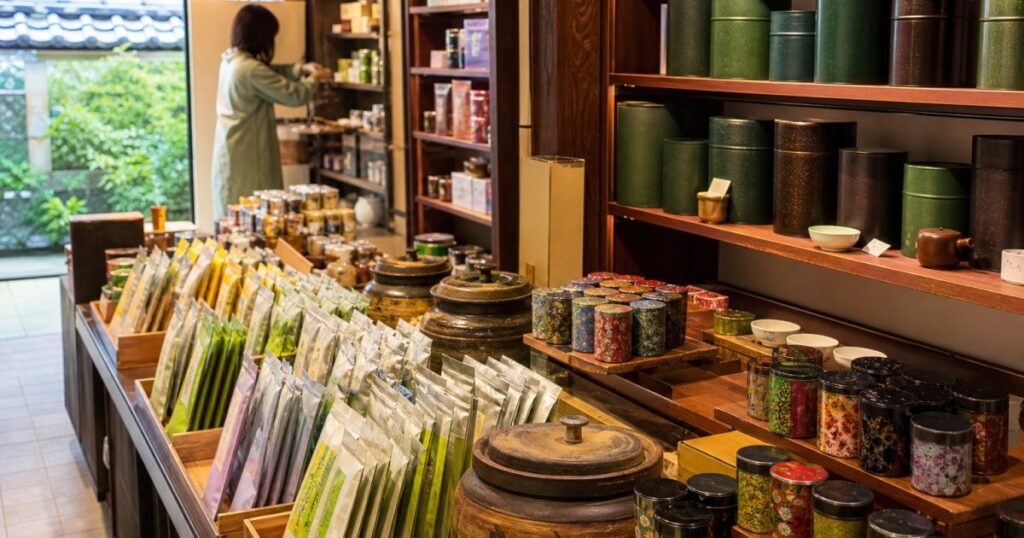
If you’re planning to bring tea home, we recommend setting aside half a day for tea shopping—or a full day if you want to visit Uji as well. Mornings are best when shops are quieter. After purchasing, head back to your hotel and store the tea powder in a cool place rather than carrying it around all day.
Contents
Know the difference: Matcha, Sencha, and Hojicha
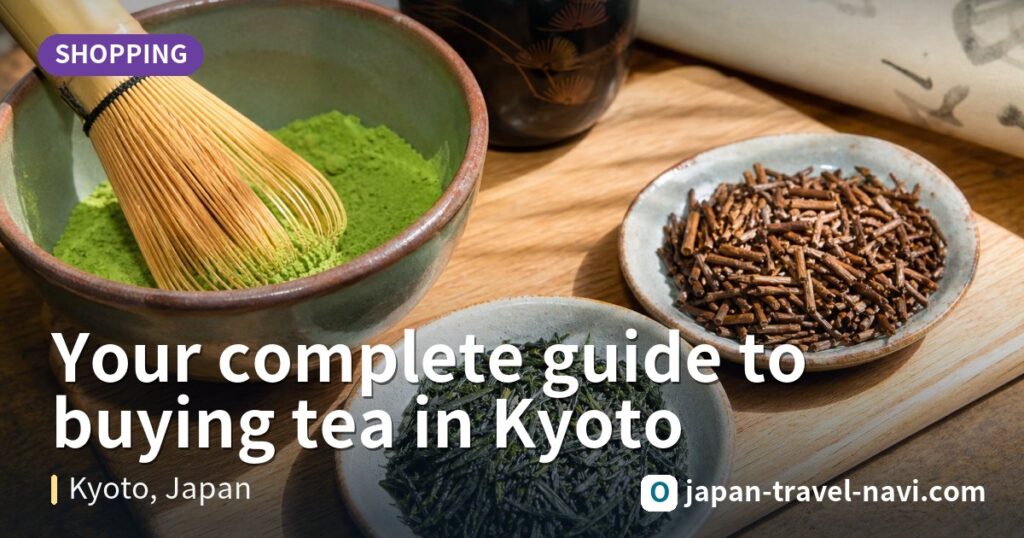
Matcha is powdered tea leaf—you consume the whole leaf in powder form, giving it a rich, full-bodied flavor. It’s ideal for traditional tea whisking and also works great in lattes and desserts. Sencha (せんちゃ) is everyday tea leaf, brewed fresh and steeped with a clean, bright aroma; it’s best appreciated when made in a traditional Japanese teapot (kyusu). Hojicha (ほうじ茶) is roasted sencha with lower caffeine and a toasted, smoky flavor—perfect after meals or in the evening. You’ll also find genmaicha and gyokuro; ask staff about the differences during tastings.
Choose matcha based on how you’ll use it
Many visitors buy matcha only to realize later that the type matters. If you plan to whisk it traditionally with a bamboo whisk (chasen) for direct drinking, choose powder labeled “for whisking” or “drinking grade.” For lattes and cakes, “cooking grade” or “baking grade” is fine—the flavor won’t be masked by milk and sugar. When in doubt, tell staff how you plan to use it; that’s more reliable than reading the package alone.
Storing matcha powder: avoid light, heat, and moisture
Matcha oxidizes easily; darkening color is a warning sign. Once you bring it home, follow these steps:
- Keep unopened powder in the refrigerator, away from strong-smelling foods.
- After opening, squeeze out air, seal tightly, and drink it soon—don’t store it long-term.
- When taking powder out of the fridge, let it sit about 30 minutes to reach room temperature before opening the lid to prevent condensation.
- During travel, don’t leave powder in a heated car or on the outer layer of luggage.
Check official customs regulations for tea leaf imports before you depart.
Choosing tea as gifts vs. for yourself
For gifts, opt for small packages or individually portioned tea bags or powder—recipients won’t face a large opened container and risk spoilage. Sencha and hojicha tea bags are safest since no special equipment is needed. For personal use, consider buying one “whisking grade” matcha and one “cooking grade” matcha separately for different purposes and no waste. If a travel companion doesn’t drink tea, pick up matcha-flavored snacks as souvenirs instead.
Starting with tea tools: three basics are enough
You don’t need everything at once. The essentials are a matcha bowl (wide-mouthed for easy whisking), a bamboo whisk (chasen), and a tea scoop (chashaku) for measuring powder. If you want to test water temperature first, add a small sifter—sifted powder clumps less. For sencha fans, choose a small-to-medium kyusu. Ceramic tools break easily; ask the shop for extra wrapping and pack in carry-on luggage for safety.
Planning your tea-shopping route
Start near Kyoto Station where department stores and shops cluster—good for browsing and comparing varieties. Next, visit Nishiki Market or the Gion area to sample different teas and try snacks. If you have time, take a train to Uji (about 30 minutes one way), where tea shops and tea houses concentrate. Enjoy a cup of matcha there, then decide which type to bring home. On rainy days, focus on Kyoto Station area and covered shopping arcades.
Travel tips
- Kyoto city streets are congested and buses often fill up. Plan your tea route around the subway, JR, and private railways. Shop in the morning and visit the farther Uji area in the afternoon.
- To reach Uji from Kyoto Station, take JR or the Keihan Railway (about 30 minutes one way). Check official timetables before departing.
- Browse tea shops first, then buy tea tools last to avoid carrying fragile items on crowded trains. Ask shops to reinforce packaging.
- Store purchased tea powder in your hotel refrigerator immediately. On your return journey, use an insulated bag or keep it in carry-on luggage to avoid sun and heat.
- City buses are crowded during rush hours. If carrying large shopping bags, avoid peak times or use the subway for more space.
- If you plan to spend significant time in Uji, store large luggage in a coin locker at Kyoto Station and travel light.
This article was compiled and written by the Japan Travel Information Station editorial team. Attractions and transportation details may change; please verify with official sources before your trip.
Please verify with official information before traveling.
This article was translated from our Traditional Chinese edition.
Related reading
 Hankyu Umeda Main Store Holiday Food Festival: Christmas Treats and Limited Souvenirs from Nov 25
 BEYOND Pop-Up Shop Brings Curated Brands to Kyoto’s Shinpuhkan Nov 27–29
 Disney Stainless Steel Couple Rings Arrive at Canal City Hakata on Nov 15
 Hakata Canal City: LAKOLE × NO COFFEE First Collaboration Nov 13–Dec 3