Kyoto River Dining in Summer: Kibune vs. Kamogawa — Differences, Reservations & Rainy Day Plans
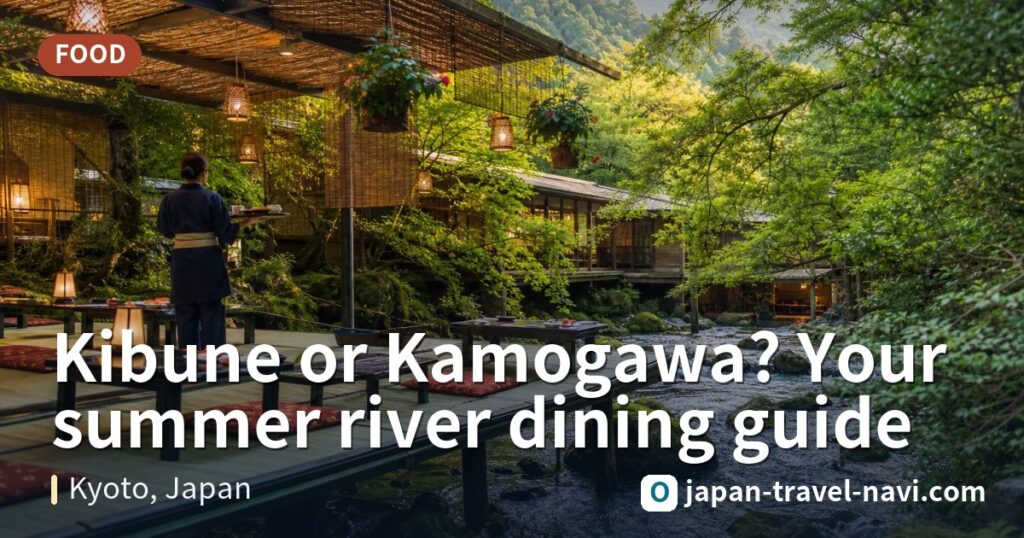
Looking for a refreshing summer meal in Kyoto? If you have a few hours to spare and want to escape the heat, head to Kibune. If you’d rather fit dinner into your city itinerary, Kamogawa is your pick. Plan 3–4 hours for Kibune (lunch is most comfortable), or 1.5–2 hours for Kamogawa (best in the evening). Both require advance reservations, with flexibility for weather changes.
Contents
Kibune vs. Kamogawa: What’s the Difference?
Kibune kawadoko (貴船の川床) sits in the mountains of Sakyo Ward, with seating built directly over a mountain stream. The sound of flowing water and cooler air make it feel noticeably fresher than the city — perfect for daytime dining and genuine heat relief. Kamogawa yūkadoko (鴨川の納涼床), located along the Kamogawa River in Nakagyō Ward near Shijo and Pontocho, showcases city nightlife and river views. Think of Kibune as a mountain escape and Kamogawa as an urban evening out. Decide which experience appeals to you first, then pick your restaurant.
Best Season and Timing
Both river dining venues typically operate from early summer through early autumn, though exact dates vary by restaurant — check official websites before you go. For the coolest experience, a Kibune lunch in midsummer is unbeatable: the city swelters while the mountains stay pleasant. For Kamogawa, arrive in the early evening and dine as dusk falls — far more comfortable than midday heat. The rainy season brings frequent cancellations, so build flexibility into your plans.
Reservations and Weather Cancellations
River seating is outdoors, so rain, rising water levels, or severe weather may force restaurants to move you indoors or cancel altogether. When booking, confirm three things: whether you’ll move indoors if it rains, when the restaurant decides to cancel, and their cancellation or rescheduling policy. If you’re unsure about communicating in Japanese, ask your hotel staff to help confirm details. Have two backup plans: if Kibune cancels, visit Kibune Shrine and its surroundings; if Kamogawa cancels, explore Gion or Kawaramachi and dine indoors instead.
What to Wear and Bug Protection
Kibune is in the mountains and stays cooler than the city, even during the day — bring a light jacket, especially for evening. The walk from the station to restaurants involves uphill paths and stairs, so wear comfortable walking shoes rather than sandals. Some venues require removing shoes, so clean socks are a good idea. Both locations are near water and attract insects. Spray insect repellent before leaving, and long pants or lightweight long sleeves are ideal; ankles are particularly vulnerable to bites. Bring a small bag you can place by your feet — space is limited at riverside seating.
How to Plan Your Day
If you have only one day: start in the city in the morning, take the train to Kibune, enjoy a lunch river meal, spend the afternoon walking around Kibune Shrine, return to the city to rest, then stroll along Kamogawa at dusk. Doing river dining twice in one day is exhausting — pick one or split them across two days, allowing extra time on your Kibune day for flexibility.
Travel Tips
- Getting to Kibune: From the city, take the train to Demachi-Masugata Shojoji Station, switch to the Eizan Railway to Kibune-guchi Station, then catch a bus up the mountain — about 1 hour total. Always check the official timetable for the last departures, especially on the way down.
- Weekend crowds: The bus to Kibune gets packed on weekends and summer afternoons. Leave early and allow extra time for the return bus queue.
- Getting to Kamogawa: Take the Keihan Line to Gojo-Kawaramachi Station or the Hankyu Line to Kawaramachi Station — both are walking distance. Very convenient for returning to your hotel after dinner.
- Arrival timing: Aim to arrive 10–15 minutes before your reservation. Late arrivals may result in cancellation or shortened dining time — contact the restaurant if you’ll be delayed.
- Weather backup: Check the forecast the day before and the morning of your visit. Cancel or switch to an indoor backup plan if heavy rain or thunderstorms threaten — mountain stream dining isn’t worth the risk.
- Safety and luggage: Riverside paths and stairs get slippery when wet. Travel light and bring a small plastic bag for wet gear or jackets.
This article was prepared by the Japan Free Travel Information editorial team. Attractions and transportation details may change — please check official websites and announcements before you depart.
Always refer to the latest official information for current conditions.
This article was translated from our Traditional Chinese edition.