How to Eat Ramen in Kyoto: Chicken Broth, Soy-Based, and Late-Night Strategies
Looking to explore Kyoto beyond tofu cuisine? A ramen meal is perfect to add to your itinerary. Budget about an hour for a single bowl, and allow extra time for queues at popular shops. Consider eating ramen in the late afternoon after visiting temples and shrines, or as a late-night closer after exploring the Kawaramachi area.
Contents
Beyond Kyoto’s Delicate Side: Rich Chicken Broth and Bold Soy-Based Styles
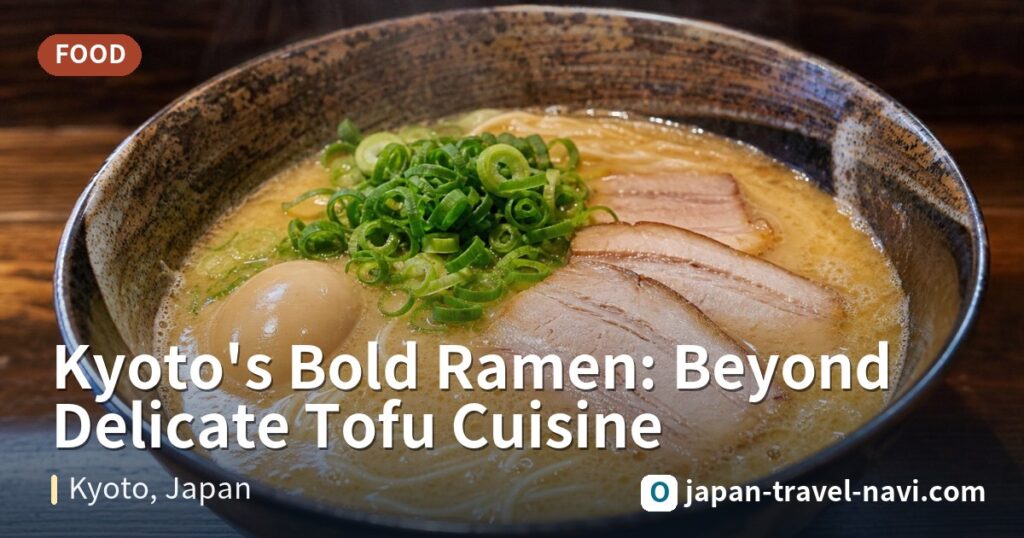
When people think of Kyoto cuisine, they usually picture refined, carefully prepared dishes with subtle flavors. But local ramen takes a different route. The styles broadly divide into two categories: one is chicken broth (tori kotsu), made by simmering chicken bones for hours, resulting in a milky-white color and rich, stew-like texture; the other is soy-based broth, which is deeper and more savory, often topped with pork fat or green onions, delivering bold, direct flavors.
First-time visitors should choose the style that matches their usual preferences. If you’ve eaten several meals of Kyoto kaiseki or tofu dishes beforehand, a rich ramen creates a nice contrast. Rich broths are very filling, so if small portions are available, consider ordering one to avoid spoiling your next meal.
Three Main Areas Where Ramen Shops Cluster
Kyoto’s ramen shops are generally concentrated in three types of locations; choose based on your itinerary:
- Around the Station: Kyoto Station is convenient for grabbing a bowl on arrival or departure days, especially if you’re not carrying much luggage. The station building also has a floor with several ramen shops, but confirm current operations and which shops are open before you go.
- Downtown Shopping Areas: The Shijo and Kawaramachi neighborhoods are packed with restaurants, making it easiest to grab ramen while shopping or picking up souvenirs. Many options are within walking distance, and it’s easy to switch shops on a whim.
- Ramen Hotspot: Ichijo-ji is famous for its high concentration of ramen shops and suits those wanting to compare several places. Take the Eizan Electric Railway from Demachiyanagi Station—the ride is about 10 minutes. Plan this as a half-evening outing, since trying one bowl is the most worthwhile use of time.
Late-Night Ramen: Timing Your Closing Bowl
Japan has a tradition of eating a “closing ramen” (shime no ramen)—a bowl after drinking or eating at an izakaya to cap off the evening. In Kyoto, this demand concentrates around the lively Kawaramachi, Kiyamachi, and Shijo neighborhoods. If your evening plans run late, you can save ramen as your final stop without needing a separate restaurant search.
Two practical points: first, late-night shop hours vary, so check official information or map apps before you go to confirm that day’s status. Second, plan your return transport carefully—note the last departure times for the subway and buses to avoid getting stranded. Late-night, rich broths also tend to make you thirsty, so grabbing a bottle of water before heading back to your accommodation will make a big difference.
Queues, Rain, and Small Adjustments to Your Schedule
Peak times at popular shops usually fall around noon and dinner hours. To skip lines, arrive 30 minutes early or avoid round hours. Some shops hand out numbered tickets; you can browse nearby while waiting, but watch for your number—missing it may mean rejoining the queue.
On rainy days, areas around the station or connected underground streets are most convenient, so you won’t have to carry a wet umbrella far. If you’ve already eaten one rich meal that day, consider trying a soy-based broth for dinner—it’s relatively lighter—and save the creamy chicken broth for another day.
Travel Tips
- Rely on Public Transit: Kyoto’s center is well covered by subway and bus, connecting all major areas. Most ramen shops are within walking distance of stations, so you won’t need a rental car.
- Getting to Ichijo-ji: Take the Eizan Electric Railway from Demachiyanagi Station—about 10 minutes. Check the last train time, especially if going in the evening, and allow time for the return journey.
- Avoid Peak Hours: Around noon and dinner time see the longest queues. Going early or off-peak saves significant waiting time.
- Plan Your Return for Late-Night Meals: Check subway and bus last departure times in advance. If uncertain, book a taxi as backup and confirm official updates.
- Store Your Luggage: Wandering downtown with large bags while eating ramen is awkward. Stash bags at Kyoto Station or your accommodation.
- Payment Methods: Some shops use vending machines to order or accept cash only. Check official details before visiting and carry some cash for peace of mind.
This article was compiled and written by the Japan Travel Information editorial team. Attractions and transport information are subject to change; please verify current details with each facility and official announcements before your trip.
Always confirm the latest official information before visiting.
This article was translated from our Traditional Chinese edition.