Kyoto Matcha Desserts Guide: Strength Levels, Where to Eat & How to Skip Lines
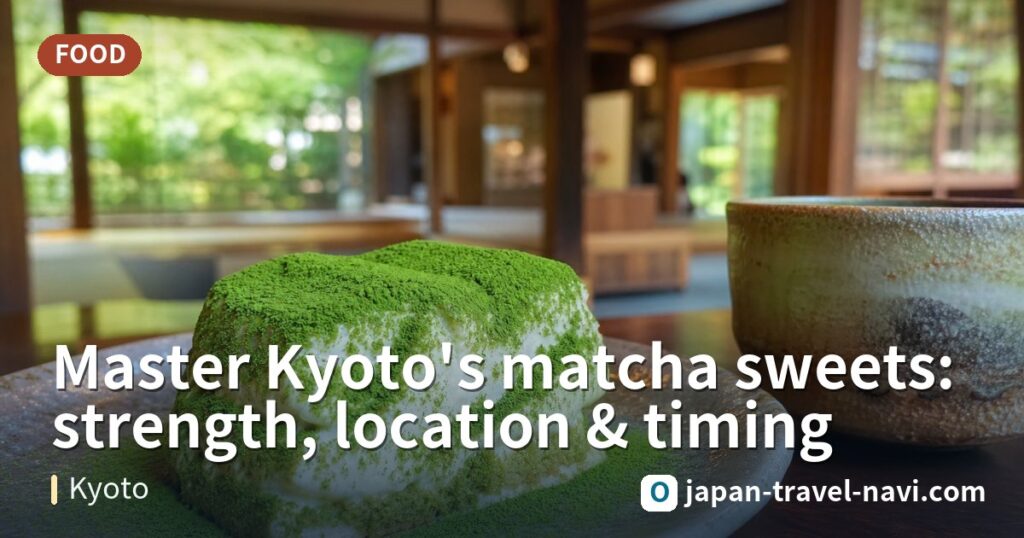
Visitors looking to enjoy matcha desserts properly in Kyoto should plan to spend half a day to a full day. Start by heading to Uji in the morning, return to the city center in the afternoon to explore Gion or the Kyoto Station area, and finish with an evening ice cream or warabi mochi. Weekday mornings and evenings see the fewest crowds, while afternoons—especially during afternoon tea time—tend to have the longest lines.
Contents
Understanding Matcha Strength and Grade
“Strong” (濃) on the menu doesn’t necessarily mean better—it depends on your taste. Matcha desserts with richer flavor have more pronounced bitterness and tea aroma, pairing well with very sweet accompaniments like red beans, white dumplings, or whipped cream. Milder versions are gentler on the palate and easier for first-time matcha eaters. In tea ceremony, there’s also a distinction between thick tea (koicha / こいちゃ) and thin tea (usucha / うすちゃ)—the former has a thicker consistency and heavier flavor, while the latter is lighter and more refreshing. Most desserts are closer to the thin tea profile.
A practical approach is to order the shop’s signature basic option on your first visit, then decide at the next place whether you want something stronger or milder. If the menu lists the tea leaf origin or strength level, ask staff which works best with desserts. If the shop serves pure matcha beverages, consider pairing a dessert with a drink to balance sweetness.
Choosing Between Parfaits, Warabi Mochi & Shaved Ice
Matcha parfaits typically feature layers of matcha ice cream, agar jelly, white dumplings, red beans, and granola—with generous portions. Sharing one parfait between two people plus ordering one warabi mochi is lighter than each getting a full parfait. Warabi mochi has a soft, bouncy texture, usually dusted with soybean powder and drizzled with black honey; matcha versions have a clearer tea flavor and are perfect for a rest break after a tiring afternoon walk.
Shaved ice is typically available during warmer seasons—check the official website before your visit to confirm availability. The portions are large and very cold, so avoid eating it as your last stop to prevent stomach discomfort affecting the rest of your day. For something lighter, choose matcha milk or pure matcha ice cream, which are usually easier to fit into your itinerary than a full parfait.
Choosing Between Uji and the City Center
If you want to see tea-making culture and drink more authentic matcha, plan a visit to Uji. It’s about 30 minutes from Kyoto Station by JR Nara Line, or you can take the Keihan Railway toward Uji. Most shops cluster near the station and around Byodoin Temple within walking distance—budget half a day to explore.
If time is limited or you want to fit matcha desserts into your city itinerary, choose Gion, the Kiyomizu-dera area, or around Kyoto Station. These locations let you combine desserts with sightseeing, and they’re easier to adjust on rainy days. For scenery, Uji is more relaxed; for saving travel time, the city center is more convenient.
Managing Peak Hours and Queues
Popular shops peak after lunch through evening, especially on weekends and holidays. The most reliable strategy is to arrive within the first hour of opening, or skip the afternoon and go straight for the evening slot. Upon arrival, check whether you pick up a physical queue number or can register through an official app or website—methods vary, so check the shop’s latest information before visiting.
If the wait is too long, explore nearby attractions or shops and return when your number is approaching. Have a backup plan: identify two or three alternatives in the area and go to whichever has the shortest line. When visiting with a group, have one person queue while others explore—this saves considerable time.
Travel Tips
- Plan your JR and Keihan schedules before heading to Uji. Morning departure avoids commute and peak tourist hours, making the return trip smoother.
- Around the city center, rely on subway, trains, and walking. Kyoto buses fill up quickly during peak season—prioritize the subway when in a hurry.
- If carrying luggage, store it in lockers near Kyoto Station, then travel light for queuing and shopping.
- Don’t stray far from your queue position. Confirm the waiting system and call system in advance—missing your number may require re-registration.
- Dessert portions are usually large. When visiting multiple shops in one day, consider sharing to avoid getting too full before dinner.
- On rainy days, adjust your itinerary to focus on indoor activities, save Uji for better weather, and allow buffer time for the return journey.
This article was compiled and written by the Japan Travel Free editorial team. Attraction and transportation details may change—please verify with official announcements before departing.
Please follow official updates for the latest information.
This article was translated from our Traditional Chinese edition.