Visiting Kyoto in Low Season: Winter and Rainy Season Guide
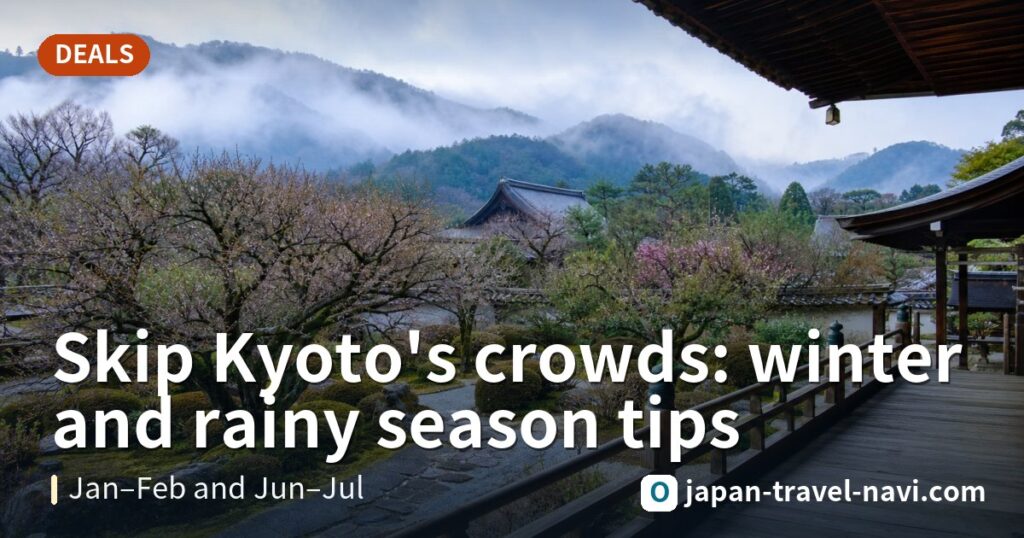
If you prefer fewer crowds and more flexibility with accommodation, Kyoto’s low seasons are ideal: winter (mid-January to February) and the rainy season (around mid-June to early July). Plan 3–4 days, scheduling outdoor sites for morning through afternoon and saving indoor activities for evening. The trade-off is missing cherry blossoms and autumn leaves, plus unpredictable weather.
Contents
Winter: fewer visitors and clearer air, but early sunsets
Winter in Kyoto’s basin climate means cold mornings and evenings with noticeable wind. The benefit: popular sites like Kiyomizu-dera, Fushimi Inari Taisha, and Arashiyama won’t have long lines, and you can photograph freely without waiting for crowds to clear. Kinkaku-ji and Ginkaku-ji occasionally offer snowy views, but snow isn’t guaranteed—don’t plan your entire trip around it.
Schedule outdoor sites from morning through afternoon, then switch to indoor activities by evening—shop near Kyoto Station or find indoor dining in the Gion area. Wear layered, insulated clothing; temple wooden structures and stone paths are especially cold, so pack extra thick socks.
Winter specials: check ahead before planning
Kyoto temples often offer special openings (tokubetsu-kōkai) in low season, allowing access to normally closed buildings, gardens, or treasures for a limited time. The offerings and dates change yearly, and some require advance booking or lottery tickets. Check official websites for the latest information before your trip.
A practical approach: decide which area you’ll stay in first, then arrange temples with special openings nearby on the same day to avoid back-and-forth travel. Use special openings as your day’s main focus and add other sites along the way for a smoother itinerary.
Rainy season: Kyoto has its charm even in rain
The rainy season’s advantage is fewer visitors and strikingly beautiful temple moss gardens and greenery. Rain-soaked Arashiyama and Nijo Castle feel unusually peaceful. The downside is humid conditions, wet shoes, and slippery stone steps and mountain paths.
Plan two versions of each day: a “sunny-day” itinerary and a “rainy-day” one. For rainy days, visit covered spots like Nishiki Market for browsing and eating, or temples like Nijo Castle where you can explore indoors at leisure. Postpone outdoor photography locations during heavy rain—don’t push through it. A compact, easy-to-store umbrella and slip-resistant shoes are more practical than a raincoat.
Accommodation: low season offers flexibility; location matters most
Low-season lodging is usually more available than during cherry blossom and autumn foliage seasons, so prioritize location over room type. We recommend staying near Kyoto Station or along subway lines within easy walking distance: winter gets dark early, and rainy paths are slippery, so proximity to the station saves significant walking.
Note that the year-end and New Year period is an exception—tourist and homecoming crowds make accommodation and transport tight, and some businesses may close. To avoid crowds, choose mid-January onward.
Skipping cherry blossoms and autumn leaves: what are you willing to trade?
Low season means sacrificing the most iconic seasonal scenery in exchange for better pacing and accommodation flexibility. If this is your first Kyoto visit and you’re set on seeing cherry blossoms or autumn leaves, you’ll need to accept peak-season crowds and booking challenges.
If you prefer a leisurely pace and fewer queues—or have already visited during peak season—low season is an excellent choice. Plan 2–3 highlights per day and keep half a day flexible for weather adjustments.
Travel tips
- Even in low season, prioritize trains, subways, and buses: Kyoto city buses can slow down in rain or on busy tourist days, so build buffer time between stops.
- Before buying a one-day or multi-day pass, calculate your actual trips; pass details change, so check official updates.
- Winter sunsets are early—schedule outdoor sites during daylight and confirm return transport routes and final departure times before dark.
- Stone steps and mountain paths are slippery in rain and winter; wear slip-resistant shoes and carry compact rain gear, avoid large luggage on hillside walks.
- With heavy luggage, store it in coin lockers or luggage services near Kyoto Station on arrival/departure days, then travel light.
- Special openings often require advance booking or lottery tickets; schedule them for the morning and prepare a backup site.
This article was prepared by the Japan Travel Navi editorial team. Site and transport information may change; please consult official announcements before departure.
Always verify details with official sources before you go.
This article was translated from our Traditional Chinese edition.