Kyoto Home-Style Cuisine Guide: How to Order at Counter Bars Alone
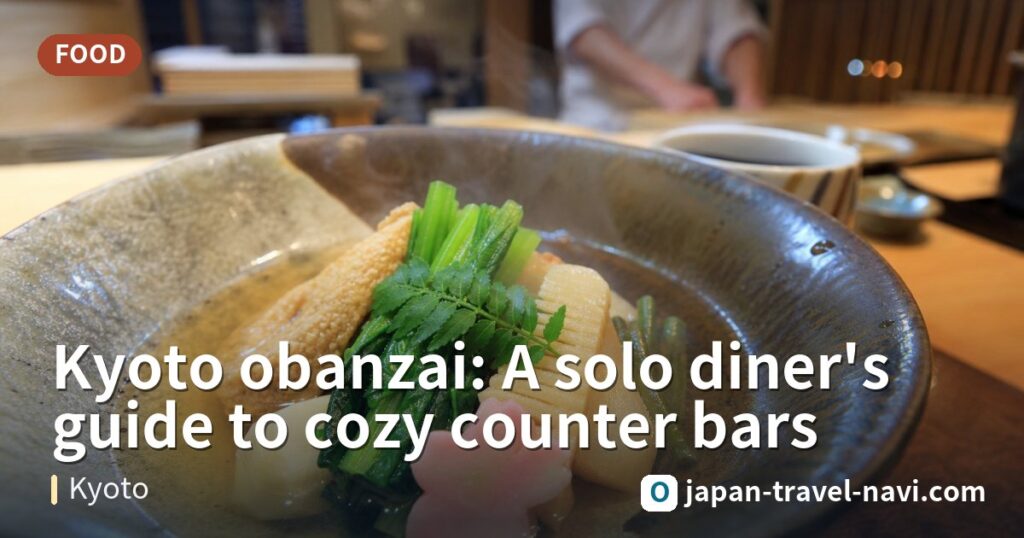
Kyoto home-style cuisine (obanzai) is perfect for travelers who want light, fresh food and prefer to eat at their own pace. Plan for about 1 to 1.5 hours, and aim to arrive early in the evening when the dish selection is fullest and counter seating is easier to find. Here’s what you need to know about these cozy shops: their specialties, how to order, and how to pick the right one.
Contents
Know the season, know what to order
Kyoto home-style cuisine is mostly made with seasonal vegetables, tofu, tofu skin, and dried ingredients in simmered dishes (nimono), cold salads, and vinegar-dressed side dishes. The flavors are subtle, letting the ingredients shine. Spring brings bamboo shoots, summer features eggplant and pike conger, autumn brings mushrooms and chestnuts, and winter centers on turnips and radish. When in doubt, simply ask the staff what their recommended seasonal dishes are today—this is safer than guessing from the menu. After browsing Nishiki Market during the day, take note of what’s in season, then match it with the menu at the restaurant in the evening for a more authentic experience.
How to order at a counter bar: Look at the big plates, then point
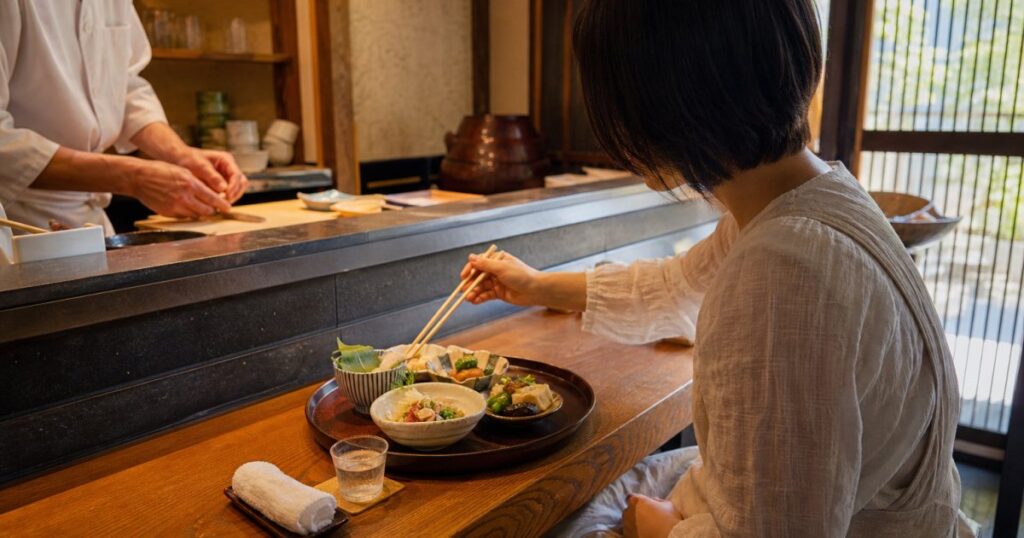
Most counter bars display their daily dishes in large serving plates (oozara) on the counter. Once you’re seated, you can look directly at them and point. On your first visit, order 2 to 3 small dishes or choose a sampler platter (moriaawase) prepared by the chef, then add more as you go—this helps you avoid over-ordering. After sitting down, you’ll usually be served a small appetizer dish (otoshi). Some shops charge a table fee for this; check official information before you go or look for notices posted inside the shop. If you want to know a dish’s name, snap a photo of the menu to translate it, or simply point and say “this one”—staff will understand.
Solo dining: Which shop style feels most comfortable
When eating alone, look for shops with mainly counter seating and a small floor space. Just say “one person (hitori desu)” when you enter. These owners typically stand in front of you, making it convenient to order and ask about ingredients—and there’s no pressure from large group tables. If you’re not confident in your Japanese, choose a shop with photo menus or dishes displayed in front of you. Peak hours fill up quickly, so consider arriving between 5 and 6 p.m., then take a walk or visit another spot after eating. Since shop spaces are compact, leave your luggage at the station or your hotel.
How obanzai differs from izakaya, and how to plan your evening
Simply put: izakayas focus on drinking and serve fried and grilled side dishes to pair with alcohol; home-style restaurants center on small dishes and rice, with alcohol as an accent. Many obanzai shops do serve alcohol, rice, and miso soup, so you can have a full dinner or just a light drink. If you want to eat lightly and not drink much, obanzai is the better choice; if you’re in a group wanting lively conversation, an izakaya is more relaxed. Plan your evening like this: “explore sights during the day, find an obanzai shop in the Kawara-machi or Gion area in early evening, eat, then head back to your hotel to rest”—avoid rushing around late at night.
Travel tips
- Use public transport: The Kawara-machi and Gion areas are served by the Hankyu Railway, Keihan Railway, and city buses. From Kyoto Station, check a map app for transfers in advance.
- No need to drive: These small shops are tucked in narrow alleys with inconvenient parking. It’s best to use trains, subways, or walk.
- Allow plenty of time: Budget 1 to 1.5 hours for dinner, and check the last train time. Don’t leave too late if you plan to stroll afterward.
- Reservations and queues: Popular shops may require reservations or have wait times. Check official information before you go; if you’re not reserving, arrive earlier.
- Rainy day backup: On rainy days, choose a shop near the station or inside a department store to minimize walking through narrow alleys.
- Mind your manners: Alley-side shops have tight spaces. Leave large backpacks and luggage behind, greet the staff simply when you enter, and check if photography is allowed.
This article was prepared and written by the Japan Travel Information Station editorial team. Attraction and transportation information may change; please check official announcements before your trip.
Always follow the latest official information.
This article was translated from our Traditional Chinese edition.