How to Ride Kyoto City Buses: Boarding, Payment, and Dealing with Crowds
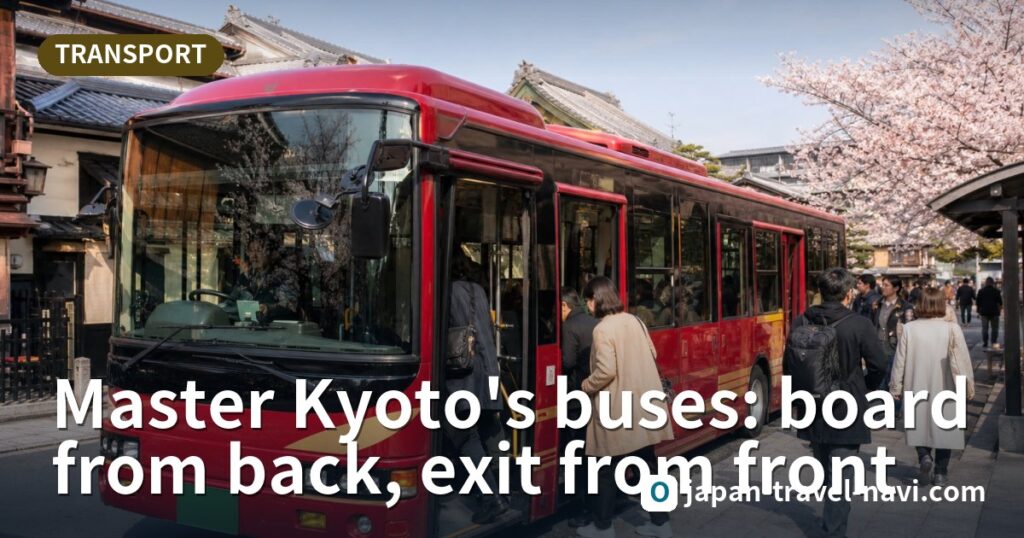
First-time visitors to Kyoto heading to landmarks like Kiyomizu-dera, Kinkaku-ji, and Ginkaku-ji scattered around the city’s edges will almost certainly need to use buses. Plan to spend half a day getting familiar with the system, and try to depart early in the morning to avoid midday tourist crowds. Once you master “board from the back, exit from the front” and learn to read bus stop signs correctly, you’ll avoid a lot of wrong turns.
Contents
- Boarding, Exiting, and Payment: Board from Back, Exit from Front
- Bus Stops and Directions: Confirm “Which Direction”
- Dealing with Crowded Popular Routes: Change the Time, Starting Point, or Mode
- Consider the Subway or Train: Buses Aren’t Your Only Option
- Trip Planning: Don’t Schedule Too Many Bus Routes in One Day
- Transportation and Itinerary Reminders
Boarding, Exiting, and Payment: Board from Back, Exit from Front
Most buses in Kyoto’s city center allow passengers to board from doors in the middle or rear of the bus, then exit from the front door and pay when getting off. After boarding, find a seat or grab a handrail. Move toward the front door as your stop approaches—when it’s crowded, start moving forward two or three stops early.
Payment can be made by tapping a transit IC card (such as ICOCA or Suica, which work nationwide) at the card reader near the front door, or by cash. If you need change, use the change machine on the bus—don’t scramble to pay at the last minute while exiting. Some routes that extend into suburban areas use a system where you take a numbered ticket when boarding and pay based on distance when exiting. If you see other passengers holding numbered tickets, follow the same procedure. Check the official website before your trip for current fares and applicable zones.
Bus Stops and Directions: Confirm “Which Direction”
In Kyoto, bus stops typically appear on both sides of the street with the same name but opposite directions—this is the most common mistake. When reading a bus stop sign, confirm three things: the route number, the final destination, and the next stop. Before boarding, you can also enter your destination into a map app and compare the stop name and route number with the display screen on the front of the bus.
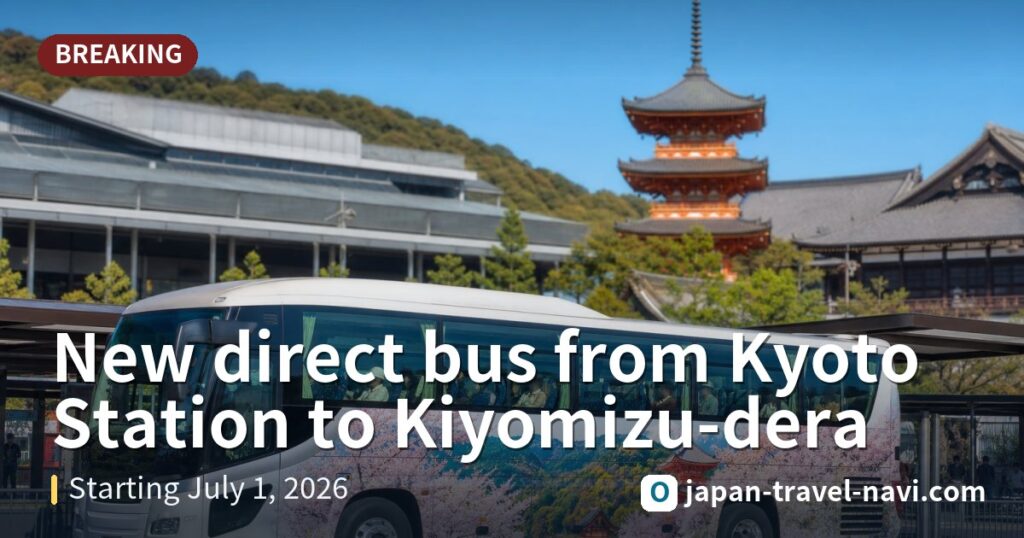
The bus terminal in front of Kyoto Station has several boarding areas, each for different routes. Find your route number first, then queue at the correct boarding area—don’t just board the first bus you see. Buses have audio announcements and screens with information in Chinese and English, but it’s still a good idea to count stops yourself and keep your location turned on in your map app.
Dealing with Crowded Popular Routes: Change the Time, Starting Point, or Mode
Tourist routes passing through Kiyomizu-dera, Gion, Kinkaku-ji, and Ginkaku-ji get especially crowded on weekends and during cherry blossom and fall foliage seasons. There are three ways to cope:
- Leave early: Schedule the most popular attractions for the first stop in the morning, and take less crowded time slots for the return trip.
- Board at the starting point: If you’re staying near Kyoto Station, queuing at the terminal gives you a better chance of getting a seat than waiting at a mid-route stop.
- Skip a stop or two and board later: If you can’t squeeze onto a bus, walk to the next stop or take the subway to the city center and transfer. There’s no need to wait for the next bus if you can’t board.
Travelers with large suitcases should store their luggage at their accommodation or in a station locker before taking the bus—there really isn’t room in the cabin.
Consider the Subway or Train: Buses Aren’t Your Only Option
Kyoto’s subway has only two main lines running north-south and east-west with limited coverage, but they’re great alternatives to buses. For example, the Tozai Line is direct for Nijo Castle, and the Karasuma Line is more reliable than buses for traveling north from Kyoto Station through the city center.
Other attractions are accessible by train: Fushimi Inari Taisha is reachable by JR without needing to transfer to a bus; Arashiyama is served by JR Sagano Line, Hankyu, and Randen, all bypassing traffic; the Gion area is accessible by Keihan Electric Railway or Hankyu to Kawaramachi or Gojo-Kawaramachi, then a short walk. The recommended approach is: use trains and subways for long-distance travel, then take the bus for the final stretch. This saves time and keeps you from being stuck in traffic delays.
Trip Planning: Don’t Schedule Too Many Bus Routes in One Day
Bus routes are affected by traffic conditions, and packing too many attractions into one day easily leads to delays. Aim for a maximum of two to three bus zones per day—for example, the Higashiyama area in the morning (Kiyomizu-dera, Gion), lunch and shopping in the city center in the afternoon, then return to your accommodation by evening. On rainy days, swap outdoor attractions for indoor ones and try to choose destinations accessible by train.
Transportation and Itinerary Reminders
- Before leaving, use a map app to check the route number, boarding stop name, and direction, and take a screenshot to save. This helps when you don’t have a signal at the station.
- Have a transit IC card ready with sufficient balance and tap it when exiting—faster than fumbling for change. If paying cash, have coins ready ahead of time.
- Buses fill up quickly during peak tourist hours (mid-morning and evening return times). Leave early and allow more travel time than you expect.
- Wear your backpack on your front and keep luggage close to you, not blocking aisles or doors, so other passengers can move freely.
- If a bus is too crowded or delayed, switch immediately to an alternative: subway, JR, Hankyu, Keihan, or Randen. Build flexibility into your itinerary.
- Check the official website for last-bus times and any route changes before your trip. This is especially important for evening plans so you know how to get back.
This article is compiled and edited by the Japan Free Travel Information Station editorial team. Attraction and transportation information may change—please check the latest updates from each facility and official announcements before your trip.
Please follow the latest official information for actual conditions.
This article was translated from our Traditional Chinese edition.
Related reading
 Kyoto by foot, bike, and taxi: how to combine them for the best use of time and energy
 Getting to Arashiyama: Comparing JR, Randen, and Hankyu Transit Options
 How to Get from Kansai Airport to Kyoto: Express Trains, Buses, Late Arrivals & Return Options
 Kyoto Metro, JR, Keihan & Hankyu: Complete Transit Guide to Skip Bus Traffic