Hakone Free Pass Guide: Coverage, Starting Points & 1-Day vs 2-Day Options
If you want to ride the mountain railway, cable car, and pirate ship all in one trip, the Hakone Free Pass (箱根フリーパス) is perfect for you. From Tokyo, a same-day round trip requires a full day of planning. If you want to soak in hot springs or visit museums, an overnight stay is recommended. Plan to leave by 9 a.m. to fit in the complete mountain loop.
Contents
What transportation does the pass cover?
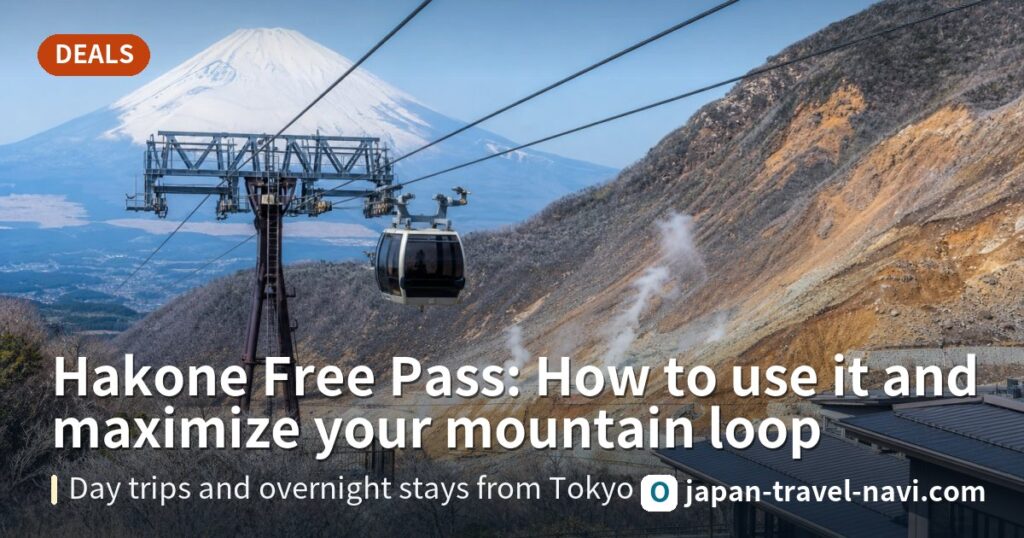
The pass has two main parts: round-trip travel on the Odakyu Railway (小田急電鉄) from your starting point to Odawara, and various local transport within the Hakone area. Local transport includes the Hakone Mountain Railway (箱根登山電車), cable car, aerial ropeway, the Hakone Pirate Ship (箱根海賊船) on Lake Ashi, and designated bus routes. Together, these form the classic Hakone “mountain loop” route.
Note that the Romance Car (ロマンスカー) requires a separate express ticket surcharge—the pass doesn’t include it. Check official sources before departure for the latest information on route coverage and service updates.
How to choose your starting point
Visitors staying around Shinjuku have the simplest option: buy a pass departing from Shinjuku and take the Odakyu line to Hakone-Yumoto without too many transfers. If you want fewer transfers and more comfort, consider adding a Romance Car seat reservation for a shorter travel time.
Visitors staying at Tokyo Station or other stations along the line can take JR or the Shinkansen to Odawara, then buy the “Odawara departure” pass. This version covers only transport within Hakone; you’ll pay separately for JR to Odawara. Before departing, compare the “Shinjuku departure pass” with “JR plus Odawara departure pass” to see which route is more convenient and economical.
How to combine with attraction discounts
In addition to transport, the pass offers discounts at select facilities, including the Hakone Open-Air Museum, sightseeing and hot spring facilities around Lake Ashi. Discount details and participating facilities change—check official announcements for the latest.
When planning, pick 2–3 facilities you really want to visit and arrange your transport route around them. For example, place a museum along the mountain railway line and visit it in the morning, then head to Owakudani and Lake Ashi in the afternoon. If you try to visit every facility, your time gets too fragmented and you’ll only rush through everything.
Same-day return or overnight stay?
Same-day return works best for first-time visitors who just want to see Owakudani and Lake Ashi. Suggested route: Hakone-Yumoto → Gora → Sounzan → Owakudani → Hakone-Machi or Moto-Hakone (by pirate ship), then return to Hakone-Yumoto by bus. The whole trip takes 7–8 hours; don’t cram in extra stops.
Two-day trips are ideal for visitors who want to relax in hot springs and take their time. On day one, complete the mountain loop and stay overnight in Gora or Hakone-Yumoto. On day two, add the museum, Hakone Shrine, or the old town. You won’t need to rush for the last train, and bad weather won’t throw off your plans.
If your budget is tight and you’re only going one day, list the transport you’ll actually use and estimate costs to confirm it’s cheaper than individual tickets. Some visitors use only one or two segments, where separate tickets may be cheaper.
Backup plans for rain or fog
Mountain weather in Hakone is changeable; the aerial ropeway and pirate ship can close due to strong winds or weather. Check official service information the day before and the morning of your trip. If they close, switch to indoor activities like museums or hot spring facilities, or explore the Hakone-Yumoto old town.
Owakudani’s access depends on volcanic gas and other factors—check official notices before finalizing your itinerary.
Travel tips
- Departure time: Leave Shinjuku or Odawara by 9 a.m. The mountain loop requires multiple transfers; an early start prevents getting stuck late in the day.
- Check last trains: Look up return train and bus times in advance and allow flexibility; mountain routes have fewer departures than city services.
- Seats and crowds: Romance Car seats fill up on weekends and during fall foliage season—book early if you want one. The aerial ropeway and pirate ship can also have queues during peak times.
- Weather contingency: When it’s windy and foggy in the mountains, the aerial ropeway and pirate ship may close. Include an indoor attraction as a backup plan.
- Luggage: Travelers with large bags should store them in lockers at Shinjuku or Odawara stations, or arrange hotel delivery. Traveling light makes transfers much easier.
- Purchase and use: Check official sources for the latest on where to buy the pass, validity periods, and usage rules. Keep your pass safe—you’ll need to show it at every facility and when boarding.
This article was prepared by the Japan Enjoy Travel editorial team. Attraction and transport information may change; please verify the latest details with each facility and official sources before your trip.
Please confirm details with official sources before traveling.
This article was translated from our Traditional Chinese edition.
Related reading




More from Tokyo
More Christmas Shopping Pop-up at Ichigaya Station (Toei Shinjuku Line) Nov 25–Dec 26
 Nov 22: 20th Bakuretsu Festival – Airsoft & Tactical Gear Showcase
 Nov 28–29 Ikebukuro Sunshine City Furniture Clearance Sale – Free Entry
 Marunouchi Building’s RIMTAE Debuts Black Tea Blooming Tea with Peony and Chrysanthemum