Save Money on Buses Between Hakata and Tenjin in Fukuoka: Understanding the Discount Zone
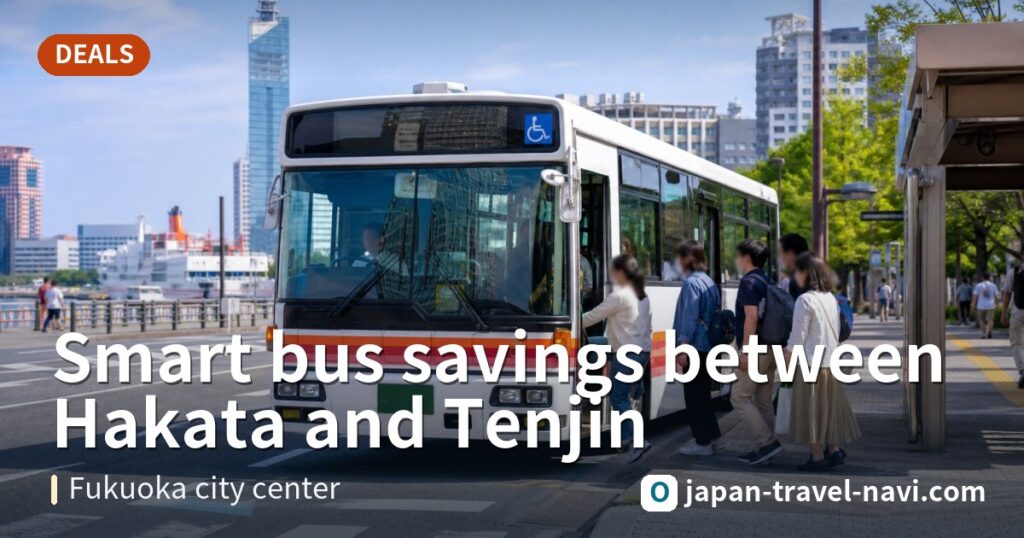
The route between Hakata and Tenjin is perfect for visitors who want to explore multiple stops in the city center without taking the subway every time. The buses in the city center have a special “discount zone” where short trips within the designated area are usually more affordable. Understanding this concept takes just a few minutes, and you’ll save money. We recommend using buses during off-peak daytime hours and allowing about 15–20 minutes of flexibility for travel time.
Contents
First, understand what the “discount zone” is
Fukuoka’s city center has a bus discount zone centered around the Hakata and Tenjin areas. When you board and exit within the zone, you qualify for discounted fares. The key point is “both endpoints must be within the zone.” If you travel beyond the zone boundary or exit outside the designated area, you’ll be charged the regular distance-based fare. The exact stops, routes, and operators covered may change based on official updates, so check the latest information before you travel.
How to tell if you’re within the discount zone
You don’t need to memorize station names—just do three things before boarding:
- Check the bus stop signs or waiting area markers, which usually indicate whether the stop is in the discount zone.
- Look at the route number and destination displayed on the bus front, then check the route map or screen inside the vehicle.
- If unsure, ask the driver when you board: “Is [station name] in the discount zone?” Point to your phone map as you ask.
Most Fukuoka buses board from the rear door and exit from the front door, with payment due at exit. So confirm before getting off whether the next stop is still within the zone—this is more reliable than guessing at boarding. Most buses accept transit IC cards, but support varies by operator, so check official information.
Hakata to Tenjin: bus or subway?
The subway takes about 5 minutes between these two points and is unaffected by traffic congestion, making it the most reliable choice. Buses offer the advantage of stops closer to street-level attractions—for example, boarding near Hakata Bus Terminal (博多バスターミナル), you can travel directly along main streets into the city center, enjoying street views and avoiding stairs and long corridors.
Practical tips for choosing:
- In a hurry or catching a connection: take the subway.
- Pulling large luggage: prioritize the subway. Buses have limited luggage space, especially when crowded.
- Traveling light, want to browse shops along the way, or your destination is near a bus stop: take the bus.
- Rainy day: the subway reduces exposure to rain, though you’ll still walk a bit after exiting. A bus stopping near your final destination can be very convenient.
Peak hour considerations
During rush hours on weekdays (morning and evening) and on holiday afternoons in the Tenjin shopping district, traffic on major city roads increases, and buses may run slower than scheduled and become crowded. Prepare mentally for extended travel time.
If you have an appointment in Tenjin or need to get back to Hakata to catch a train, we recommend:
- Weekday evenings and holiday afternoons: take the subway to avoid congestion.
- Off-peak times: buses offer savings and a relaxing ride.
- Tight schedule (such as catching a Shinkansen): don’t gamble on the bus. Catch an earlier bus or switch to the subway instead.
How to plan a smooth day’s itinerary
A simple approach: depart Hakata in the morning by bus, travel through the city center to Tenjin, and browse until midday. After spending the afternoon around Tenjin, return to Hakata by subway. This way you enjoy the discount and street views on the way there, and avoid evening traffic congestion on the way back—getting the best of both options.
If your day takes you outside the discount zone to more distant areas, you’ll pay standard distance-based fares. We recommend confirming your route and exit station with a map app before departing.
Travel tips
- Decide your priority first: take the subway if you’re pressed for time; choose the bus if you want to enjoy street scenery and are traveling light.
- Confirm the discount zone before boarding: check stop signs and the route map inside the bus. If unsure, ask the driver and confirm again before exiting.
- During peak hours (weekday mornings and evenings, holiday afternoons), allow extra travel time. If your itinerary has fixed time commitments, the subway is safest.
- With large luggage, bus space is limited. Prioritize the subway or store luggage in station lockers instead.
- Have your transit IC card or coins ready. Prepare payment before reaching the front door to avoid blocking other passengers. Check official information on card support before you travel.
- Hold handrails while the bus is moving and don’t stand up and walk around, especially when the bus brakes at intersections. Watch your safety and your luggage.
This article was prepared and written by the Japan Free Travel Info editorial team. Attraction and transportation information may change; please check the latest announcements from each facility and official sources before departing.
Please follow official information for the most current details.
This article was translated from our Traditional Chinese edition.
Related reading




More from Fukuoka
More Kouyou Hachiman-gu Maple Festival in Fukuoka: Nov 28–29 Features Stalls and Performances
 SHOCK EYE “Hundred Landscapes” Photography Exhibition at Hakata Hankyu
 Artwork by Artists with Disabilities on Display at Ohori Park Japanese Garden from Nov 18
 Fukuoka Tower and Ice Skating Park Partner Deal Starting Nov 20, 2026