Biei Blue Pond and Rolling Hills: A One-Day Guide to Sights, Routes, Etiquette and Seasonal Differences

If you want to experience Hokkaido’s pastoral landscape in a single day, Biei is perfect for you. Plan a full day to see the Blue Pond, Shiraige Falls and the rolling hill roads. Early summer through early autumn offers the most stable scenery, and winter has its own charm—just with a different experience.
Contents
- Blue Pond and Shiraige Falls: Visit the pond first, then see the falls on the way back
- Rolling Hill Roads: Divide by region and don’t try to see everything at once
- Private farmland is off-limits: Follow photography etiquette
- Seasonal landscape differences: Adjust your itinerary by season
- Suggested one-day itinerary order
- Transportation and travel tips
Blue Pond and Shiraige Falls: Visit the pond first, then see the falls on the way back
The blue color of Ao-ike (Blue Pond / 青い池) changes with weather and light. On clear, calm days, the water surface is most reflective, making the color and mirror effect most vivid. On cloudy or rainy days, the water appears greyish-green—don’t be disappointed. Try different angles or wait a bit longer; the scenery often shifts and improves.
Shiraige Falls (白ひげの滝) is not far from the Blue Pond. Water flows from crevices in the cliff face, resembling white whiskers, and the river water carries a blue tint. It’s best to visit the Blue Pond first, then head back along the route to see the falls. Spending 1.5 to 2 hours at both locations is ideal. On rainy days, you can shorten your Blue Pond time and focus on the falls and nearby walking trails instead.
Rolling Hill Roads: Divide by region and don’t try to see everything at once
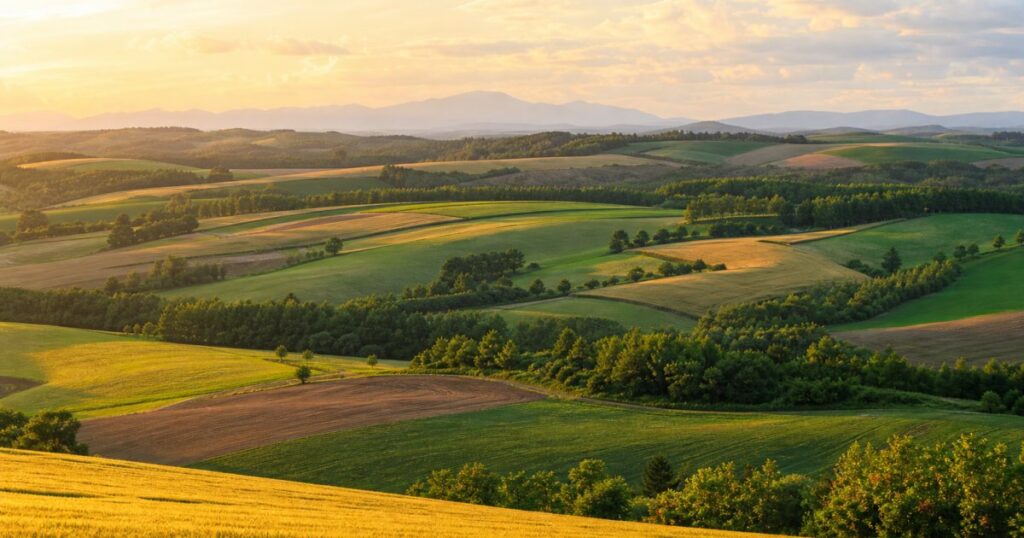
Biei’s rolling hill scenery divides roughly into two areas: the Patchwork Road (パッチワークの路) and the Panorama Road (パノラマロード). The Patchwork Road area features rolling wheat and potato fields with windbreaks, creating a quilt-like pattern. The Panorama Road area offers broader vistas where flower fields and distant mountains form more concentrated scenes.
If you’re not driving, consider renting an electric bike at Biei Station, or booking a half-day private car charter or taxi tour. The hills are steeper than you might expect, and a regular bike takes more physical effort than many realize. If you only have half a day, focus on one area and explore at a leisurely pace rather than rushing both. For rental and booking details, check the latest official information before departure.
Private farmland is off-limits: Follow photography etiquette
Most of Biei’s rolling hills are farmland—not parks. Don’t step into field edges or between crops, and never enter fields or crouch between rows just to photograph them, even if it looks unattended. Crops damage easily and you may introduce germs.
What to do instead: photograph only from the road or designated viewpoints; check regulations before flying a drone and avoid disturbing crops and other visitors; don’t block farm vehicle routes when you stop to photograph; take all trash with you. When you see “No Entry” signs, that’s a clear boundary.
Seasonal landscape differences: Adjust your itinerary by season
In spring, as snow melts, black soil gradually appears in the fields, and the Blue Pond’s water color slowly recovers—good for avoiding crowds. Summer brings the most vivid flower fields and green hills, and also the largest crowds. Start early and avoid the hottest afternoon hours.
Autumn shifts to gold and brown tones, with simpler field lines after harvest—ideal for photography enthusiasts. Winter features snowy landscapes; the frozen Blue Pond becomes snow-covered. If special lighting events are on, check official information for exact dates and times. Winter roads are slippery, so wear shoes with good grip and factor in early sunset when planning.
Suggested one-day itinerary order
Visit the Blue Pond and Shiraige Falls in the morning, have lunch near Biei Station around midday, then explore the rolling hill roads in the afternoon. This way, even if weather changes in the afternoon, you won’t miss the star attraction—the Blue Pond. If the weather is poor that day, shorten your hill time and visit nearby shops and exhibition spaces instead, keeping your schedule flexible.
Transportation and travel tips
- Getting there: From Sapporo, take a JR limited express to Asahikawa, then transfer to the Furano Line to Biei Station. Allow 2 to 2.5 hours one way. Check official timetables.
- Biei Station to Blue Pond: Take a bus or taxi, about 20 minutes. Bus service and frequency vary by season, so confirm current information before departure.
- Moving around the hills: Without a car, an electric bike or half-day private car charter is less strenuous. Consider slopes and wind conditions; switch to a taxi if weather turns bad.
- Drivers: Use designated parking areas; don’t park on roadsides or at farm entrances or access roads, as you may block farm vehicles.
- Timing: Summer has long daylight but peak crowds—depart early. In autumn and winter, it gets dark early; plan to leave by mid-afternoon to avoid driving or biking in darkness.
- Weather backup plan: Rain or fog greatly reduces visibility. If that happens, focus on the Blue Pond and falls, and save hill photography for when weather improves.
This article was compiled and written by the Japan Travel Navi editorial team. Attraction and transportation information may change—please consult the latest official announcements before your trip.
Please refer to the latest official information for current conditions.
This article was translated from our Traditional Chinese edition.