Kyoto by foot, bike, and taxi: how to combine them for the best use of time and energy
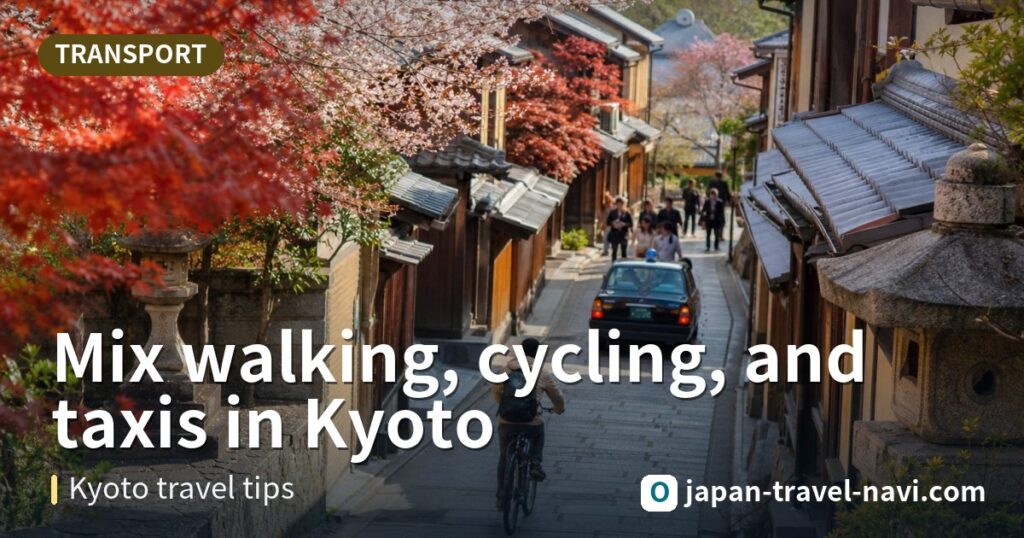
Kyoto’s city center works wonderfully with a “walk-first, bike and taxi as backup” strategy—perfect for travelers who want to skip long bus queues and explore side streets freely. Plan for half a day to a full day of walking daily, then use bikes or taxis for stretches that are hard to cover on foot. This balances both energy and time much better.
Contents
Three walking-friendly neighborhoods
Higashiyama area: Starting from Kiyomizu-dera, walk down Ninenzaka and Sannenzaka streets, pass Kodai-ji and Yasaka Shrine, and end at Gion. Best to arrive early at Kiyomizu-dera, then walk downhill the whole way—plan for half a day to a full day with no backtracking.
Shijo-Kawaramachi, Kawaramachi to Nishiki Market: Flat terrain with many shopping streets. It takes about 2–3 hours to explore on foot. On rainy days, use covered shopping arcades and underground passages.
Ginkaku-ji to Nanzen-ji: Stroll along the Philosopher’s Path (Tetsugaku no Michi), following the canal for about 30 minutes—ideal for a leisurely morning walk when crowds are thin.
Bike rentals: where to use them and what rules apply
Bike rentals work best on flat city-center terrain, such as around Nijo Castle, Kyoto Imperial Palace, and along the Kamo River. Higashiyama has steep hills and many narrow sidewalks, so cycling isn’t recommended there.
Before renting, check these points:
- Whether the return location is the same as the pickup location and what the latest return time is—check official information before you go.
- Keep left, turn on lights at night, don’t ride side-by-side, and don’t check your phone or hold an umbrella while riding.
- Park only in designated bike parking areas; bikes left on the street may be towed away, which is a hassle to recover.
- Before visiting temples, shrines, or restaurants, confirm nearby parking is available; if not, walk instead.
Taxis: when are they worth it?
Taxis make sense in these situations: heavy luggage, rainy weather, traveling with elderly people or children, missing the last bus, or when two sights require multiple transfers and long waits. For example, sightseeing between the northern and eastern parts of the city often involves time-consuming transfers on public transit—taking a taxi for one segment saves a lot of time.
Three ways to catch a taxi:
- Queue at the taxi stand in front of Kyoto Station.
- Hail a taxi on the street when you see the “vacant” (空車) light on.
- Ask your hotel or restaurant staff to call one, or use a taxi app—but make sure to link a payment method and confirm it accepts foreign credit cards.
In Japan, taxi rear doors open and close automatically; you don’t need to pull them yourself.
During cherry blossom and autumn foliage peak seasons, traffic in the city center and Higashiyama gets heavy—taking a taxi for a short distance may not be faster than walking. For 1–2 stops, just walk.
Splitting costs among multiple people: plan ahead
When 3–4 people travel together, the taxi fare per person is usually reasonable—think of it as “paying a little to save time,” especially when rushing to your first sight in the morning or heading back to your hotel at night. Standard small taxis seat up to 4 passengers; if you have large luggage, confirm the trunk has space or book a larger vehicle.
When splitting the fare, have one person pay upfront. Agree on each person’s share before getting in, then settle up that evening using a money-tracking app on your phone. Don’t do the math at the moment you exit. Also confirm payment method (cash or card) before boarding.
Transportation and itinerary reminders
- Check the route first, then pick your transport: Neighborhoods like Higashiyama and the Philosopher’s Path are walking-focused; consider bikes around Nijo Castle and Kyoto Imperial Palace; use taxis for distant spots or those requiring multiple transfers.
- Confirm bike return rules before renting: Return location, latest return time, and whether one-way rental is available—check official information before departing.
- Park bikes only in designated areas: Temples, shopping streets, and roadsides have many no-parking zones; bikes left illegally may be towed.
- Allow extra time during peak season: Cherry blossom and autumn foliage seasons mean congestion in the city center and Higashiyama; build in buffer time for taxi trips, and walk short distances instead.
- Set up a taxi app in advance: Link a payment method and confirm foreign credit cards are accepted; you can also ask your hotel or restaurant staff to call a taxi for you.
- Have a rainy-day backup plan: Include shopping arcades, underground passages, and metro- or bus-accessible sights in your itinerary; switch bike plans to walking or taxi if needed.
This article was compiled and written by the Japan Free Travel Info editorial team. Attraction and transportation details may change—please check official announcements before you go.
Please verify details with official sources before your trip.
This article was translated from our Traditional Chinese edition.
Related reading
 Getting to Arashiyama: Comparing JR, Randen, and Hankyu Transit Options
 How to Get from Kansai Airport to Kyoto: Express Trains, Buses, Late Arrivals & Return Options
 Kyoto Metro, JR, Keihan & Hankyu: Complete Transit Guide to Skip Bus Traffic
 How to Take Ferries in Fukuoka: Noko Island, Shika Island, and Weather Cancellation Guide