Kyoto Traditional Crafts: How to Shop and Experience Kiyomizu Ware to Textiles

Looking for quality Kyoto souvenirs beyond the typical gifts? This guide is for you. Kiyomizu ware, Kyoto fans, washi paper and textiles can be explored in half a day to a full day. We recommend starting in the morning—there are fewer crowds, better light, and more time to chat with shop owners.
Contents
Kiyomizu Ware: Browse Leisurely Around Kiyomizu-dera
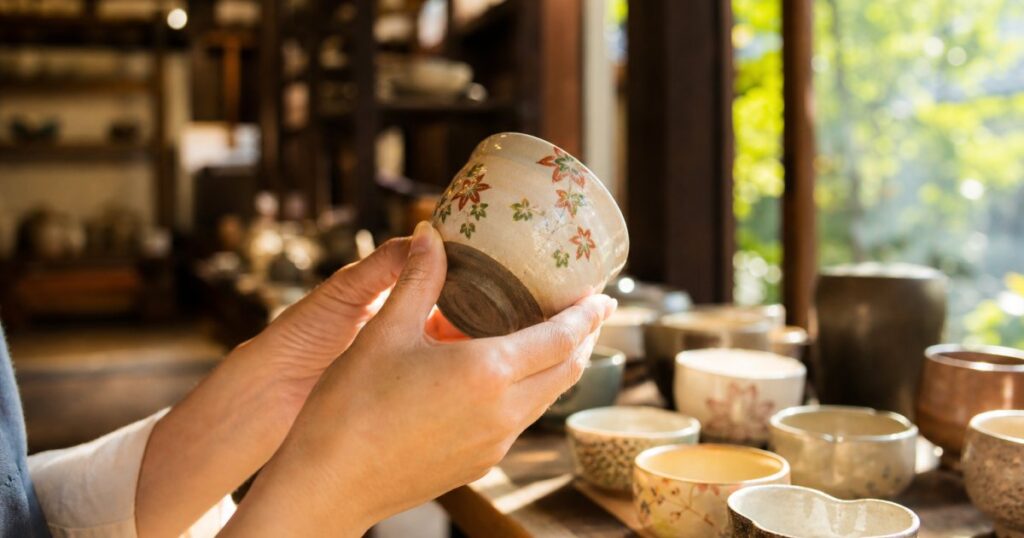
Kiyomizu ware (清水焼) is known for refined glazes and diverse shapes, from tea bowls and small plates to chopstick rests. Many ceramic shops line both sides of the slope around Kiyomizu-dera, making it perfect to browse after visiting the temple. When selecting pieces, pick them up and feel their weight, then check the thickness of the rim and the bottom—smooth feel and a stable base are signs of quality. If you plan to use them daily, ask the shop owner whether items are dishwasher- or microwave-safe, as many hand-painted glazed pieces aren’t. On a tight budget, prioritize small items like chopstick rests and small plates—they’re easier to pack and less likely to break.
Kyoto Fans and Washi Paper: Lightweight and Gift-Friendly
Kyoto fans (京扇子) come in everyday use, tea ceremony or dance use, and decorative types. For summer practicality, choose everyday fans and check that the ribs open smoothly and the face seams are even. Washi paper (和紙) can be found as letter sets, bookmarks, goshuin notebooks (御朱印帳—books for temple stamps), or small lampshades. They’re lightweight and take up minimal luggage space. We recommend feeling the paper’s fiber texture in the shop before deciding whether to give as gifts or keep for yourself. These two categories go quickly—about 20–30 minutes per shop is enough. Plan to visit them after ceramic shops as a relaxing part of your itinerary.
Textiles: Start with Small Items to Avoid Mistakes
Kyoto’s textiles are famous for Nishijin weaving (西陣織) and Kyoto yuzen (京友禪, a dyeing technique). Unless you’re specifically looking for large kimono-related pieces, start with small items like coin purses, drawstring bags and card holders. When selecting, check if patterns are symmetrical, if the weave is tight, and if edges are neatly finished. Flipping pieces over to check the back is also helpful. To dive deeper into textile culture, consider spending half a day in the Nishijin area—some workshops and exhibition spaces are open to visitors. Check official websites before visiting to see if reservations are required.
Hands-On Experiences: Choose by Interest and Time
Common types include pottery painting, fan painting, washi paper making, dyeing and weaving experiences. For first-timers, painting and papermaking are straightforward and take about 1–2 hours to complete, fitting well into a morning or afternoon. Popular experiences often need advance reservations—check official websites for booking methods and language support. Pottery and dyeing pieces may require firing or drying and can’t be taken the same day; ask when reserving whether items can be shipped and how long it takes. On rainy days, indoor workshop experiences are a great alternative activity.
Fragile Item Packing and Shipping: Order Matters
Save ceramics for last in your itinerary to avoid carrying them around. At checkout, ask staff to add extra bubble wrap or cushioning and inquire about special boxes. For the return trip, pack ceramics in carry-on luggage or wrap thoroughly in clothing and place in the center of your suitcase with no empty spaces around them. Fans and washi paper fear pressure and moisture—lay them flat on the top layer of your suitcase or tuck them inside a hardcover notebook. If you’ve bought large pieces or many items, ask shops if they offer shipping services. Confirm costs and methods on the spot.
Travel Tips
- The area around Kiyomizu-dera is best explored on foot. With slopes and many stone steps, wear comfortable shoes. From Kyoto Station, city bus is most direct, but weekends get crowded—consider leaving early or taking the train and walking instead.
- The Nishijin area isn’t near major stations. Use buses or subway plus walking. Check routes and stops before you go to avoid getting lost in side streets.
- Craft shops and workshops have varying closure days and experience times. Check official information before visiting and build in buffer time—don’t overschedule.
- After buying fragile items, hold bags in front of you on crowded buses or trains to avoid bumps and collisions from other passengers.
- Arrive early for hands-on experiences and follow official dress code guidance. If pieces need shipping, keep receipts and contact information.
- On rainy days, switch to indoor workshops, museum-style exhibition spaces, or visit covered shops first—keeping your schedule flexible makes all the difference.
This article was compiled and written by the Japan Travel Navigator editorial team. Venue and transportation details may change. Please check official announcements from each facility before you go.
Always refer to the latest official information for current conditions.
This article was translated from our Traditional Chinese edition.
Related reading
 Hankyu Umeda Main Store Holiday Food Festival: Christmas Treats and Limited Souvenirs from Nov 25
 BEYOND Pop-Up Shop Brings Curated Brands to Kyoto’s Shinpuhkan Nov 27–29
 Disney Stainless Steel Couple Rings Arrive at Canal City Hakata on Nov 15
 Hakata Canal City: LAKOLE × NO COFFEE First Collaboration Nov 13–Dec 3