Getting to Arashiyama: Comparing JR, Randen, and Hankyu Transit Options
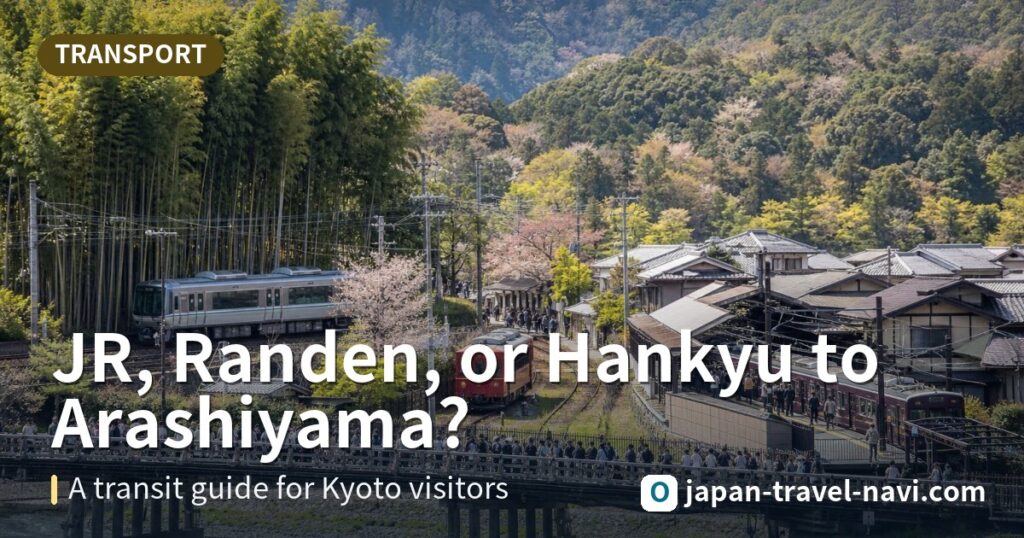
First-time visitors wanting convenience should take JR; those with time to explore scenic spots along the way should choose Randen; travelers from Osaka or the Kawaramachi area should consider Hankyu. Half a day to a full day is plenty to enjoy Arashiyama. Arrive before 9 a.m. and start heading back around 4 p.m. to avoid the heaviest crowds.
The difference between these three transit options isn’t about which is fastest, but rather where you’re coming from and which side of Arashiyama you want to explore first. Here’s a detailed breakdown.
Contents
The Three Routes Compared
- JR Sagano Line: From Kyoto Station to Sagaarashiyama Station, about 15 minutes. It’s the fastest and easiest to navigate. The station is on the north side of Arashiyama—about 10 minutes’ walk to the bamboo grove, then another 15 minutes south to Togetsu Bridge.
- Randen (Arashiyama Electric Railway): Kyoto’s rare tram line, departing from Shijo-Omiya and arriving at the final stop, Randen-Arashiyama Station, in 20 to 25 minutes. It’s slower, but the scenery through the windows is delightful. The station sits in the heart of Arashiyama town, with shops and restaurants right outside.
- Hankyu Railway: From Osaka Umeda or Kyoto’s Kawaramachi/Karasuma area, take the Kyoto Line to Katsura Station, then transfer to the Arashiyama Line to Hankyu-Arashiyama Station. This station is south of Togetsu Bridge, with the bustling shopping area just across. Ideal for those wanting to see the river first. Direct trains may be available during certain times—check official schedules before you go.
Choose Based on Your Starting Point
- Departing from Kyoto Station: JR is the simplest—no transfers needed.
- Staying near Nijo Castle: JR Nijo Station is on the Sagano Line, so you don’t need to backtrack to Kyoto Station. It’s about 10 minutes to Arashiyama.
- Staying in Shijo-Karasuma or Kawaramachi: Taking Hankyu to Katsura for a transfer is convenient, or walk to Shijo-Omiya to catch Randen—treat the train ride as part of your itinerary.
- Coming from Osaka: From Umeda, take Hankyu Kyoto Line to Katsura for a transfer. If you have a JR Pass or prefer JR routes, take it to Kyoto Station and transfer to the Sagano Line.
- Staying in Gion or near Kiyomizu-dera: No direct train service. Buses are slower and prone to traffic. Consider taking the subway or tram to Kyoto Station or Shijo-Kawaramachi first, then choosing one of the routes above.
Randen Stops Worth a Detour
Randen is perfect for hopping on and off. Between Shijo-Omiya and Arashiyama, consider these stops:
1. Saiin Station: You can transfer to Hankyu here. If you’re returning toward Kawaramachi or Osaka, this is a convenient switching point.
2. Uzumasa-Koryu-ji Station: Film enthusiasts can get off here and walk to the Uzumasa movie village area—about half a day of fun.
3. Ninnaji-Ryoan-ji (Koryu-ji-no-Tsuji) Station: This is where Randen’s Kitano Line and Arashiyama Main Line intersect. Transfer here if you want to head toward Kinkaku-ji, or visit nearby Ninna-ji and Ryoan-ji temples. The small stations along the Kitano Line have a nostalgic atmosphere.
4. Randen-Sagastation and Randen-Arashiyama Station: The closer you get to the final stop, the more you’ll feel Arashiyama’s atmosphere. Leave time for walking.
Limit detours to one or two stops, or you’ll end up with a fragmented day and no time to properly explore Arashiyama itself.
Beating the Return-Trip Crowds
Arashiyama is most crowded in the afternoon and early evening, especially at Togetsu Bridge and Randen-Arashiyama Station. Here are practical tactics:
- Use different routes for arrival and departure: For example, take JR on the way there and Hankyu on the way back, or take Randen to Saiin and transfer to Hankyu. This spreads out the crowding at busy stations.
- Leave early: Start heading to the station around 3:30 to 4 p.m. It’s much less hectic than 5 p.m. and later.
- Walk to the next stop: When Randen-Arashiyama Station is packed, walk to Randen-Saga Station—you’ll usually have more seat options.
- Switch to JR if crowds are too heavy: Sagaarashiyama Station has frequent trains, and if you want to head straight back to Kyoto Station, JR is usually your most reliable option.
- Rainy-day backup plan: When it’s wet, Randen tracks become slippery and service may be delayed. Add 20 to 30 extra minutes to your return journey estimate.
Transit and Itinerary Tips
- Check official schedules before you go to confirm train frequencies, last-train times, and any service disruptions for JR, Randen, and Hankyu.
- These three rail companies operate independently—tickets are not interchangeable. If you’re planning multiple segments, verify your IC card’s usable range and whether a day pass is actually worth buying.
- Hankyu-Arashiyama Station is south of Togetsu Bridge, while JR Sagaarashiyama Station is north. The two stations lead to different parts of the attractions, so decide which side you want to start exploring first.
- Arashiyama involves considerable walking. Wear comfortable shoes. Leave your luggage in a locker at Kyoto Station—avoid dragging a large suitcase onto Randen.
- On weekends and during cherry-blossom and autumn-foliage seasons, waits at Randen-Arashiyama Station can be very long. Consider taking Randen in the morning and switching to JR or Hankyu for your return in the afternoon.
- Avoid taking city buses to Arashiyama—they’re affected by road traffic and delays are hard to predict, making it difficult to adjust your itinerary.
This article was compiled by the Japan Travel Information Station editorial team. Attraction and transit details may change. Please verify with official sources and facility announcements before you travel.
Always check official announcements for the latest information.
This article was translated from our Traditional Chinese edition.
Related reading
 Kyoto by foot, bike, and taxi: how to combine them for the best use of time and energy
 How to Get from Kansai Airport to Kyoto: Express Trains, Buses, Late Arrivals & Return Options
 Kyoto Metro, JR, Keihan & Hankyu: Complete Transit Guide to Skip Bus Traffic
 How to Take Ferries in Fukuoka: Noko Island, Shika Island, and Weather Cancellation Guide