Munakata Taisha and Genkai Sea Coast: World Heritage Pilgrimage Route and Transportation Guide
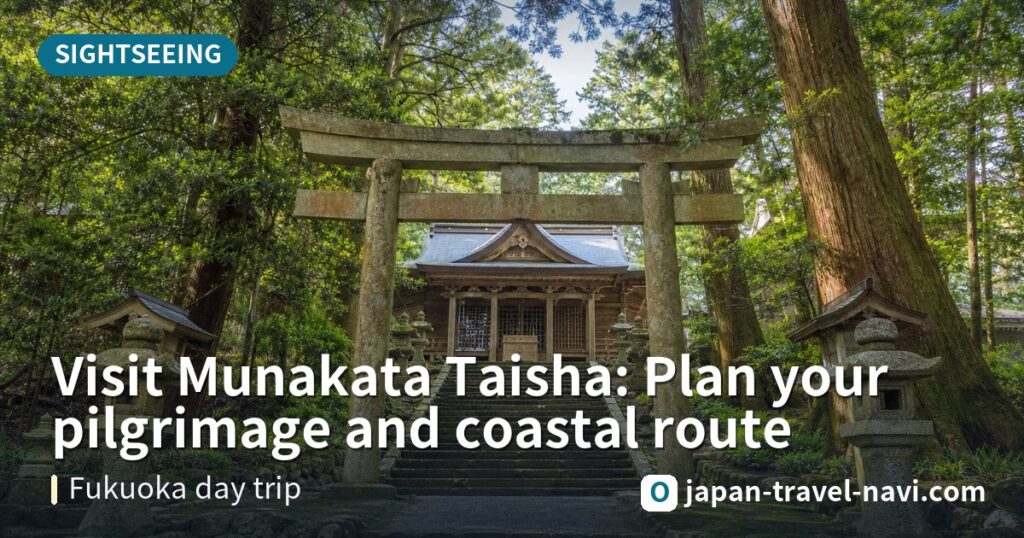
Visitors who want to experience a shrine, seascapes, and local atmosphere in one outing should consider adding Munakata Taisha to their Fukuoka itinerary. Departing from Hakata, plan for a half day to a full day—arriving early in the morning is ideal for fewer crowds and gentler light. The main challenge here is navigating public transit connections and schedules, so sorting out transportation beforehand will make the entire trip much smoother.
Contents
World Heritage Background: The Three-Shrine Unity
Munakata Taisha is not a single shrine but rather a complex of three shrine divisions: Hetsutsu Shrine (辺津宮) on the mainland, Nakatsu Shrine on Okinoshima Island, and Okitsu Shrine (沖津宮) on the remote island of Oki-no-shima far offshore. Oki-no-shima has long been considered sacred and is off-limits to general visitors, so when visiting you’ll experience the “mainland plus Okinoshima Island” two-part pilgrimage. Understanding this structure beforehand means you’ll know you’re visiting part of a larger faith system and won’t mistake one shrine visit for the complete experience.
Hetsutsu Shrine: Pilgrimage Order and Time
Hetsutsu Shrine is most visitors’ first stop. Begin by paying respects at the main hall, then follow the signs toward the Takamiya Festival Grounds (高宮祭場) at the rear—it preserves an ancient sacred atmosphere and features a quiet, easy forest path. Next, plan time for the Sacred Treasure Museum (神宝館), which displays ritual artifacts recovered from Oki-no-shima and is key to understanding the site’s World Heritage significance. It’s also a good place to linger if the weather is rainy or too hot. Allow 1.5 to 2 hours total. Wear comfortable shoes and bring water if visiting in summer.
Transportation: The Challenge is the “Final Leg”
From Hakata, take the JR train to Togo Station (about 40 minutes), then transfer to a bus heading to Munakata Taisha—this is the most straightforward route. However, bus schedules are often infrequent, and if you plan to continue to Kanmitsu Port (神湊) to catch a ferry, you’ll need to confirm transfer times carefully. Three recommended steps:
- Before departing, look up “train arrival times” and “bus departure times” and take screenshots
- Confirm return bus schedules as well, not just outbound times
- Build in about 30 minutes of buffer time to avoid a long wait if you miss a connection
Check official resources for the latest schedules and routes before your trip.
Genkai Sea Coast: Taking the Ferry from Kanmitsu to Okinoshima Island
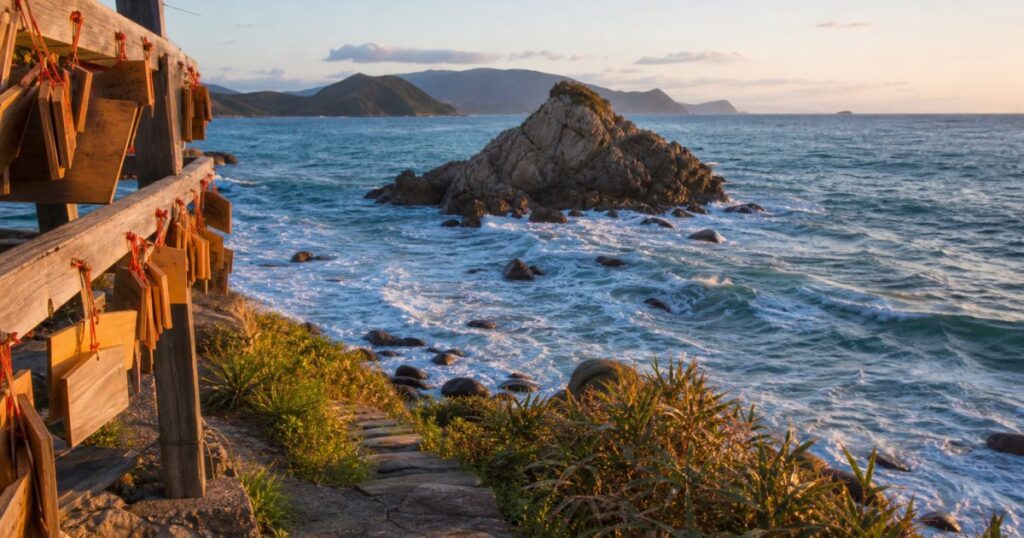
To include coastal scenery in your itinerary, the best option is to take the ferry from Kanmitsu Port to Okinoshima Island—a single journey takes about 25 minutes and offers expansive views of the Genkai Sea from the boat. Once on the island, you can visit Nakatsu Shrine and also use the remote worship hall (遙拜所) for Okitsu Shrine; on clear days, you can offer prayers toward Oki-no-shima. Plan for a morning or early-afternoon ferry departure and spend 2 to 3 hours exploring the island before returning to the mainland in the afternoon. Strong winds or rough seas may alter ferry schedules, so on rainy days or poor sea conditions, focus on Hetsutsu Shrine and the Sacred Treasure Museum for a safer experience.
Route Combinations and Rental Car Considerations
Using only public transit, you can follow the “Hakata → Togo Station → Munakata Taisha → Kanmitsu Port → Okinoshima Island → Return to Hakata” route comfortably in a day. If you’d like to visit additional spots, consider renting a car and connecting coastal points along the Munakata and Fukutsu areas—for example, after Munakata Taisha, head toward the coast to see the seaside scenery around Tsuyazaki, or extend further to nearby Miyaji Dake Shrine. This approach offers more flexibility but requires self-management: schedule your must-see sites in the morning and keep the afternoon open-ended to decide whether to add stops.
Transportation and Itinerary Reminders
- Decide on transportation first: If you’re unfamiliar with local roads or prefer not to rent a car, stick with JR plus buses. Consider a rental car only if you want to chain multiple coastal attractions—you don’t have to choose just one method.
- Confirm schedules and last departures: Bus and ferry schedules are limited. Check outbound and return times before departure to avoid getting stranded at remote stops.
- Research parking if self-driving: During peak seasons or holidays, shrine parking lots can get crowded. Arrive early and check official parking information beforehand.
- Watch for coastal wind conditions: On coastal roads, strong winds, rain, or fog reduce visibility. Slow down and shorten your itinerary if needed—never rush in poor conditions.
- Plan a rainy-day backup: In bad weather, focus on Hetsutsu Shrine and the Sacred Treasure Museum, and either reschedule or skip the island and coastal scenery depending on conditions.
- Observe shrine etiquette: Stay quiet within the shrine grounds. Check signage before taking photos—some areas may be off-limits. Review official guidelines before you go.
This article was prepared and written by the Japan Travel Information Station editorial team. Attractions and transportation information may change; please check the latest official announcements from relevant facilities before your visit.
Please verify with the latest official announcements.
This article was translated from our Traditional Chinese edition.
Related reading


More from Fukuoka
More Kouyou Hachiman-gu Maple Festival in Fukuoka: Nov 28–29 Features Stalls and Performances
 SHOCK EYE “Hundred Landscapes” Photography Exhibition at Hakata Hankyu
 Artwork by Artists with Disabilities on Display at Ohori Park Japanese Garden from Nov 18
 Fukuoka Tower and Ice Skating Park Partner Deal Starting Nov 20, 2026