Kibune and Kurama Day Trip: How to Ride the Eizan Railway, Assess Hiking Fitness, and Dress for the Season

For visitors looking to escape the crowds and take a peaceful mountain walk, Kibune and Kurama make an ideal one-day itinerary. You can cover both areas with just train and bus rides plus short walks in about half a day; to hike the full mountain path between them, plan for a full day. Summer mornings offer the coolest conditions, while autumn foliage season requires an early start to avoid peak crowds.
Contents
- How to Ride the Eizan Railway: Depart from Demachi Masugata Shoji Station
- Mountain Trail Between the Two: Assess Your Fitness Level First
- Summer Cooling: Kibune’s Valley and Kawadoko Riverside Dining
- Autumn Foliage: Highlights and Crowd Management
- Mountain Weather and Clothing Reminders
- Transportation and Itinerary Tips
How to Ride the Eizan Railway: Depart from Demachi Masugata Shoji Station
From Kyoto Station, take the subway or bus to Demachi Masugata Shoji Station, then transfer to the Kurama Line of the Eizan Railway (叡山電鉄). The single journey usually takes about 30 minutes. The line branches between Kibune-guchi Station and the terminal at Kurama Station, so decide your route in advance:
- Easy route: Get off at Kibune-guchi Station, take a bus or walk up to Kibune, explore, then return to Kibune-guchi Station and ride to Kurama.
- Hiking route: Ride directly to Kurama Station, hike the mountain path from Kurama-dera temple down to Kibune, then take the bus back to Kibune-guchi Station.
On weekends and during the foliage season, the platform and train cars at Demachi Masugata Shoji Station will be crowded; arriving early in the morning is recommended. The walk from Kibune-guchi Station to Kibune Shrine is a continuous uphill climb of about 30 minutes; for those with average fitness, taking the bus is easier and takes about 5 minutes.
Mountain Trail Between the Two: Assess Your Fitness Level First
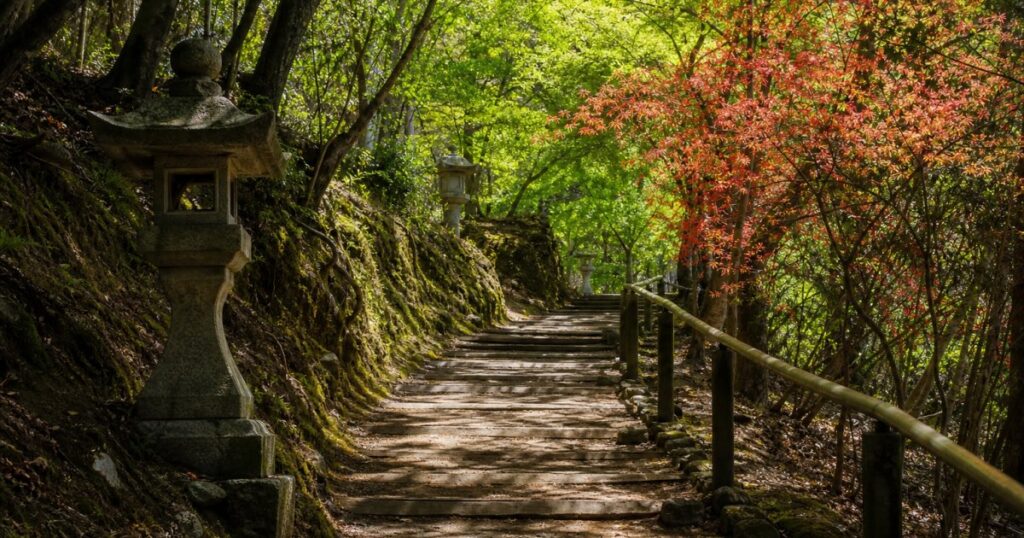
The mountain path between Kurama-dera and Kibune is a hiking trail with ups and downs. You’ll encounter sections with exposed tree roots called “Kine-michi (木の根道)” where the ground is uneven—you need to watch your footing as you walk. From Kurama Station, including time to visit the main hall and rest stops, the full route takes about 2 to 3 hours; those who walk slowly or like to take photos should allow 3 hours or more.
Here’s how to assess:
- If you normally walk continuously for 1 to 2 hours, you can tackle the full trail.
- If you have knee issues, are bringing elderly relatives or children, consider exploring only the first half of Kurama-dera or visiting just one location.
- It’s best to hike from Kurama toward Kibune; the second half of the mountain path is mostly downhill, which is less taxing.
- Start descending by 3 p.m. at the latest; daylight fades quickly in the mountains, so avoid hiking mountain paths in the late afternoon or evening.
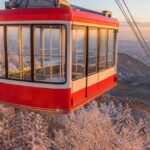
Between Kurama-dera’s gate and main hall, you can choose to walk or take the cable car; check the official website before departure for the latest operational information.
Summer Cooling: Kibune’s Valley and Kawadoko Riverside Dining
Kibune sits in a mountain valley, and summer temperatures are cooler than central Kyoto. Walking along Kibune River is especially pleasant. In summer, “kawadoko (かわどこ)” dining—where seating is set up above the stream—is available but usually requires advance reservation. Peak days and lunch times fill up quickly. Check the official website before visiting to confirm operating periods and reservation methods.
The recommended order is: start with Kibune Shrine in the morning, walk slowly up the stone steps of the shrine approach, arrange lunch at midday, then move toward Kurama in the afternoon. Kibune Shrine’s “water divination fortune (水占みくじ)” is famous—the text appears only after you dip the paper in sacred water, so consider leaving time to try it. If afternoon thunderstorms occur, rest under the shrine’s eaves or take an early bus back to the city center.
Autumn Foliage: Highlights and Crowd Management
The stone lanterns lining Kibune’s shrine approach combined with maple leaves create the most popular autumn scene. The Eizan Railway line also has sections with rows of colored foliage; during foliage season, trains often slow down so passengers can enjoy the view through the windows. Check the official website for actual details. Foliage timing varies each year but typically peaks in mid to late November; check the year’s foliage forecast before deciding your dates.
Three strategies to manage crowds:
- Choose weekdays when possible and arrive early in the morning.
- Buses from Kibune-guchi Station to Kibune can have long queues during peak times; allow 30 minutes or more as a buffer.
- If evening illumination is offered during the foliage season, confirm details with the official website and check the last train and bus times in advance.
Mountain Weather and Clothing Reminders
Mountain weather changes faster than in the city; it can be sunny downtown but foggy or rainy in the hills. Recommended clothing:
- Shoes: Non-slip athletic or hiking shoes are essential; avoid sandals or dress shoes. Stone steps and tree roots become very slippery after rain.
- Clothing: In summer, bring a light jacket for cool early mornings, evenings, and near the river valley; in autumn, use layering to adjust easily.
- Rain gear: A lightweight rain jacket is more convenient than an umbrella on mountain trails.
- Summer: Bring insect repellent and enough water; vending machines aren’t guaranteed on the trail.
If heavy rain is forecast on your travel day, skip the mountain hike and just take the train to Kibune for a shrine visit before returning; safety is more important than completing the itinerary.
Transportation and Itinerary Tips
- Use trains and buses: Kibune and Kurama are connected by the Eizan Railway and buses; self-driving is not recommended. Mountain roads are narrow and prone to traffic on weekends. Check the official website for the latest information on traffic restrictions and parking.
- Start early: Especially on weekends and during foliage season, board the train from Demachi Masugata Shoji Station in the early morning to avoid long bus queues.
- Check the last train: After descending, allow time to reach Kibune-guchi or Kurama Station, and look up the final train and bus times in advance to avoid being stranded in the mountains.
- Pack light: Mountain trails aren’t suitable for luggage. Store large bags in coin lockers at Kyoto Station or your hotel.
- Monitor the weather: Check the mountain forecast on the morning of your trip. Cancel the mountain hike if heavy rain, thunderstorms, or strong winds are forecast.
- Hike with others and prepare: Cell phone signals may be unreliable on the trails; travel with companions and download offline maps in advance. Build flexibility into your schedule.
This article was prepared by the Japan Travel Information Station editorial team. Attractions and transportation information may change; please check the latest announcements from each facility and official sources before departure.
Please verify the latest official information before your visit.
This article was translated from our Traditional Chinese edition.