How to Eat and Choose Mentaiko in Fukuoka: Spice Levels, Grades, and Taking It Home
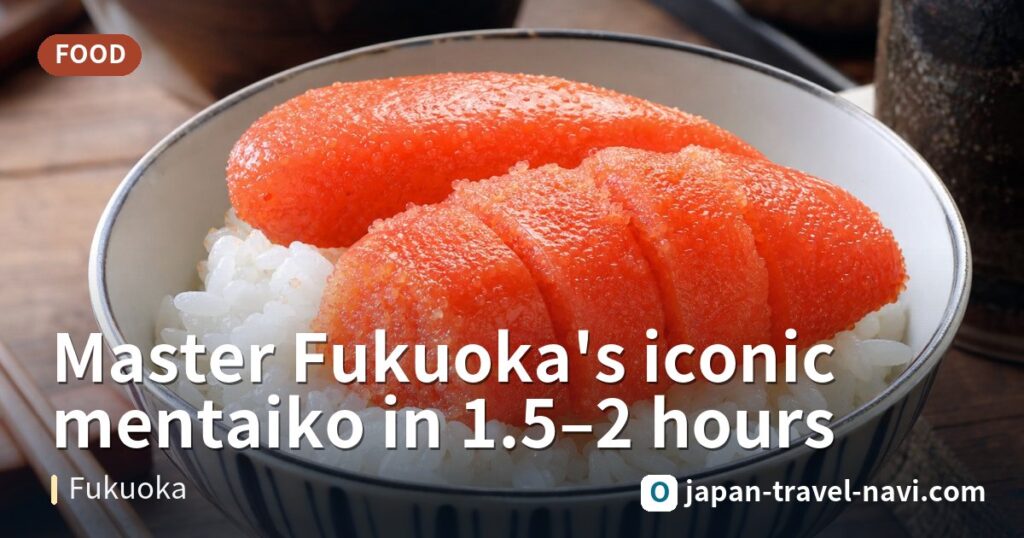
Visitors who want to experience Fukuoka’s mentaiko (spicy pollock roe) strategically should plan about 1.5–2 hours total: one meal featuring mentaiko during breakfast or lunch, plus time to buy souvenirs. Eat in the morning or midday set-meal hours, and save shopping for the end of your trip before leaving Fukuoka—it’s easiest to keep everything cold this way.
Contents
Getting to know the different ways to eat mentaiko
Mentaiko is made from salt-cured pollock roe marinated with chili peppers and seasonings. The simplest way is “whole and plain” (整条原味)—cut a small piece and eat it with white rice to appreciate its salty, slightly spicy natural flavor. Once you’re familiar with the plain version, try variations: mentaiko rolled omelet (明太子入りの卵焼き), mentaiko cream pasta, mentaiko French bread, tea-infused rice, and grilled mentaiko—a common izakaya favorite.
For first-timers, order the plain version with rice first, then try one cooked dish so you can compare the raw and heated textures. After grilling, the outside firms up while the inside stays soft, and the spice becomes gentler. If you’re sensitive to heat, start with the grilled version.
Spice levels and grades: check the label, not just the name
Different brands label spice levels differently—common categories are mild, slightly spicy, medium spicy, and very spicy. Even if two brands both say “medium spicy,” they can taste quite different. When in doubt, ask staff for a recommendation or ask for a sample before buying. Generally, higher spice levels pair better with plain rice or alcohol, while mild versions work well in rice balls, mixed with noodles, and are more kid-friendly.
Grades fall into two simple categories:
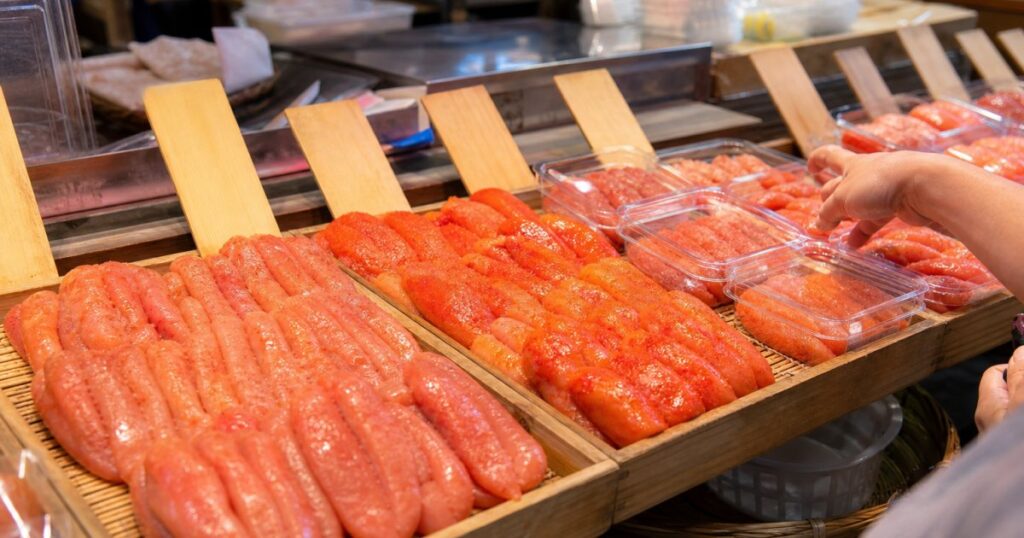
- Whole and intact: beautiful membrane and plump roe, ideal for gifts or eating as the main attraction.
- Broken or chopped “kire-ko” (切れ子): similar taste but imperfect appearance, great for mixing into home-cooked rice or dishes at home, often in a tube for easy squeezing.
Also check the salt content and expiration date. High-salt versions require less per serving so you don’t overpower your rice.
Breakfast and set meals: how locals eat mentaiko daily
Many hotels in Fukuoka serve mentaiko at breakfast, usually pre-cut into small pieces with white rice or rice porridge. If you want to try several varieties, go between 8–9 a.m. when the selection is fullest.
For lunch, look for mentaiko set meals near Hakata Station or Tenjin. Some restaurants include mentaiko, miso soup, and side dishes all in one set, with unlimited rice refills. The best approach: take one bite of plain mentaiko first, then eat it with nori (seaweed) or takana (pickled mustard greens) together. Don’t spread it all over your rice at once, or you’ll find the beginning too salty and the end boring. On rainy days, the shopping complex near Hakata Station offers convenient covered access—complete a meal and shopping without getting wet.
Buying mentaiko: compare before you decide
Hakata Station and Fukuoka Airport have dedicated mentaiko shops with wide selections and easy comparison. The suggested process: taste first, pick your spice level, decide between whole or kire-ko, then check expiration date and packaging.
For gifts, choose whole pieces in a nice box; for personal use, kire-ko in tubes is practical and travel-friendly. When purchasing, ask staff about refrigeration versus freezing and how long it will last after leaving the shop, so you can pack accordingly.
Taking it home: keeping it cold, customs, and quarantine
Mentaiko is a processed seafood product. Before bringing it across borders, confirm three things:
1. Keeping it cold: Choose vacuum-sealed or frozen packaging, ask the shop for an insulated bag and cooling packs, and buy as close as possible to your departure—ideally the same day you leave Fukuoka.
2. Airline regulations: Rules for cooling packs and dry ice vary by airline. Check your airline’s official guidelines before departure.
3. Customs and quarantine: Regulations for seafood and processed meat products differ by country. Check your destination’s customs and quarantine agency official rules before you leave, and declare if required.
Once home, freeze it immediately. When ready to eat, thaw slowly in the refrigerator—never use hot water or a microwave—to preserve texture and flavor.
Travel tips
- The subway from Hakata Station to Fukuoka Airport takes under 10 minutes. On departure day, buy your mentaiko at Hakata Station, then head to the airport to minimize cold-storage time.
- If eating or shopping in both Tenjin and Hakata areas, dine at the more distant location first, then return to Hakata Station for purchases so you don’t have to carry luggage around.
- After buying in the city, don’t leave it sitting outdoors or in a stuffy locker. Use an insulated bag, get back to your accommodation to refrigerate quickly, or go straight to the airport.
- If checking luggage, confirm cooling pack and dry ice rules first. If carrying it on, allow extra time for security and queuing at the airport.
- If shopping on your departure morning, budget about 30 minutes as a buffer to avoid delays from lines or checkout that could affect your transport schedule.
- Shop hours and quarantine rules may change—check official sources for the latest information before you go.
This article is compiled and written by the Japan Free Travel Information Station editorial team. Venue and transportation information may change; please confirm the latest details with official sources before your trip.
Please refer to the latest official announcements for actual conditions.
This article was translated from our Traditional Chinese edition.
Related reading



More from Fukuoka
More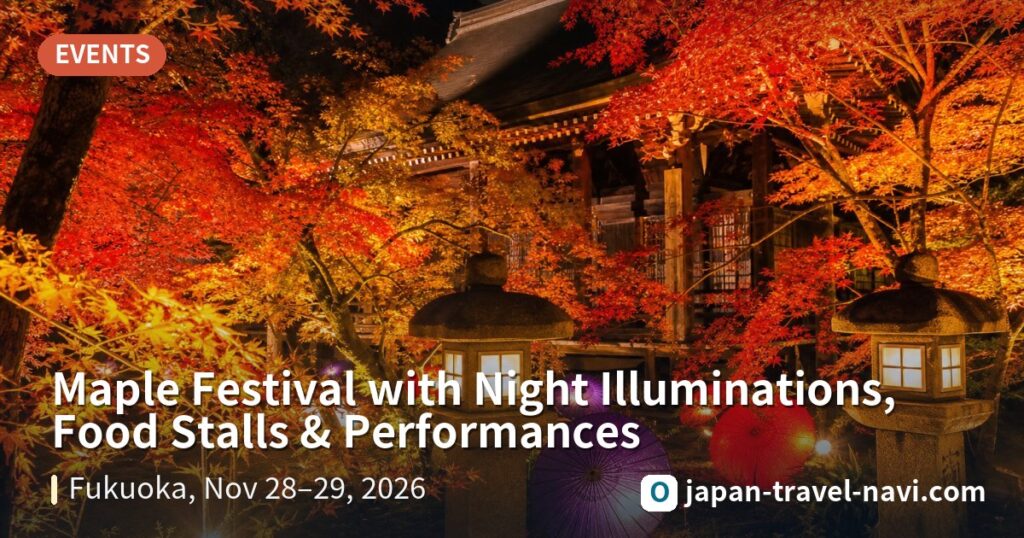 Kouyou Hachiman-gu Maple Festival in Fukuoka: Nov 28–29 Features Stalls and Performances
 SHOCK EYE “Hundred Landscapes” Photography Exhibition at Hakata Hankyu
 Artwork by Artists with Disabilities on Display at Ohori Park Japanese Garden from Nov 18
 Fukuoka Tower and Ice Skating Park Partner Deal Starting Nov 20, 2026