How to Photograph Kinkaku-ji’s Reflection: A Half-Day Route Connecting Ryoan-ji and Nin-na-ji

Kinkaku-ji is ideal for travelers who want to photograph the golden pavilion’s reflection without stopping at just one sight. Plan for half a day to a full day and connect Kinkaku-ji, Ryoan-ji, and Nin-na-ji in a single route. The best approach is to visit Kinkaku-ji in the morning, head west in the afternoon, and take the Randen Tramway to Arashiyama in the evening.
Contents
Photographing the Reflection: Watch the Weather and Wind
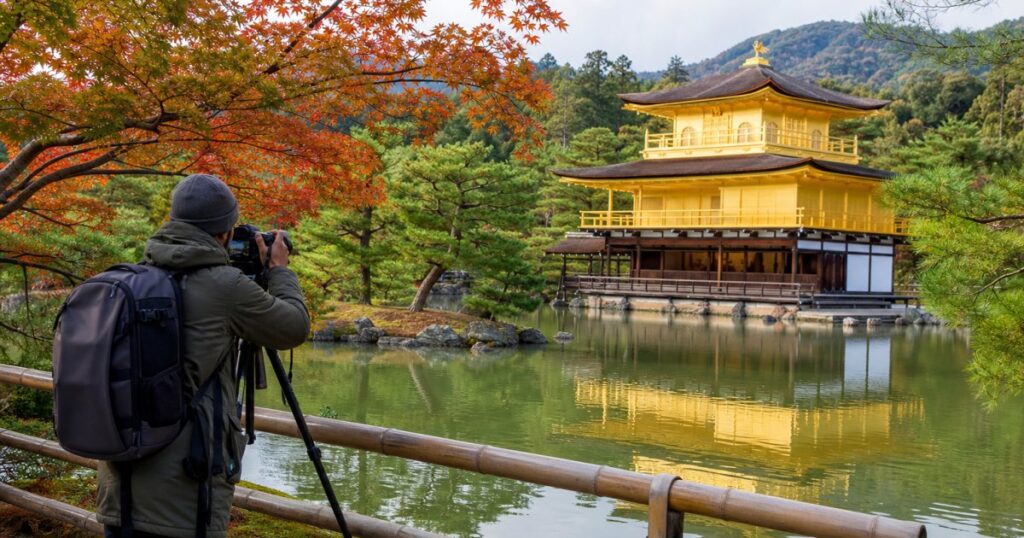
The key to a clear reflection of the golden pavilion is “no wind.” When the wind blows, ripples form on the Mirror Lake’s surface, and the reflection scatters—no amount of sunlight can fix it. Check the forecast the day before and choose a day with light winds and bright skies. Clear days or light cloud cover both work.
Just after rain, when clouds are clearing, the pool surface is clean and the gold appears especially vivid—this is an ideal time. Photography spots along the pool are limited, and visitors move slowly along the viewing route, so don’t expect to stand in one spot for extended shooting. Scout your angles ahead of time, take your shots when it’s your turn, then continue along the route. You can circle back later to capture any additional angles.
Connecting Three Temples: Kinkaku-ji → Ryoan-ji → Nin-na-ji
All three temples are located on the west side of Kyoto’s northern district and can be easily connected by walking or short transit rides. Kinkaku-ji takes about 1 hour to explore. From Kinkaku-ji to Ryoan-ji is approximately 20–30 minutes on foot; if you prefer not to walk, you can take a bus, but check routes and schedules on the day.
The highlight at Ryoan-ji is the rock garden (karesansui). Sit on the veranda and contemplate the garden quietly for 20–30 minutes rather than rushing through after photographing. Next, head to Nin-na-ji, about 15 minutes on foot, or take the Randen Tramway and get off at Omuro Nin-na-ji Station. Nin-na-ji’s buildings and gardens cover a large area, so allow about 1 hour to explore comfortably. Finally, take the Randen Tramway from Omuro Nin-na-ji Station—about 20 minutes will get you to Arashiyama, flowing naturally into the next part of your itinerary.
Alternative Routes When Buses Are Overcrowded
City buses around Kinkaku-ji can develop long queues during peak seasons and holidays, and cars become packed. Here are two alternatives:
- Reverse the route: Take the Randen Tramway to Omuro Nin-na-ji Station and start from Nin-na-ji, then head toward Ryoan-ji and Kinkaku-ji. This way you avoid the first wave of crowds heading to Kinkaku-ji. When you leave Kinkaku-ji, you can take a bus depending on conditions, or walk to Kitano Hakubai-cho Station to switch to the Randen Tramway.
- Use the subway: Take the Kyoto Municipal Subway Karasuma Line to Kitaoji Station, then transfer to a bus or walk to connect. This avoids the crowds on direct buses from Kyoto Station.
If the bus queue is already very long, you can walk to the next bus stop and board there—it’s usually less crowded.
Snow Scenery: Possible, but Requires Luck
Kyoto city doesn’t get snow every year; it depends on the forecast and overnight temperatures. If snow does fall, visit Kinkaku-ji early in the morning—the view is most beautiful before snow is trampled and melted. The contrast between the gold roof, white snow, and the pool reflection is spectacular.
Ryoan-ji’s rock garden gains cleaner lines when covered in snow, and Nin-na-ji’s gardens are quiet and excellent for photography. In snowy conditions, paths are slippery, so wear slip-resistant shoes on stone steps and gravel paths. Protect your camera and phone from moisture. If conditions deteriorate and buses are delayed, consider visiting Nin-na-ji first, which has more indoor spaces, and save Kinkaku-ji for after the snow stops.
Sample Schedule
The smoothest approach is to explore Kinkaku-ji in the morning, dine in the northern district at midday, visit Ryoan-ji and Nin-na-ji in the afternoon, and take the Randen Tramway to Arashiyama in the evening. If you only have half a day, choose Kinkaku-ji and Ryoan-ji. If you want to explore Nin-na-ji fully, set aside separate time rather than cramming it all in.
Transportation and Planning Tips
- Main transit: Take city buses directly to the Kinkaku-ji area from Kyoto Station, though service is frequent and journey times are long—allow flexibility during peak season. Alternatively, take the subway to Kitaoji Station and transfer.
- Randen Tramway connections: Both Ryoan-ji Station and Omuro Nin-na-ji Station are on the Randen’s Kitano Line, making it convenient to move between Nin-na-ji and Ryoan-ji, and easy to connect to Arashiyama activities.
- Beat the crowds: Visit Kinkaku-ji shortly after opening or in the early evening, and avoid midday visits during holidays and peak cherry blossom or autumn foliage seasons.
- Walking logistics: The distances between temples are considerable, so wear comfortable shoes and budget time for rest and photography. Don’t overpack your schedule.
- Adjust for weather: On rainy, windy, or snowy days, confirm bus and tramway operations beforehand. If needed, reschedule Kinkaku-ji to a day with better weather.
- Confirm details before you go: Check official websites for current temple opening hours, admission information, and bus and train ticket options before departure.
This article is compiled and written by the editorial team of Japan Travel Navi. Attraction and transportation information may change; please check official announcements from each facility before your visit.
Please refer to the latest official information for actual conditions.
This article was translated from our Traditional Chinese edition.