Nishiki Market Eating Guide: Morning Visit, Walking-and-Eating Etiquette and Teramachi-dori Route
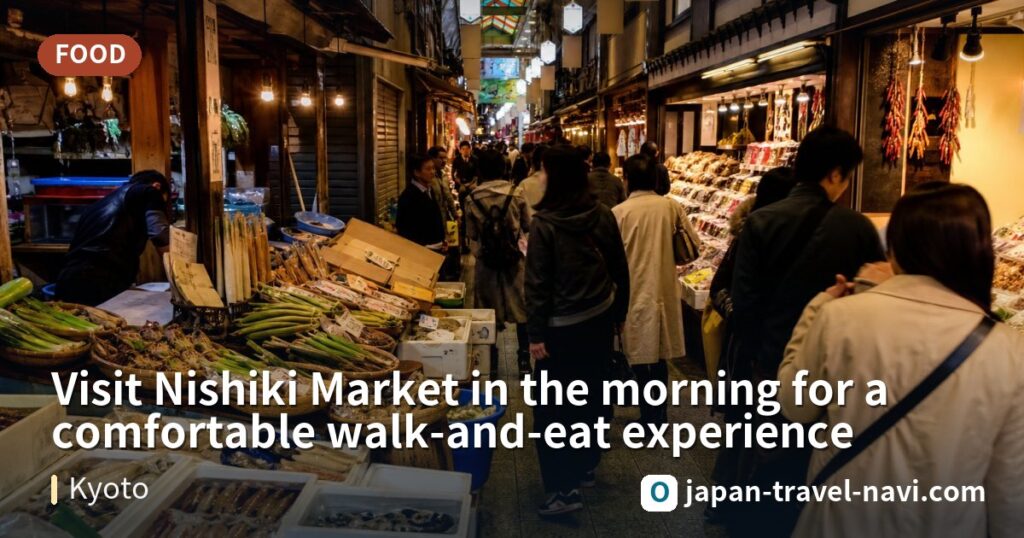
Nishiki Market works perfectly for visitors who want to sample Kyoto’s diverse ingredients but only have a short time. Pure browsing and eating takes about 1 to 1.5 hours; including Teramachi-dori and Shin-Kyogoku-dori, plan around 3 hours total. A morning visit is recommended—fewer crowds, wider walkways, and easier access to standing-eating spots. Afternoons get noticeably busier, so schedule flexibly.
Contents
Timing: Visit the market in the morning, shopping streets in the afternoon
Nishiki Market is a narrow, east-west shopping street known as “Kyoto’s Kitchen” (京の台所). The walkway is tight, and crowds mean constant stopping. Pushing a stroller or dragging a large suitcase is difficult. Morning is the most comfortable time to see ingredients and interact with shop owners. After noon through afternoon, it gets most crowded, with queues for photos and samples.
Many shops close earlier than typical shopping streets, so don’t save the market for late afternoon. Shop hours and open days vary—check official information before you go. If you only have afternoon free, try “browse Teramachi-dori and Shin-Kyogoku-dori first, then visit the market” to avoid peak crowd times.
What you can eat and buy here
Nishiki Market specializes in everyday Kyoto ingredients, roughly divided into these categories:
- Pickled vegetables (漬物): Wide variety, many shops offer samples so you can taste before buying.
- Dashi-rolled omelet (だし巻き玉子): A Kyoto home-style favorite with distinctive egg aroma and broth flavor.
- Tofu skin (湯葉) and soy products: Soy milk sweets are common, perfect for snacking as you walk.
- Anchovy with Japanese pepper (ちりめん山椒), dried goods, and tsukudani: Long-lasting items, convenient for souvenirs or personal use.
- Skewers, seafood, and Kyoto vegetable snacks: Small portions, try one from each shop without getting too full.
For food to bring home, check entry regulations first; fresh produce and meat or egg products require special attention.
Eating-while-walking rules and etiquette
The market has signs asking visitors not to eat while walking. The reason: narrow aisles mean bamboo skewers, food, and drinks easily soil others’ clothes. The best approach is finishing your food near the shop you bought from, or using the shop’s standing-eating or seating area. Return bamboo skewers and packaging to the shop or take them with you.
- Check on-site notices and shop staff instructions—rules may change.
- Say hello before sampling; don’t have a crowd around one stall without buying.
- Don’t photograph in a way that blocks foot traffic, especially during peak hours.
- Wear backpacks in front to avoid bumping ingredient displays.
- If you want a more relaxed meal, buy a few items and find a spot nearby to enjoy them.
Continuing to Teramachi-dori and Shin-Kyogoku-dori
The eastern end of Nishiki Market connects to Teramachi-dori, with Nishiki Tenmangu shrine at its end—worth a brief stop. The suggested route: enter from the market’s west side, stroll to the east end, then turn into Teramachi-dori, and finally reach Shin-Kyogoku-dori. Teramachi-dori has a local atmosphere with tea shops, stationery, and old stores; Shin-Kyogoku-dori features souvenirs, small goods, and snacks—livelier overall.
On rainy days, focus on covered shopping street sections; the market, Teramachi-dori, and Shin-Kyogoku-dori all have roofed areas. If you want to walk less, pick just two of the three and use the remaining time for lunch or a coffee break.
Travel tips
- Getting there by train: From Kyoto Station, take the Karasuma Line subway to Shijo Station (about 10 minutes), then walk to the market. Alternatively, take a bus to Shijo-Kawaramachi area (15–20 minutes; longer during rush hours due to traffic).
- Hankyu Line route: Coming from Osaka, take Hankyu to Kawaramachi Station in Kyoto and walk directly to Shin-Kyogoku-dori and Teramachi-dori; Nishiki Market is nearby.
- Luggage: The market’s narrow aisles make large suitcases impractical. Use station coin lockers or leave bags at your hotel.
- Eating order: Buy small samples at the market first—don’t buy too much at once, since more snacks and cafes await at the shopping streets.
- Adjusting for crowds: If afternoon crowds make the market too tight to move, head to Teramachi-dori and Shin-Kyogoku-dori instead, then return to the market for souvenirs once crowds thin out.
- Before you go: Shop hours, closing times, and market notices change. Check official updates before your visit.
This article was prepared by the Japan Free Travel Information Station editorial team. Attraction and transportation information may change; please confirm the latest details with each facility and official announcements before you go.
Please check official announcements for the most current information.
This article was translated from our Traditional Chinese edition.