Kuromon Market Guide: Best Times to Visit, Seafood Shopping & Namba Connection
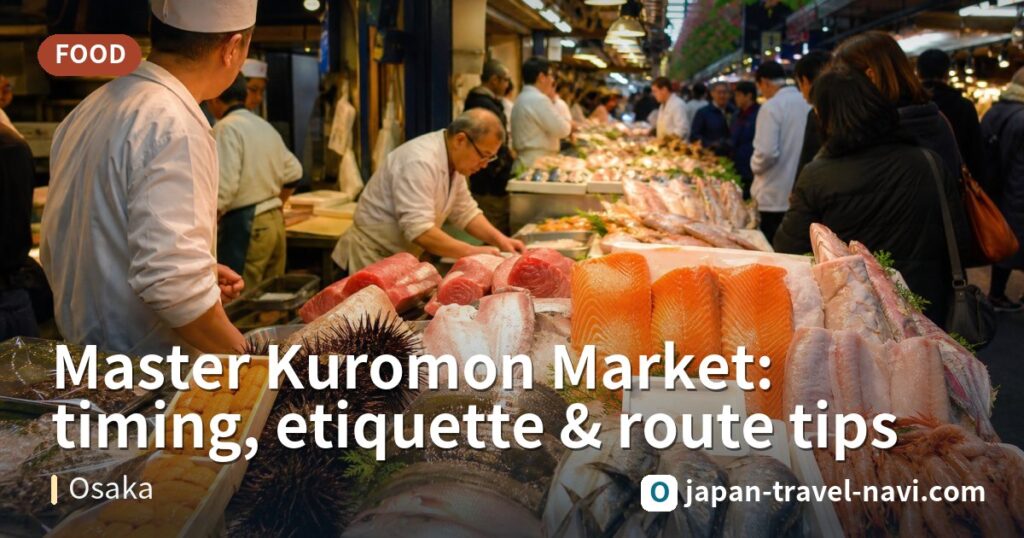
Kuromon Market is ideal for visitors wanting to sample Osaka’s fresh seafood and street food all in one place. We recommend spending 1.5 to 2 hours here, arriving in the early morning or before noon for the most relaxed experience. If you want to include it in your Namba itinerary, start at the market and head south, eating your way through to Dotonbori.
Contents
Eat as You Go: Decide Your “Main” First
The market stalls are packed closely together, making it easy to buy from the first vendor you see—then discover you’re too full to try anything else later. Walk through the entire market first, note what you’d like to eat, then return to buy.
Common offerings include freshly grilled seafood, skewered meats, tamagoyaki (Japanese rolled omelet), fruit platters, and desserts. If you have a small appetite, order one of each item and share between two people to sample more varieties. For seafood, fresh-cooked and piping hot is the best value. For raw dishes, choose stalls with high foot traffic and quick ingredient turnover.
Eat standing beside the stall or at the location the vendor indicates, and hand your trash to the shop staff. Don’t eat while walking—the aisles are narrow and you might accidentally get someone’s clothes dirty.
Early Morning vs. Midday: Different Vibes
The early morning market is busy with ingredient shopping. Local residents and restaurant staff are present, stalls are fully stocked, and the atmosphere feels genuinely lived-in. Before noon, tourist numbers pick up noticeably—aisles get crowded and you’ll spend more time waiting in line for fresh-made snacks.
If you want to take photos and browse leisurely, arrive shortly after opening. After midday, it’s more like a “lively food court”—better if you want to soak up the atmosphere and sit down for a proper meal. Individual shop hours vary, and some vendors close early, so check the official website before your visit. Avoid making the market your final stop of the day.
Sampling & Buying Seafood: What You Should Know
Before trying anything, look at signage or ask staff whether sampling is allowed—don’t help yourself. When you find something you want, confirm whether it’s to eat on the spot or take away, as packaging and storage differ.
Three key points when buying:
- For fresh seafood you’ll carry with you: check how much longer you’ll be shopping or traveling. If you have more sightseeing or transport ahead, buy only what you can finish on the spot.
- To bring home: dried goods, kelp, and seasonings are easier to pack than fresh items. Different countries have different import rules for meat and seafood—check your customs regulations before you go.
- Some stalls may take cash only, so keep some coins handy.
Connecting Kuromon to Namba: A Walkable Route
From Nipponbashi Station, it’s about a 5-minute walk to the market. After exploring, head south through Nipponbashi Dendentown (the electronics district), then on to Dotonbori and Namba—roughly 15–20 minutes on foot. You can browse anime and electronics shops along the way.
Suggested itinerary: morning at Kuromon Market with light snacks → early-afternoon lunch in Namba or Dotonbori → afternoon shopping in Shinsaibashi-suji and around Namba → evening back at Dotonbori for night views.
On rainy days, the market’s main passageways have roofs, so you can still browse comfortably. Afterward, take the subway to Namba and walk the underground arcades and malls to minimize rain exposure.
Travel Tips
- Transport: Subway to Nipponbashi Station is most convenient—the market is a short walk away. Coming from Namba is also just a brief walk or one station away.
- Timing: To avoid crowds, go in the early morning and plan for 1.5 to 2 hours. Don’t make the market your last stop of the day.
- Luggage: Aisles are narrow; store large bags at your hotel or a station locker and travel light.
- Cash & Payment: Some stalls take cash only—bring coins and check official info before you go.
- Hygiene & Etiquette: Hand trash back to the vendor, don’t eat while walking, and don’t take samples without permission.
- Flexibility: If it rains heavily or gets too crowded, shorten your time here and spend more time in Namba’s underground arcades and malls instead.
This article was prepared by the Japan Free Travel Information Station editorial team. Venue and transport details may change—please verify with official sources before your visit.
Please refer to official announcements for the most current information.
This article was translated from our Traditional Chinese edition.