Budget-Friendly Winter Gear for Hokkaido: Do You Really Need Snow Boots and Jackets?
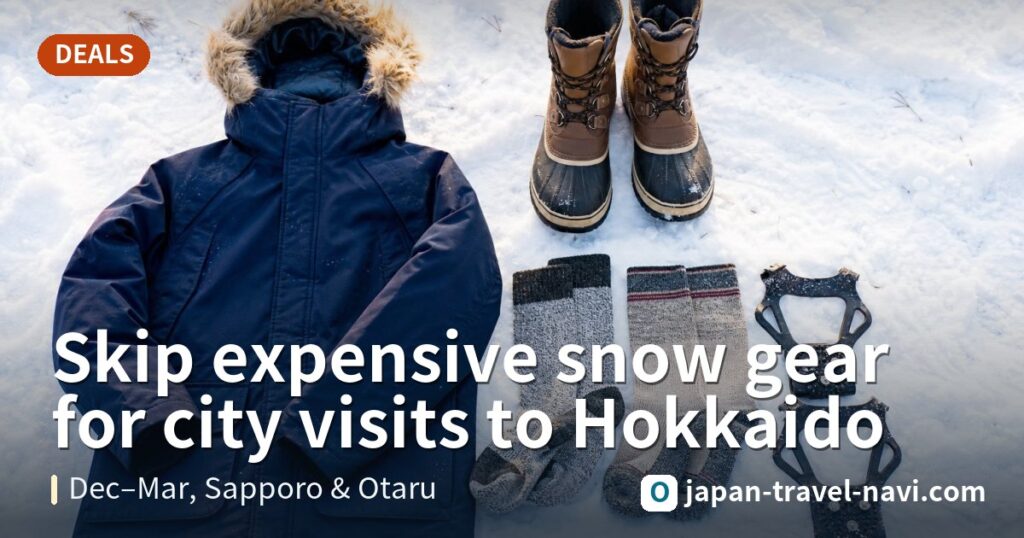
If you’re heading to Hokkaido between December and early March with plans centered on city exploration in Sapporo, Otaru, and similar areas, you don’t need to spend big on a full professional snow outfit. The most cost-effective combination is “anti-slip snow boots + layering + windproof jacket”—simply check the weather forecast about a week before departure and adjust as needed. The real money-waster is usually buying gear you’ll never use, or scrambling to buy emergency items after you arrive.
Contents
Check your itinerary first—then decide on a snow jacket
If your plans involve walking around Sapporo and Otaru, taking trains and subways, and moving between indoor and outdoor spaces, a single windproof, water-resistant jacket that covers your hips is enough—no need for a full ski suit. Planning to ski or do snow activities? Rent snow jackets and pants at the resort; for just a day or two, renting beats buying and saves luggage space. Only invest in your own quality winter coat if you’ll be visiting other cold regions afterward.
Layering: three layers is all you need—easy on and off matters most
Hokkaido’s outdoors are cold, but trains, department stores, and underground shopping areas have powerful heating. Wearing too much risks sweating indoors. Try this layering strategy:
- Base layer: moisture-wicking thermal underwear, top and bottom.
- Mid layer: thin down jacket or fleece, easy to remove indoors.
- Outer layer: windproof, water-resistant jacket with a hat that covers your ears.
Keep a hat, gloves, and scarf within easy reach. Bring a bag with enough capacity to stuff your mid-layer jacket inside when entering shops—no need to find a separate place to store it.
Snow boots: grip is everything—buy them before you go
Snow boots are the one item you should never leave to chance once you arrive. Break in new boots and try them on with thick socks to ensure your toes aren’t squeezed; a day of foot pain is worse than cold hands. Look for three things: deep tread, water-resistant upper, and cuff tall enough to keep out snow. Wear them on the plane to save luggage space. City itineraries don’t require special snow boot rentals; resort rentals are designed for skiing, not sightseeing.
Anti-slip shoe covers: read the situation, decide locally
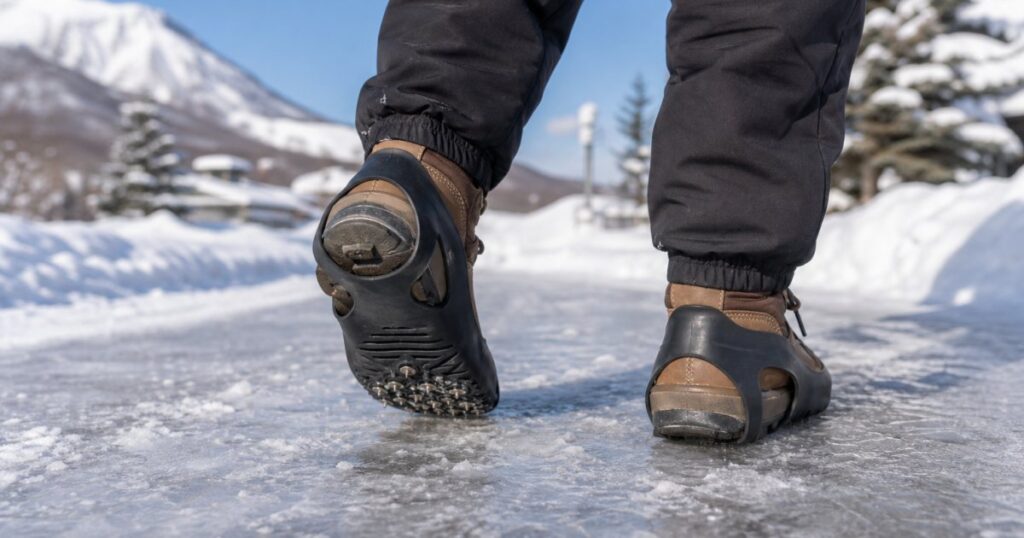
If your boot soles aren’t grippy enough, or your plans include Otaru’s steep slopes, shrine steps, or early morning outings, consider covers. The best timing is your first day after arrival—observe the ground conditions. Main roads cleared of snow are fairly safe during the day, but icy intersections, crosswalks, and corners, especially at dawn and dusk, are slip hazards. Drug stores, general goods shops, and shoe retailers usually stock them. Even if you discover you need them later, there are ways to handle it. Just remember to remove them before entering buildings—tile floors become even more slippery. For brief stops, basic versions are fine.
What to buy in Taiwan vs. what to buy locally
Buy in Taiwan: thermal underwear, wool socks, touchscreen gloves, hat, moisturizer and lip balm, power bank (battery drains fast in cold), and sunglasses (snow glare is intense). These have wider selection and you can try them first.
Buy locally: disposable heat packs, adhesive warming patches, shoe covers, backup gloves. Heat packs are everywhere in convenience stores and drugstores. Warming patches go on your clothes, not skin, to avoid cold burns. With limited luggage space, it’s often smartest to skip uncertain items and pick them up locally as needed.
Travel tips
- From New Chitose Airport to Sapporo via JR Express takes about 40 minutes. Snow can cause delays; allow an extra 30 minutes to 1 hour buffer time, especially if you’re catching a return flight the same day.
- Station stairs and platform entrances are often slippery from melting snow. On public transport, walk slowly, hold railings firmly, and keep your hands out of your pockets.
- Luggage wheels don’t roll well on snow and icy pavement. Choose carry-on size luggage, or use a backpack instead. Once in Sapporo, you can store larger bags in station lockers and explore light.
- Indoors heat aggressively; trains and subways get stuffy. Before boarding, stash your scarf and gloves, and unzip your outer jacket to avoid sweating and then getting cold when you exit.
- Heavy snow disrupts train schedules and bus routes. Build at least one flexible day into your plans. If you’re rushed or roads are icy, taxis are a backup option.
- If you plan to drive, confirm your rental includes winter snow tires and review local snow-driving rules. Check official sources for current road conditions and service updates before you depart.
This article was compiled and written by the Japan Travel Navigator editorial team. Attraction and transport information may change; please confirm details with official sources and facilities before your trip.
Please refer to the latest official announcements for current information.
This article was translated from our Traditional Chinese edition.