Noboribetsu Hot Spring and Jigokudani: Trail Guide, Etiquette and a Two-Day Loop with Lake Toya
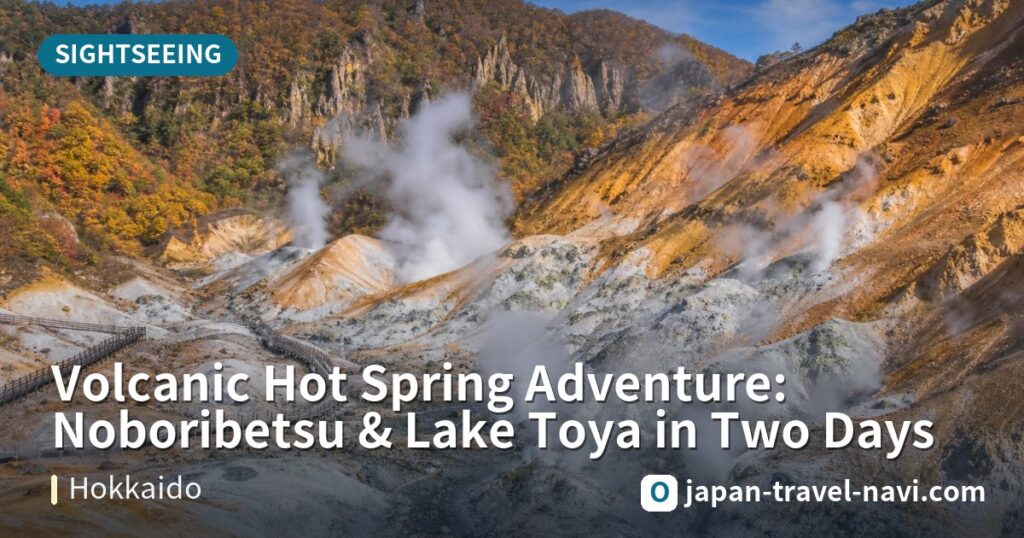
If you’re looking for both natural hot springs and dramatic volcanic landscapes, Noboribetsu is an ideal choice. A one-night, two-day trip from Sapporo or New Chitose Airport works perfectly. Aim to arrive mid-morning or early afternoon, explore Jigokudani (Hell Valley) first, check into a hot spring inn by evening, and visit Lake Toya the next day.
Contents
Jigokudani Trail: Start with the Main Route, Then Decide Whether to Extend
The main attraction of Jigokudani is walking along wooden boardwalks to view steaming volcanic craters and exposed cliff faces. A simple loop to the viewpoint and back takes about 40 minutes. If you have enough energy and time, continue toward Oyunuma (Big Hot Spring Lake) for an additional hour. Along the way, you’ll notice a distinct sulfur smell, and the scenery shifts from rocky walls to smoking geothermal pools.
It’s best to walk late morning or early afternoon when lighting is good and before organized tour groups arrive in peak numbers. The trail has plenty of stairs and slippery sections, so wear non-slip shoes. On rainy or snowy days, proceed carefully. If heavy rain or strong winds hit, you can skip the trail, stroll the hot spring town instead, enjoy the inn’s bath, and attempt the hike the next day if weather permits.
Hot Spring Town Accommodation: Location Trumps Room Type
Noboribetsu’s hot spring district is small, with main shops, demon statues, and the Jigokudani entrance all within walking distance. First-time visitors should stay at an inn near the town center so you can stroll after dinner. If you prefer a quieter setting, choose an inn slightly away from the main area, but confirm shuttle service availability and the last bus time.
When booking, pay attention to three things:
- Whether breakfast and dinner are included. Few restaurants operate at night in the hot spring town, so many visitors opt for meal plans.
- The bath’s spring quality and whether there’s an outdoor bath.
- Arrival time. Inns typically accept check-in only in the afternoon; early arrivals can store luggage first.
Confirm room rates and policies directly with the inn before departure.
Onsen Etiquette: Key Points to Remember
Rinse your body thoroughly before entering the bath. Tie up long hair. Don’t place the small towel in the bath water; instead, rest it on your head or leave it poolside. Most public baths prohibit photography and phones. Drink water after bathing, and avoid soaking right after meals or drinking alcohol. Don’t stay in too long.
If you have tattoos, confirm the inn’s policy beforehand—some facilities require coverage or make special arrangements. If unsure, choose an inn with a private bath in the room or a private onsen.
Getting There from Sapporo or New Chitose Airport
Both routes start with JR, then switch to a bus. From Sapporo, take the limited express Hokuto train (heading toward Hakodate) to Noboribetsu Station, a journey of just over one hour. From New Chitose Airport, take JR to Minami-Chitose, then transfer to the limited express to Noboribetsu Station—total time is slightly longer with the extra transfer.
From Noboribetsu Station, switch to a bus heading to Noboribetsu Hot Spring, a 15-minute ride. Check bus schedules before you leave and allow buffer time for transfers. If you have lots of luggage, store it at the station or have the bus take you directly to your inn for storage.
Pairing with Lake Toya for a Two-Day Loop
Spend day one in Noboribetsu, then head to Lake Toya after checkout the next morning, traveling south to north. Take the limited express from Noboribetsu Station to Toya Station (about 30 minutes), then transfer to a bus to Lake Toya Onsen (about 20 minutes). Once there, walk along the lakeshore, and if weather allows, take a sightseeing boat or climb the observation platform. Services and conditions vary with weather, so check official information before you go.
In the afternoon, return to Sapporo or head to New Chitose Airport. If you’re flying out the next day, take an earlier return bus to allow buffer time and avoid missing your flight.
Transportation & Trip Reminders
- Build in Transfer Time: JR limited express and bus schedules aren’t always frequent. Before transferring at Noboribetsu or Toya stations, check the next bus time and allow 20–30 minutes buffer.
- Store Luggage First: Hiking Jigokudani with large bags is exhausting. Leave luggage at your inn or the station and tackle the trail light.
- Weather & Trail Conditions: On rainy or snowy days, wooden boardwalks and stairs become slippery. Wear non-slip shoes, watch for strong winds and fog that reduce visibility.
- Sulfur Gas Caution: The volcanic area smells of sulfur. If you feel unwell or have respiratory issues, avoid lingering and heed warning signs.
- Night Travel: The hot spring town is quiet at night. If you’re catching a bus back, confirm the last departure time so you’re not stranded in the mountains.
- Self-Drivers: Verify parking availability and rules with your inn or local authorities. In winter, equip snow tires and avoid mountain roads at night.
This article is compiled and written by the Japan Travel Matters editorial team. Attraction and transport details may change, so confirm with official sources before departure.
Please rely on the latest official announcements for actual conditions.
This article was translated from our Traditional Chinese edition.