Tokyo to Kamakura and Enoshima: One-Day Itinerary, Enoden Train, and Hydrangea Season Tips
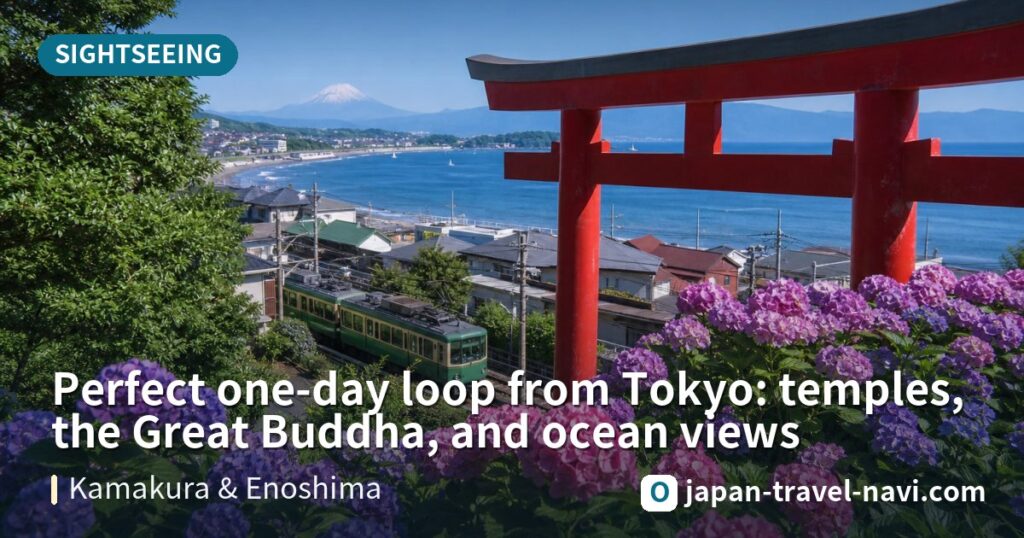
This itinerary works best for travelers wanting an easy day trip from Tokyo with temples, the Great Buddha, and ocean scenery all in one go. Plan for about 9–10 hours total. Aim to reach Kamakura by 9 a.m., move to Enoshima in the afternoon, and leave around sunset—this balances crowds and energy.
Contents
- Route order: Kamakura first, then Enoshima
- Tsurugaoka Hachimangu and Komachi-dori: Walk the approach path first
- Enoden line: The Great Buddha and which stops to visit
- Hydrangea season crowds: early visits, off-peak timing, and backup plans
- Timing for Enoshima and the return journey
- Transport and trip reminders
Route order: Kamakura first, then Enoshima
From Tokyo Station, take the JR Yokosuka Line to Kamakura (about 1 hour). Alternatively, from Shinjuku, take the Odakyu Line direct to Katase-Enoshima Station on the Enoshima side. The recommended order is Tsurugaoka Hachimangu → Komachi-dori → Kamakura Daibutsu (Great Buddha) → Enoshima. Two reasons: temples are best visited early before crowds arrive, and Enoshima’s ocean views and sunset are perfect for the afternoon. You can reverse the route by taking the Odakyu Line from Shinjuku to Enoshima first, then train along the Enoden back to Kamakura. However, the final leg back to Tokyo becomes rushed; only choose this if you have flexible timing.
Tsurugaoka Hachimangu and Komachi-dori: Walk the approach path first
It’s about 10–15 minutes on foot from Kamakura Station to Tsurugaoka Hachimangu. You’ll walk a straight approach path—take photos here first, then gradually climb the steps to the main shrine. About 1–1.5 hours is enough. For snacks or shopping, head back to Komachi-dori (小町通り) after leaving the shrine. This street gets noticeably crowded after midday; if you spot long queues, keep walking and circle back later.
Enoden line: The Great Buddha and which stops to visit
From Kamakura Station, the Enoden train (江ノ電) reaches Hase Station in about 5 minutes. Walk roughly 7 minutes from there to see the Kamakura Daibutsu, and plan 40–60 minutes to stop. If you plan multiple stops along the Enoden that day, check whether the one-day unlimited pass (のりおりくん) offers good value before you start. Heading toward Enoshima, I recommend stopping at Kamakura Koko-mae Station (鎌倉高校前駅) for 20–30 minutes—the railway crossing and sea view here are popular photo spots. You don’t need to get off at every other station; one or two stops is plenty, otherwise your time gets fragmented.
Hydrangea season crowds: early visits, off-peak timing, and backup plans
Hydrangea season typically peaks around June (check official updates closer to your travel date). Northern Kamakura’s Meigetsuin and the Hase area get especially crowded. If you want to see the flowers, put them first in your itinerary—head there right after arriving in Kamakura, then backtrack to Tsurugaoka Hachimangu. Weekends see long queues both inside Enoden trains and on platforms. Consider visiting on a weekday instead, or arrive at stations early and avoid the 11 a.m.–3 p.m. rush. If rain hits, switch focus to indoor activities like the Enoshima Aquarium (新江ノ島水族館), and catch the flowers again briefly after the rain clears.
Timing for Enoshima and the return journey
The Enoden takes about 25 minutes from Hase to Enoshima Station; then walk across the bridge to the island. The main site is Enoshima Shrine (江島神社), with many slopes along the way—wear comfortable shoes and budget 2–3 hours. To catch the sunset, aim to reach the observation area about an hour before dusk, take photos, and head down. For the return, leave around 7 p.m. before dark, to avoid the evening rush. From Katase-Enoshima Station, the Odakyu Line returns to Shinjuku in just over an hour. If heading to Tokyo Station or Shibuya, take the train to Fujisawa Station to transfer to the JR—allow about 15 minutes of buffer time between connections.
Transport and trip reminders
- Use trains throughout: Kamakura and Enoshima’s roads jam up on holidays. Stick to the JR, Odakyu, and Enoden trains; no need for a rental car.
- Avoid peak station hours: After 3 p.m. on weekends, trains around Kamakura Station and Enoshima get crowded. Leave 30 minutes earlier, or switch to the Odakyu Line back to Tokyo.
- Allow transfer buffer time: When changing to the JR or Odakyu at Fujisawa Station, keep about 15 minutes spare in case of platform walking or minor delays.
- Footwear and stamina: The stairs at Tsurugaoka Hachimangu and the slopes on Enoshima require steady walking. Wear comfortable shoes and plan a rest break around Komachi-dori or near Hase.
- Heavy rain or strong winds: Outdoor viewing at Enoshima can be cut short; use indoor facilities instead. Check the latest official transport and facility updates before you go.
- Luggage and tickets: Consider leaving large bags at your Tokyo accommodation or in a station locker. Travel light—Enoden stations and trains have limited space.
This guide was compiled and written by the Japan Solo Travel Info editorial team. Venue and transport information may change; please verify the latest details with each facility and official announcements before departure.
Please refer to the latest official updates for the most current information.
This article was translated from our Traditional Chinese edition.
Related reading



More from Tokyo
More Christmas Shopping Pop-up at Ichigaya Station (Toei Shinjuku Line) Nov 25–Dec 26
 Nov 22: 20th Bakuretsu Festival – Airsoft & Tactical Gear Showcase
 Nov 28–29 Ikebukuro Sunshine City Furniture Clearance Sale – Free Entry
 Marunouchi Building’s RIMTAE Debuts Black Tea Blooming Tea with Peony and Chrysanthemum