Guide to Farm Stands in Furano and Biei: Melons, Corn, and Quarantine Tips
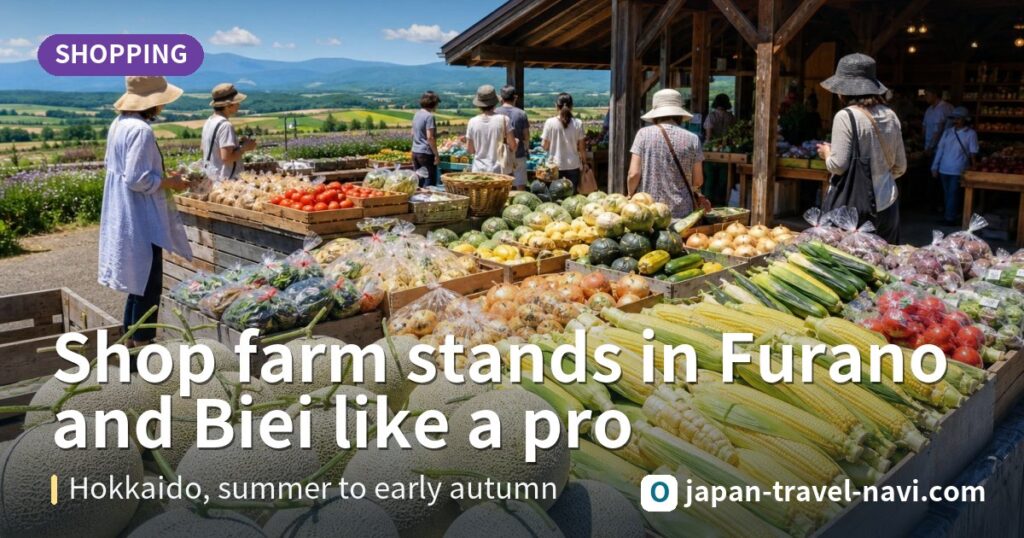
Visitors looking to include local food in their Furano and Biei itinerary can spend half a day to a full day at farm stands. We recommend heading out in the morning or early afternoon—summer through early autumn is when fruits and vegetables are most abundant, with the widest selection and lowest chance of items selling out. This guide covers how to navigate farm stands, which seasonal produce to pick, and how to decide between eating on-site, shipping, or taking items home.
Contents
Three types of farm stands: know the difference
Farm stands in Furano and Biei fall into three categories. Visiting them in the right order makes a big difference in efficiency.
- Michi no Eki (roadside stations) and large farm stands: Full range of items, places to rest, and usually simple meals on-site. Best as your first stop to see what’s in season today.
- Small stalls at farm gates or field edges, unattended sales (無人販売): Usually coin-operated—bring small change. Limited quantities, gone when sold out. Stop by if you pass one.
- Farms and pick-your-own gardens with attached cafes or ice cream stands: Good for eating on-site and photo breaks.
Start at a large farm stand to get a sense of seasonal items and prices, then visit smaller stalls. If using public transit, base yourself at Furano Station or Biei Station on the JR Furano Line, then take a taxi, sightseeing bus, or rent a bicycle if weather and energy allow. Biei’s attractions are spread out, so walking isn’t recommended as your main mode of transport.
Cantaloupe and corn: season and how to eat them
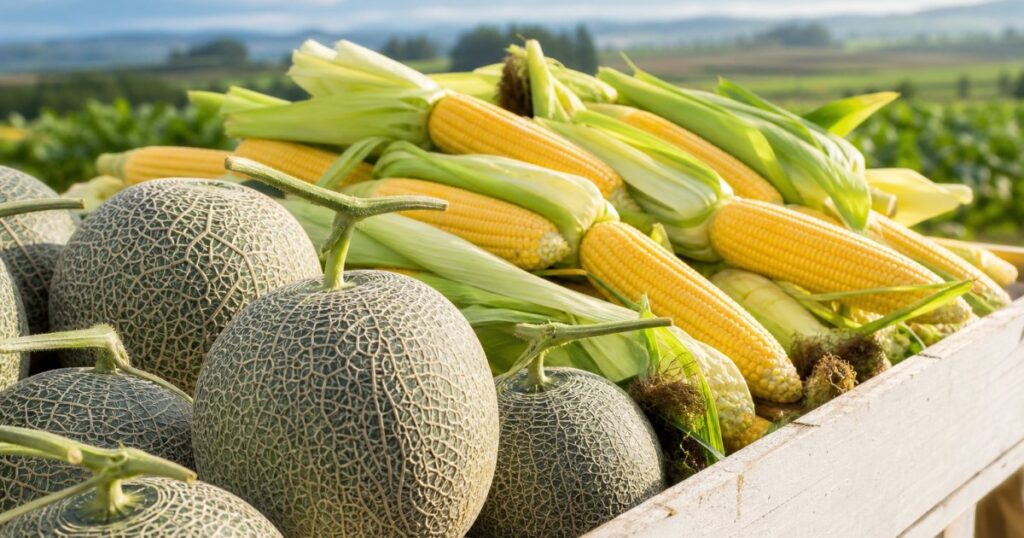
Furano is famous for cantaloupe, which peaks in summer. Whole melons usually have a “best-by date” label—difficult to finish during a trip. Beginners should buy sliced or small portions instead and eat them the same day. Corn is sweetest from late summer through early autumn, and farm stands often have freshly boiled or grilled corn; mornings are your best bet for freshness.
Tomatoes, potatoes, and squash are also worth exploring. Peak seasons vary yearly depending on weather, so check official information before you go or look for notices at the stands.
Eat on-site or ship it?
Fruit loses quality the longer it’s away from the farm, so eating on-site is safest. Heavy, fragile items like cantaloupe and corn aren’t ideal to carry around all day.
If you want to ship, domestic delivery only works within Japan—for example, to your next night’s accommodation or a friend’s house. Before shipping to your lodging, ask the hotel if they can receive and refrigerate the package.
The most practical approach: eat one portion of what you most want to try on-site, then buy small amounts of shelf-stable processed goods as souvenirs.
Produce and quarantine: know the rules before you go
Most countries and regions have quarantine restrictions on fresh fruit and vegetables. Without proper quarantine certificates, you typically can’t bring them in carry-on or checked luggage, and they may be confiscated or subject to fines if discovered. Japan also has quarantine checks on departure.
Before you leave, check your home country’s animal and plant quarantine authority website, as well as Japan’s Ministry of Agriculture, Forestry and Fisheries quarantine information, for the latest rules.
If you want to take something home, consider jams, juices, or snacks instead. Still verify packaging labels, entry regulations, and liquid limits on the plane.
Travel tips
- Use the JR as your backbone: Check the Furano Line schedule first—trains can run infrequently. Plan your farm stand visits around your return train to avoid missing the last service.
- Check station resources: When you arrive, ask about sightseeing buses, taxis, or bicycle rentals at the station. Biei’s sites are scattered; advance planning saves time over figuring it out on the spot.
- Bring cash and coins: Small stalls and unattended stands often don’t accept electronic payment, and coin-operated boxes require small change.
- Store fruit carefully: In hot weather, don’t leave produce in your backpack or luggage all day. Eat it the same day or ask the shopkeeper how to store it properly.
- Visit in the morning, move in the afternoon: Mornings have the fullest selection. Move to your next stop or accommodation in the afternoon to avoid the midday heat and see more items.
- Rainy day plan B: On rainy days, focus on indoor spaces like michi no eki, then visit cafes or museums. Skip field-side stalls in bad weather.
This guide was compiled by the Japan Travel Navi editorial team. Attraction and transport information may change; please check with individual facilities and official announcements before you go.
Always confirm the latest official information before your visit.
This article was translated from our Traditional Chinese edition.
Related reading
 Hankyu Umeda Main Store Holiday Food Festival: Christmas Treats and Limited Souvenirs from Nov 25
 BEYOND Pop-Up Shop Brings Curated Brands to Kyoto’s Shinpuhkan Nov 27–29
 Disney Stainless Steel Couple Rings Arrive at Canal City Hakata on Nov 15
 Hakata Canal City: LAKOLE × NO COFFEE First Collaboration Nov 13–Dec 3