Kiyomizu-dera, Ninen-zaka & Sannen-zaka: Beat the Crowds at Dawn, Then Head to Gion

You can comfortably visit Kiyomizu-dera, Ninen-zaka, and Sannen-zaka, then continue to Yasaka Shrine (八坂神社) and Gion in about 4–5 hours—perfect for first-time Kyoto visitors. Start at Kiyomizu-dera in the early morning, walk downhill along the slope roads, and finish in Gion at dusk. This route is efficient and easy on the legs.
Contents
Early Morning Visit: Temple First, Then the Old Streets
Kiyomizu-dera gets crowded from mid-morning onward. Arrive 15–30 minutes before opening and line up at the gate (check the official website for current opening times before you go). From Kyoto Station, take a city bus to either the Kiyomizu-michi or Gojo-zaka stop, then walk uphill along the slope road—about 10–15 minutes.
Inside the temple, follow this route: Nio-mon Gate → Three-Story Pagoda (Sanju-no-to) → Main Hall and Kiyomizu Stage (Kiyomizu no Butai). Total time: about 60–90 minutes. Otowa Falls (Otowa no Taki) usually has a queue; if you’re short on time, skip it or queue later and come back to photograph it.
Ninen-zaka & Sannen-zaka: Downhill Routes and Photo Spots
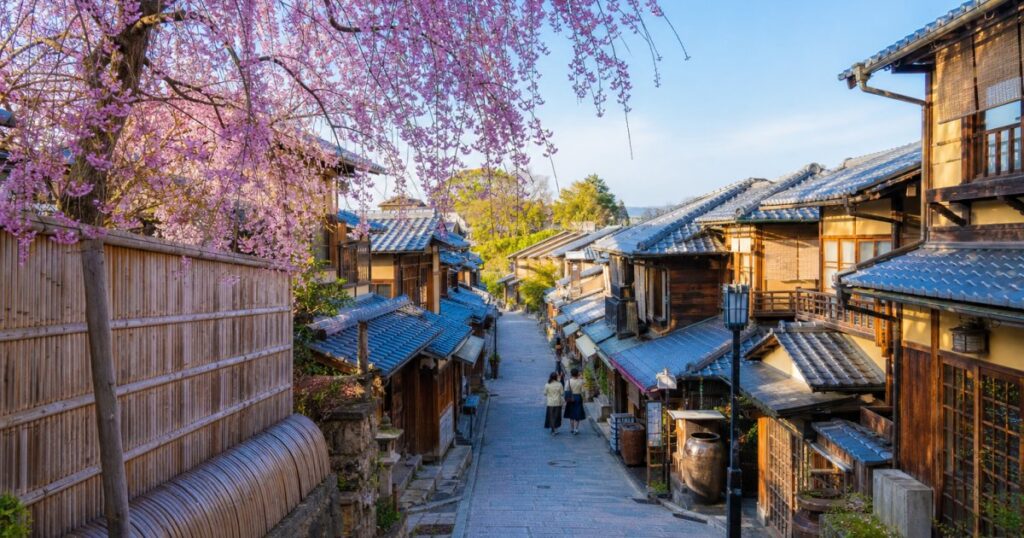
After leaving Kiyomizu-dera, head back and pass through Sannen-zaka first, then Ninen-zaka. Everything slopes downhill, so it’s easy on your legs. Most shops won’t be open yet, but the streets are empty—perfect for photos of stone paths and wooden townhouses.
- Upper Sannen-zaka steps: Turn around and shoot down the slope to capture the rooflines of old houses lining the street.
- Mid-Ninen-zaka: Traditional row houses line both sides. When crowds are thin, you can photograph the complete street lines cleanly.
- Yasaka-dori: View Yasaka Pagoda (八坂塔) from here—a classic shot. Plan to spend an extra 10 minutes in this area.
When taking photos, step to the side and avoid standing in the middle of the road or in front of shop entrances. If residential areas have no-photography signs, please respect them.
On to Yasaka Shrine and Gion: Extending Your Half-Day
From Ninen-zaka, walk along Nene-no-michi (ねねの道), pass Yasaka Pagoda, and reach Maruyama Park and Yasaka Shrine in about 20–30 minutes. If time allows, detour into Ishibe Koji (石塀小路), a quiet stone-paved alley.
Exit Yasaka Shrine from the west side onto Shijo-dori. Walk west to reach Gion and Hanamikoji Street. This section takes 1.5–2 hours total; save it for the afternoon. Gion is best in the early evening.
Two ways to return:
- Take the Keihan Railway from Gojo-Keihan Station.
- Walk west along Shijo-dori to Kawara-machi area, then transfer to the Hankyu Railway or a bus.
Tips for Walking in Kimono
If you’d like to wear a kimono, rent one in the morning to match your early itinerary and avoid peak crowds. Confirm rental hours and return times with the shop in advance, and allow buffer time for your journey back.
- Footwear: Slopes and stone steps can be slippery in zori sandals. Consider using blister prevention tape and bring a backup pair of shoes.
- Stride: Kimono sleeves are narrow. Take small steps when climbing or descending stairs.
- Getting on and off transit: Hold the handrail first, then step. Don’t carry an oversized bag.
- Rainy days: Stone paths become slippery. Choose flat routes instead, or visit indoor attractions.
Transport & Planning Tips
- Getting there: From Kyoto Station, take a city bus to Kiyomizu-michi or Gojo-zaka—most direct option. Buses run frequently, but mornings can be crowded. Leave early.
- Return journey: After walking downhill to Gion, take the Keihan Railway from Gojo-Keihan Station or walk west on Shijo-dori to Kawara-machi for the Hankyu Railway or buses. This saves time versus backtracking.
- Timing: Allow 60–90 minutes for Kiyomizu-dera, 1.5–2 hours for the slope roads and Yasaka Shrine. Save Gion for late afternoon and evening. Don’t overpack the schedule.
- Walking and stamina: The route is mostly slopes and stone steps. Wear comfortable shoes. If traveling with children or elderly family members, consider stopping at Ninen-zaka and taking a bus from there.
- Crowds and safety: The lanes are narrow. Step aside when photographing and watch for people behind you. During busy periods, use Nene-no-michi or Ishibe Koji to avoid the main flow.
- Weather adjustments: Rain makes stone paths slippery—slow your pace. In heavy rain, shorten the Kiyomizu-dera visit and focus on indoor spots in the Gion area.
This article was compiled and written by the Japan Free Travel Information Editorial Team. Attractions and transport details may change. Please check the latest official announcements from each facility before you visit.
Always verify current information with official sources.
This article was translated from our Traditional Chinese edition.