Dazaifu Tenmangu Half-Day Guide: How to Get There by Nishitetsu or Bus, Worship Order & Plum Blossom Season

Dazaifu Tenmangu is perfect for visitors looking to escape Fukuoka city for a relaxed half-day outing. Combined with a walk along the approach and a visit to the Kyushu National Museum, allow 4–5 hours for a comfortable pace. To avoid crowds, visit on a weekday morning; during plum blossom season or holidays, leave early.
Contents
Nishitetsu or Bus: Which to Choose
From Tenjin, the most common route is the Nishitetsu Tenjin-Omuta Line to Futsutsuichi Station, then transfer to the Dazaifu Line to Dazaifu Station—about 30 minutes total. Frequent train service means no traffic worries and reliable timing.
From Hakata, consider a direct bus, which takes about 40 minutes and eliminates transfers. It’s easier when traveling with luggage or elderly companions. Routes and schedules may change, so check official information before your trip.
My recommendation: take the train on the way there, and decide based on energy on the way back. During holidays or plum blossom season, buses may be affected by traffic, making the train more reliable.
Worship Order on the Approach and at Tenmangu
After exiting the station, walk along the approach—there are many shops on both sides. I recommend not eating too much on the way in; visit the shrine first, then browse shops and buy souvenirs on the way back so you won’t be queuing while carrying bags.
Once inside the grounds, follow this order:
1. Rinse hands and mouth at the water basin (temizusha).
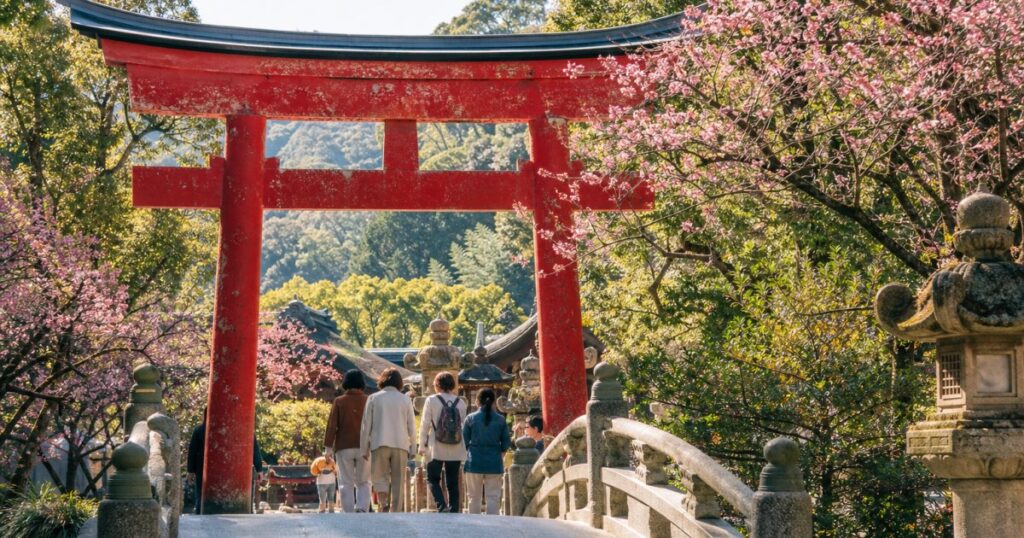
2. Walk across the arched Taiko Bridge over the heart-shaped pond and enjoy the view.
3. Pay respects at the main hall (honden).
4. See the flying plum tree (Tobiume) and don’t miss the stone ox statue (ushizou).
5. Finally, browse wooden prayer plaques (ema) and amulets (omamori).
The main hall may be undergoing renovation or have temporary structures; follow official announcements for the current route. Walking the grounds takes about 1–1.5 hours.
Plum Blossoms: What to See and Best Timing
Plum blossom season typically runs from February to early March, though exact bloom dates vary yearly. Check official updates before visiting. The grounds have many plum trees; focus on the flying plum tree and the trees around the heart-shaped pond framed with the water scenery.
For photos without crowds, visit early on a weekday. During holidays with heavy foot traffic, visit the museum first, then return to the shrine in the afternoon when crowds thin out.
The most famous snack on the approach is ume gashi (plum pastry)—best eaten fresh and warm as you walk, no need to find a seat.
Combine with the Kyushu National Museum
The Kyushu National Museum is right next to Tenmangu. It’s a short walk from the shrine grounds with escalators and passages connecting them—convenient even in rain. Plan it as your second stop after the shrine, allowing 1–1.5 hours.
Special and permanent exhibits rotate. Check the official information first to decide if entry is worth your time; if time is tight, you can just see the permanent collection.
Recommended route: Dazaifu Station → Approach (browse, don’t buy yet) → Tenmangu worship → Museum → Return to approach for ume gashi and souvenirs → Head back. On rainy days, spend more time at the museum and less outdoors.
Timing Your Half-Day Visit
If departing from Tenjin, arriving between 9–10 AM is most comfortable. Eat lunch near the approach, then leave around 2–3 PM to return to Fukuoka for shopping or dinner. During plum blossom season or holidays, leave even earlier. Return trains and buses will be crowded; shift your departure time 30 minutes earlier or later to avoid peak hours.
Transport and Trip Reminders
- Train as main transport: From Tenjin, take Nishitetsu to Futsutsuichi Station and transfer to Dazaifu Line. No reservation needed, just confirm the transfer platform.
- Bus as backup: For fewer transfers or extra luggage, check direct buses from Hakata. Confirm current schedules and routes officially before departing.
- Transit cards and passes: Bring an IC card accepted on Nishitetsu and buses. If using a discount pass, verify coverage and value beforehand.
- Avoid peak crowds: 11 AM–2 PM is most crowded during plum season and holidays. Arrive early or visit the museum first, then return to the shrine.
- Footwear and weather: The grounds and approach have stone paving and stairs; wear comfortable shoes. Bring a light rain jacket in wet weather and plan longer museum time.
- Plan return time: If catching a flight or bullet train, add 30 minutes buffer time and confirm final departure times and transfer schedules in advance.
This article was compiled by the Japan Travel Navi editorial team. Attraction and transport information may change; check official announcements before you go.
Always confirm current details with official sources.
This article was translated from our Traditional Chinese edition.
Related reading



More from Fukuoka
More Kouyou Hachiman-gu Maple Festival in Fukuoka: Nov 28–29 Features Stalls and Performances
 SHOCK EYE “Hundred Landscapes” Photography Exhibition at Hakata Hankyu
 Artwork by Artists with Disabilities on Display at Ohori Park Japanese Garden from Nov 18
 Fukuoka Tower and Ice Skating Park Partner Deal Starting Nov 20, 2026