How to Eat Monjayaki: Cooking Tips, Ordering Guide & Tsukiji-Ginza Itinerary
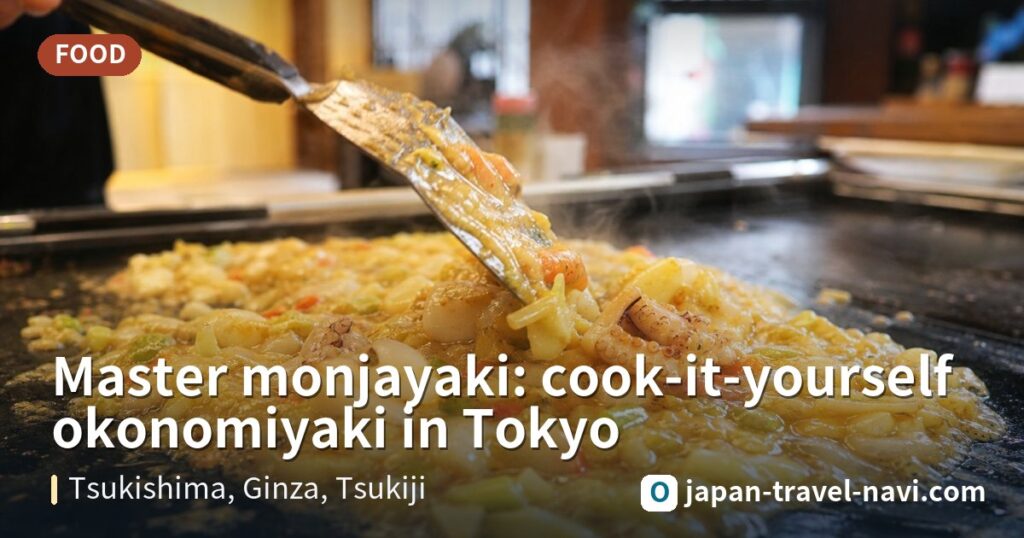
Monjayaki is perfect for visitors who want to experience “cooking it yourself,” and ideal for planning a relaxed half-day outing in the city center. Plan to spend 1.5 to 2 hours dining; choose mid-afternoon or early evening, and avoid weekend lunch crowds. This guide covers the differences between monjayaki and okonomiyaki, step-by-step cooking instructions, ordering suggestions, and how to combine it with Tsukiji and Ginza into one day.
Contents
What’s the difference between monjayaki and okonomiyaki?
Monjayaki (もんじゃ焼き) has a very watery batter and stays semi-liquid when cooked; you scrape it directly off the griddle with a small spatula (ヘラ), giving it a crispy, gooey texture. Okonomiyaki (お好み焼き) has a thicker batter, cooks into a single patty, is cut into pieces and eaten with chopsticks—it tastes more like a fluffy pancake. If you’re trying monjayaki for the first time, think of it as “thick sauce cooked on a griddle,” and you won’t be put off by how it looks. The Nishinaka-dori shopping street (西仲通り商店街) in Tsukishima has many monjayaki restaurants clustered together, making it easy to browse and choose.
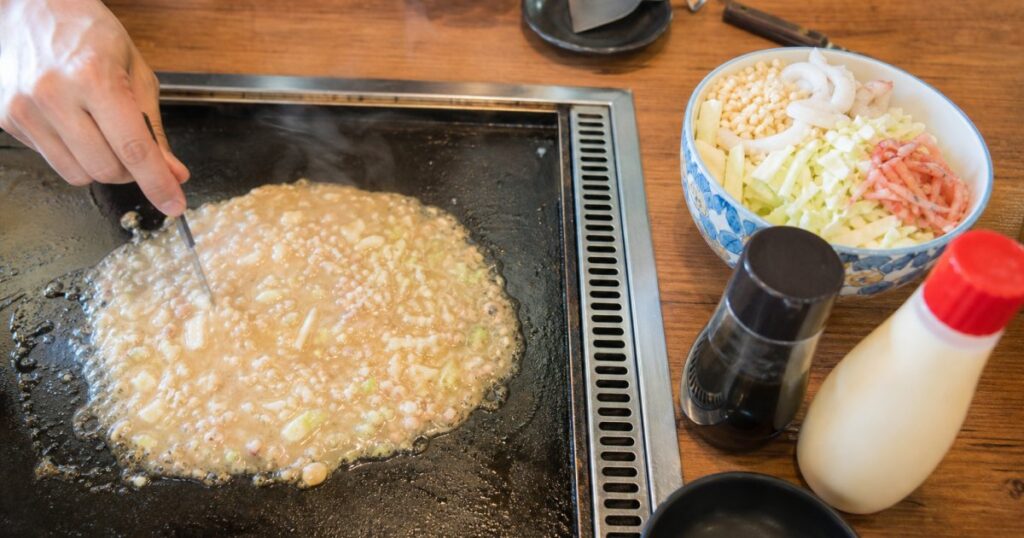
Step-by-step cooking instructions
Most restaurants will bring you a bowl containing chopped ingredients and broth. Follow these steps to cook it:
1. Place the solid ingredients from the bowl (cabbage, etc.) on the griddle and stir-fry until cooked, then chop and flatten.
2. Push the cooked ingredients into a ring with an empty center—this ring is called the “tede (どて)”.
3. Slowly pour the remaining broth into the center ring in 2–3 batches; don’t pour it all at once or it will spill out.
4. Once the broth starts bubbling and thickens, break apart the tede ring and mix it with the broth, spreading it into a thin layer.
5. Cook until the bottom develops a crispy crust (おこげ), then scrape it up piece by piece with the small spatula to eat.
If you’re unsure about timing, just ask the staff to demonstrate—most restaurants are happy to help. Wear a jacket you can bundle up after sitting down to keep smoke smell off your clothes.
Ordering recommendations
For 2–3 people, order 2 types of monjayaki plus 1 teppan side dish—that portion is just right.
- Start with a classic flavor to understand the basics.
- Order a second one with toppings like mentaiko (spicy cod roe), cheese, or mochi for richer flavor layers.
- Choose a teppan side like fried noodles or vegetables to nibble while your monjayaki cooks.
If you’re traveling solo or have a small appetite, order 1 type first and add more if needed—safer than ordering too much at the start. If you can’t read the menu, point at pictures or ask the staff for popular recommendations.
Combining Tsukiji, Ginza & Tsukishima into one day
- Tsukiji → Tsukishima: Browse the Tsukiji Outer Market in the morning and eat lightly at lunch. In the afternoon, take the Tokyo Metro Oedo Line (大江戸線) to Tsukishima Station—about 10 minutes—and monjayaki becomes your second meal.
- Ginza → Tsukishima: Spend the day shopping in Ginza, then take the Tokyo Metro Marunouchi Line (有楽町線) to Tsukishima Station in the evening—about 10 minutes—and stroll afterward to digest.
- Rainy day alternative: If it rains, spend extra time in Ginza department stores, then head to Tsukishima in the evening. Since each restaurant has different hours and closures, check official information before you go.
Travel tips
- To reach Tsukishima, take the Tokyo Metro Marunouchi Line or the Toei Oedo Line to Tsukishima Station. The shopping street is a short walk away—no need to drive.
- Peak dining times (weekend lunch and dinner) often mean queues or ticket numbers; arrive early or choose a weekday afternoon instead.
- The griddle gets very hot; don’t wave the spatula around, and if bringing children, watch carefully to keep them away from the griddle edge.
- When departing from Tsukiji or Ginza, allow about 30 minutes for transfers, finding the restaurant and waiting.
- If you’re already tired from Tsukiji, schedule monjayaki for earlier in the afternoon, then head back to your hotel to rest afterward.
- If you have luggage, store large bags at your hotel or a station locker first—dining spaces are usually tight.
This article was prepared by the Japan Travel Navi editorial team. Attraction and transportation information may change; please check the latest official announcements before you go.
Please verify the latest official information before your visit.
This article was translated from our Traditional Chinese edition.
Related reading



More from Tokyo
More Christmas Shopping Pop-up at Ichigaya Station (Toei Shinjuku Line) Nov 25–Dec 26
 Nov 22: 20th Bakuretsu Festival – Airsoft & Tactical Gear Showcase
 Nov 28–29 Ikebukuro Sunshine City Furniture Clearance Sale – Free Entry
 Marunouchi Building’s RIMTAE Debuts Black Tea Blooming Tea with Peony and Chrysanthemum